
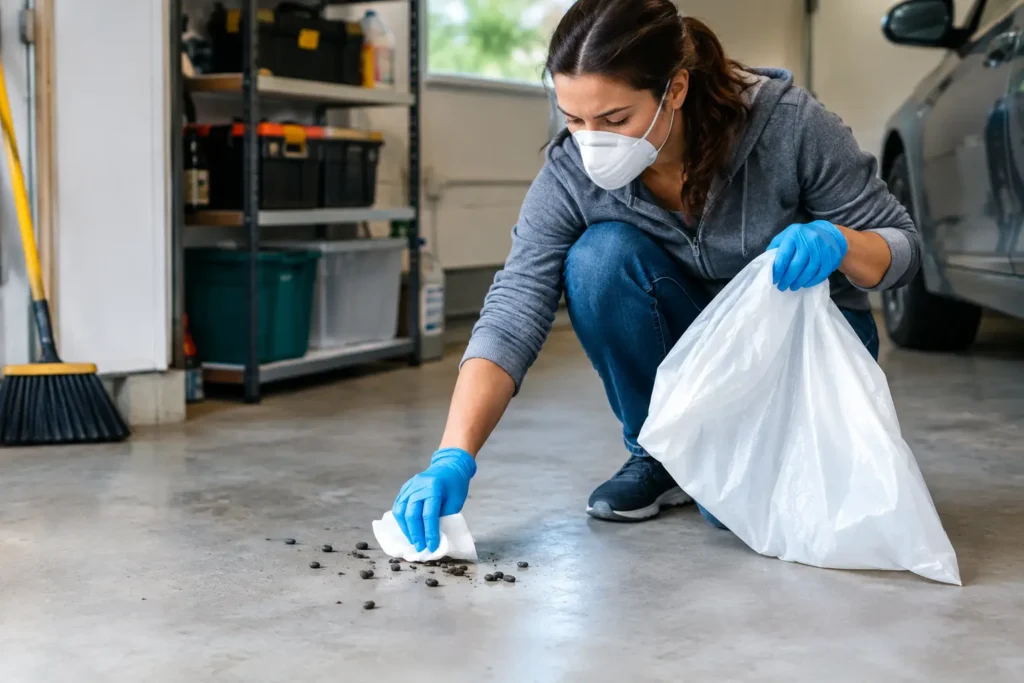
Droppings in garage are not just an unpleasant cleanup problem. They are evidence that an animal has found a way into your home’s perimeter, likely has access to food or shelter, and may be traveling farther than the garage itself. Rodents commonly move from garages into wall cavities, attics, crawlspaces, and storage areas – often before homeowners see them.
A few pellets behind a box may look manageable, but visible droppings can represent a much larger hidden contamination issue. Urine, nesting debris, chewed materials, and contaminated insulation may be nearby or concealed behind stored belongings, drywall, or garage walls. The right response protects your family, preserves your home, and stops a small discovery from becoming a recurring problem.
Why Droppings in Garage Need Attention
Garages are easy targets for rodents. They tend to have gaps around garage doors, utility penetrations, vents, rooflines, and side doors. They also provide cover: stacked boxes, holiday decorations, pet food, birdseed, cardboard, and clutter can create ideal nesting conditions.
Mice leave small, dark, rice-shaped droppings, while rat droppings are generally larger, thicker, and more blunt or pointed at the ends. Fresh droppings may look darker and slightly moist; older droppings often turn gray, dry, and crumbly. But size and appearance alone do not tell the full story. A professional inspection can determine whether the activity is current, where rodents are entering, and whether they have reached connected spaces.
The health concern is not limited to the droppings you can see. Disturbing dry droppings or nesting material can put contaminated dust into the air. Rodents can also leave urine trails along stored items, baseboards, framing, and insulation. In an attached garage, air movement and openings around pipes, doors, and walls can allow odors and contaminants to affect adjacent living areas.
There is also a property-condition concern. Rodents chew wiring, damage stored belongings, shred insulation for nests, and contaminate building materials. If insulation above or beside the garage has been soiled, it may no longer perform as intended. That can contribute to odor problems, reduced energy efficiency, and an environment that remains attractive to rodents.
Do Not Sweep or Vacuum the Area Dry
The instinct to grab a broom, shop vacuum, or household vacuum is understandable. It is also a common mistake. Dry sweeping or vacuuming can break apart droppings and nesting debris, sending particles into the air where they can be inhaled.
Keep children and pets away from the affected area, especially if droppings are near pet food, stored belongings, or a door leading into the house. Avoid moving boxes or insulation around until you know the extent of the activity. If you need to retrieve an essential item, wear disposable gloves and avoid touching droppings, urine-stained surfaces, or nests.
A small, isolated amount of old debris on a hard, nonporous surface may be addressed with appropriate protective equipment and wet-cleaning methods. But that is not the same as remediating an active or widespread rodent problem. If droppings appear in multiple areas, are mixed with nesting material, have soaked into cardboard or fabric, or are near insulation, it is time for a professional assessment.
Signs the Problem May Extend Beyond the Garage
Rodents rarely limit themselves to one convenient corner. Look for patterns that suggest they are actively using the garage or moving into the structure. Scratching sounds in the ceiling or walls, gnaw marks on boxes and wiring, shredded paper or insulation, greasy rub marks along edges, and a persistent musky urine odor all deserve attention.
You may also notice droppings concentrated along walls, behind shelving, near water heaters, around appliances, or beside stored food and seed. Rodents usually travel along protected edges rather than across open floor space. A trail of activity near the wall shared with your house is especially worth investigating.
It depends on the home, but attached garages and older properties often have several connected entry routes. An opening behind a utility line, a gap under a side door, or a damaged vent screen can be enough. Sealing only the most obvious hole may slow activity temporarily, but it does not address contamination already inside or alternate routes rodents can use.
What Professional Garage Rodent Cleanup Should Include
A proper response is more than trapping an animal and removing a few visible pellets. The goal is to restore the affected area and make the property harder for rodents to reenter.
A thorough service begins with an inspection of the garage, connected attic or crawlspace areas when accessible, exterior entry points, insulation condition, and visible evidence of urine, nests, and damage. This establishes whether the issue is confined to the garage or part of a larger infestation.
Next comes controlled removal of droppings, nesting material, and contaminated debris. Certified technicians use full protective gear and methods designed to limit exposure while removing material safely. Porous items such as heavily contaminated cardboard, fabric, or insulation may need to be discarded rather than simply sprayed or wiped down.
Sanitization follows cleanup. This step addresses surfaces affected by rodent waste and helps reduce odor-producing contamination. If urine odor has penetrated building materials or insulation, surface cleaning alone may not be enough. The affected material may need treatment, removal, or replacement based on its condition and location.
Finally, exclusion work closes access points. This is what turns cleanup into a long-term solution. Technicians identify and seal gaps around foundations, wall penetrations, vents, roofline areas, garage doors, and other vulnerable points using materials appropriate for the location. The exact work depends on the structure, but the objective is simple: remove the contamination and lock rodents out for good.
Protect the Garage While You Wait for Service
You do not need to turn your garage upside down before an inspection. In fact, leaving evidence in place can help identify travel paths and nesting locations. A few practical precautions can reduce risk without disturbing the contaminated area.
Store pet food, birdseed, grass seed, and pantry overflow in sealed, rodent-resistant containers. Move boxes and fabric items away from obvious contamination only if you can do so without handling droppings or nests. Keep the garage door closed when not in use, and do not leave exterior doors propped open.
Avoid placing poison in hidden areas without a plan. Rodents can die inside inaccessible walls, ceilings, or insulation, creating an odor issue that is difficult to locate and resolve. Traps and pest control can have a place in an integrated plan, but they do not sanitize urine, restore damaged insulation, or seal the openings that allowed rodents inside.
When to Call for Help Right Away
Do not wait if you see repeated droppings after cleaning, find nests or chewed wiring, smell strong urine odor, or discover activity in an attached garage near the home. The same is true when contamination is in insulation, around HVAC equipment, or near spaces where children and pets spend time.
For homeowners in Los Angeles, Ventura, Riverside, San Bernardino, and Orange counties, Professional Rodent Cleanup can inspect the property, identify the scope of contamination, remove affected materials, sanitize the area, restore insulation when needed, and complete exclusion work backed by a lifetime workmanship guarantee.
Your garage should be storage space, not a rodent access point. Treat the first signs seriously, keep the area undisturbed, and get a clear assessment before hidden damage and contamination have more time to spread.