
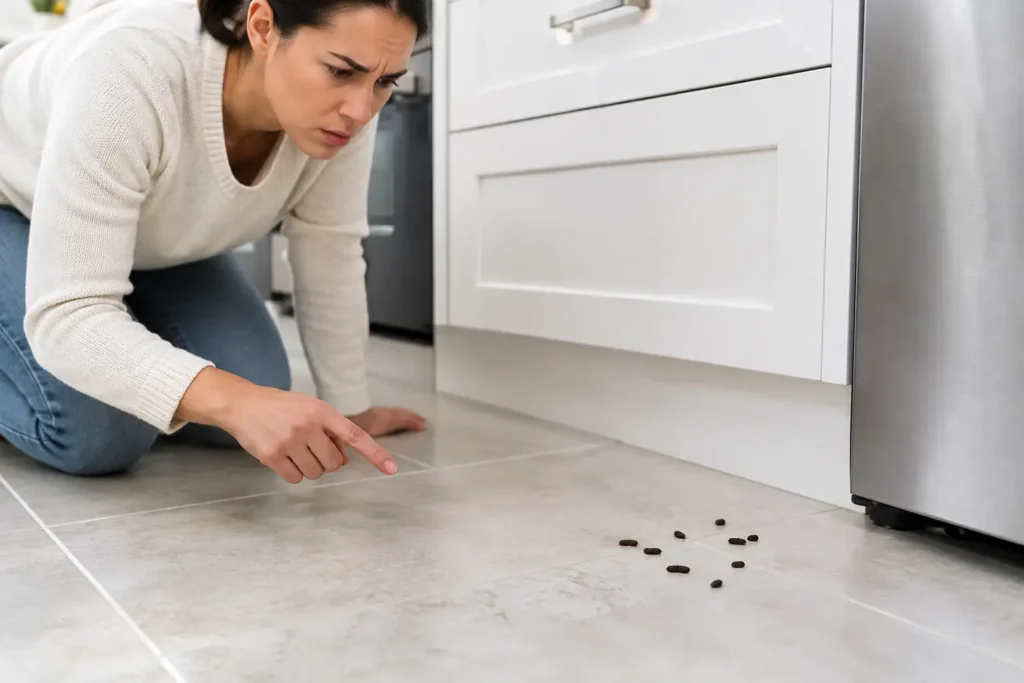
Mouse droppings in the kitchen are more than an unpleasant cleanup. They can signal active rodent traffic near food, dishes, drawers, and wall openings – and the contamination may extend well beyond what you can see on the counter.
What to Do When You Find Droppings
Do not sweep or vacuum dry droppings. That can disturb contaminated particles and spread them through the room. Keep children and pets away from the area, discard exposed food and disposable packaging, and avoid using dishes or utensils stored nearby until they have been properly cleaned.
A few droppings behind an appliance may be old, but fresh-looking droppings, new damage to food packages, urine odors, or repeated sightings point to an active problem. Mice often travel along walls, behind refrigerators and stoves, inside cabinets, and through openings around plumbing lines. The kitchen may be where you found the evidence, not where the full contamination began.
Why Mouse Droppings in the Kitchen Require More Than Traps
Traps may catch an individual mouse, but they do not remove contamination or close the entry point that allowed rodents inside. If rodents have access to the kitchen, they may also be nesting in an attic, crawlspace, garage, wall void, or insulation.
Professional cleanup focuses on the complete condition of the home. Technicians can safely remove contaminated nesting material and insulation where needed, sanitize affected areas, address persistent urine odor, and identify the openings rodents use to enter. Exclusion work is the step that locks rodents out for good.
When to Call for Professional Help
Arrange an inspection promptly if droppings keep appearing after cleaning, you notice a strong odor, hear activity in walls or ceilings, or find chewed wiring, insulation, or food packaging. This is especially wise in homes with young children, older adults, or anyone concerned about indoor-air quality.
For Southern California homeowners, Professional Rodent Cleanup provides no-obligation inspections and a full restoration approach – contamination removal, sanitization, insulation restoration, and rodent-proofing performed by trained technicians in protective gear.
The fastest path back to a safe kitchen is not simply removing what is visible. It is finding the source, cleaning the affected areas correctly, and sealing the home before the next mouse gets in.