
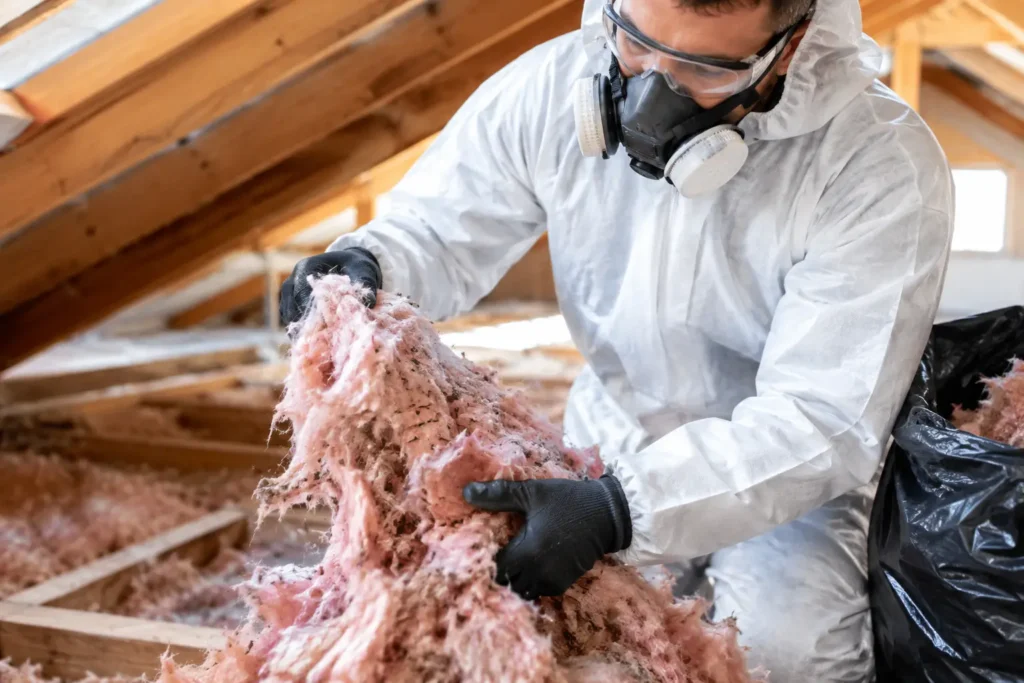
That sharp, stale odor coming through a ceiling vent is not just unpleasant. When mice have been living in an attic or crawlspace, the insulation can hold urine, droppings, nesting debris, and odor long after the animals are gone. Mouse infested insulation removal is often necessary to restore a cleaner, healthier, and properly insulated home.
Traps or pest control may remove the immediate rodent problem, but they do not remove what rodents left behind. A complete restoration addresses the contaminated material, sanitizes the affected space, and closes the gaps that allowed mice inside in the first place.
Why Mouse-Contaminated Insulation Needs Attention
Insulation is designed to trap air and control heat transfer. Unfortunately, its fibers also trap rodent waste, nesting materials, and urine. Mice can travel throughout an attic or crawlspace, leaving contamination well beyond the spot where a homeowner first notices droppings.
The result can be persistent odors, reduced insulation performance, and concerns about indoor air quality. In some homes, air from the attic or crawlspace can move through small openings around recessed lights, plumbing penetrations, ductwork, and wall cavities. That can allow odors and fine contaminated dust to affect living areas below.
There is also a practical cost. Flattened, soiled, or disturbed insulation does not perform as it should. A home may become harder to heat or cool, placing more demand on the HVAC system and making rooms feel less comfortable.
What Professional Mouse Infested Insulation Removal Includes
A proper cleanup starts with an inspection, not a guess. Technicians assess the extent of rodent activity, identify damaged insulation, locate nesting areas, and look for the exterior or structural openings mice used to enter. The scope can vary widely. A small, contained area may need targeted removal, while a long-term infestation often calls for removal of insulation across a larger attic or crawlspace.
During removal, trained technicians use protective gear and containment-minded procedures to handle contaminated insulation and debris safely. The goal is to remove the source of contamination rather than simply cover it with deodorizer or add fresh insulation on top. Covering damaged insulation can trap odors and leave unsanitary material in place.
Once the material is removed, the exposed surfaces can be cleaned and sanitized. Treatment is selected for the conditions found, including urine contamination, droppings, nesting debris, and lingering odor. This stage matters because a clean-looking attic is not necessarily a sanitized one.
Replacement Insulation Is Part of Restoring the Home
After cleanup, replacement insulation may be installed to bring the attic or crawlspace back to an appropriate level of thermal protection. The right approach depends on the space, the condition of the remaining insulation, and the extent of contamination.
Homeowners sometimes ask whether insulation can be saved. It depends. If activity was brief and limited to a small, accessible section, selective removal may be possible. When mice have nested repeatedly, urine odor is widespread, or droppings are distributed across the area, full removal is usually the more reliable answer.
Cleanup Without Exclusion Leaves the Door Open
Removing contaminated insulation is only one part of the job. If entry points remain open, mice can return and contaminate the restored space again.
A complete rodent exclusion process identifies and seals likely access points around rooflines, vents, utility penetrations, foundations, siding transitions, and other vulnerable areas. Mice can fit through surprisingly small gaps, so the work needs to be detailed and durable. This is where a remediation company differs from a basic trap-setting service: it restores the damaged area and works to lock rodents out for good.
For homeowners in Los Angeles, Orange, Ventura, Riverside, and San Bernardino counties, older construction, roofline gaps, and crawlspace access points can all create opportunities for rodent activity. A professional inspection helps determine where the problem started and what it will take to stop it.
Don’t Wait for Odors to Get Worse
Visible droppings, scratching sounds, shredded insulation, and urine odors are all reasons to schedule an inspection promptly. Rodent contamination rarely improves on its own, and delays can mean more damage, stronger odors, and a larger cleanup area.
Professional Rodent Cleanup provides a straightforward path forward: inspect the property, remove contaminated materials, sanitize affected areas, restore insulation where needed, and seal entry points to help prevent reinfestation. With responsive scheduling and a workmanship guarantee, homeowners can move from uncertainty to a clean, protected home.
If you suspect mice have contaminated your attic or crawlspace, the best next step is not to cover the problem up. Have the space evaluated so you can make a clear decision based on the actual condition of your home.