

Schedule a professional inspection: 833-END-RATS (833-363-7287)
Rodent proofing and cleanup for an infested garage is not a matter of sweeping up visible droppings and setting a trap. A garage can hold contaminated storage boxes, nesting debris behind shelving, urine-soaked insulation in walls or ceilings, and odors that pull new rodents back to the same space. The job is to remove the contamination safely, correct the conditions that allowed it, and close the routes rodents are using.
For homeowners, landlords, and facility managers, that distinction matters. A garage often connects directly to living space, utility lines, wall voids, or an attic. When rodent activity is left behind after the animals are gone, the odor and contamination can continue affecting how the property smells and functions.
Why garage rodent cleanup requires more than a surface clean
Mice and rats favor garages because they offer shelter, clutter, stored materials, and easy access through gaps around doors, pipes, vents, and utility penetrations. Droppings may be obvious along walls or behind appliances, but the visible mess is not always the full scope of the problem.
Urine can soak into cardboard, insulation, unfinished wood, fabric storage items, and concrete cracks. Nesting material may be tucked inside cabinets, under shelving, or around stored equipment. In attached garages, activity can extend into wall cavities and upward into the attic.
Dry sweeping, brushing, or using an ordinary household vacuum can disturb contaminated dust and spread it through the space. Cleanup should follow CDC-aligned precautions: appropriate personal protective equipment, controlled wet disinfection with sufficient contact time, careful removal of contaminated materials, sealed disposal, and specialized HEPA equipment when conditions call for it.
A professional approach to garage cleanup and proofing
A proper inspection begins by identifying where rodents traveled, nested, fed, and entered. Fresh droppings, rub marks, gnawing, urine staining, damaged weatherstripping, and openings around plumbing or electrical lines all help define the scope. In a warehouse, apartment building, or single-family garage, the process is similar, but the containment and restoration plan depends on the size of the affected area and what has been contaminated.
Containment and contamination removal
Before removal begins, technicians prepare the site to limit cross-contamination. Contaminated nesting debris, droppings, insulation, and damaged storage materials are removed using controlled methods and placed in sealed disposal bags. Materials that cannot be cleaned effectively may need to be removed rather than deodorized around.
This is especially relevant when droppings have accumulated beneath shelving, inside a drop ceiling, or near HVAC and utility components. Simply covering the odor with a fragrance does not address the contamination source.
Targeted sanitation and odor neutralization
After removal, affected surfaces receive targeted sanitation. The right method depends on the surface: concrete, unfinished framing, drywall, cabinetry, and stored items do not respond the same way. Professional Rodent Cleanup uses a structured approach that focuses on the areas where contamination and odor are actually present.
Persistent urine odor often requires more than one pass because porous materials can retain scent below the surface. Proprietary rodent scent neutralization helps address the odor signals that can make a previously active garage attractive to returning rodents. If insulation, drywall, or other materials are heavily affected, removal and replacement may be the more reliable restoration choice.
Exclusion that addresses the real entry points
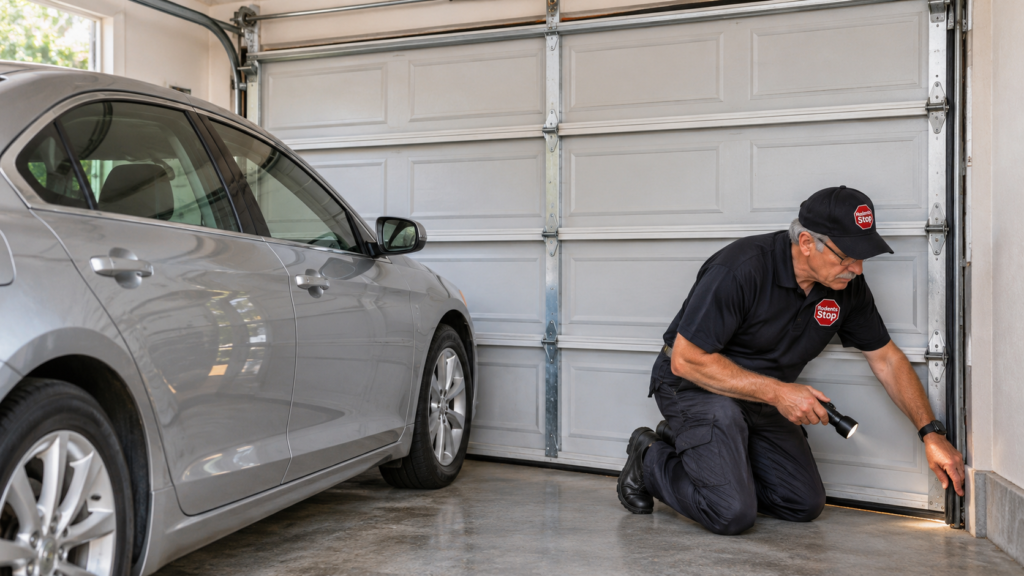
Cleanup without rodent proofing can lead to the same problem a few weeks later. Common garage entry points include worn door sweeps, gaps at the side jambs, unsealed utility penetrations, damaged vents, openings where walls meet the slab, and gaps around conduit lines.
The goal is not to seal every opening blindly. Active rodent movement should be evaluated first so animals are not trapped inside a wall or garage. Once activity is controlled, durable exclusion repairs can help lock rodents out for good without relying on poison. This poison-free, pet-conscious approach is especially valuable around homes, schools, storage areas, and commercial properties.
How to keep mice out of your garage
Start with the garage door. Look for daylight along the bottom seal and gaps at the corners. Check where pipes and cables enter, and look for damaged vent screens. Store pet food and birdseed in tightly sealed containers and reduce clutter along walls so you can spot new activity. If you’re finding fresh droppings or nesting material, have the garage assessed before sealing active entry points.
If your car is parked on the street
If a mechanic finds rodent damage to wires, hoses, or the cabin air filter, ask for photos and a written description of the damage. Remove food and wrappers from the cabin. When you have a choice of parking spots, avoid spots next to trash bins or dense vegetation. For more vehicle-specific guidance, see AAA’s guide to protecting your car from animal damage.
If your car is parked in a garage
After a mechanic documents the damage, check the garage for droppings along the walls, gaps around the door, and nesting material near stored items. That applies to daily drivers and classic or collectible vehicles that sit for extended periods. Rodents Stop can assess the garage, address active rodent activity, and seal entry points to reduce the chance of repeat damage. We serve Los Angeles, Ventura, Orange, Riverside, and San Bernardino counties.
Are rats chewing wires in your garage or parked car?
If your mechanic found chewed wiring, tell us where you park overnight. For a car kept in an enclosed garage, we inspect the door seals, wall gaps and utility openings. We seal the entry points and use short-term trapping to remove rats still inside. A mechanic handles wiring repairs to the vehicle.
We remove droppings, nesting material, and any insulation contaminated by rodents. We then disinfect affected surfaces and apply our pheromone-neutralizing spray to the cleaned areas. Ask which warranty applies to your garage proofing package. Garage coverage applies to the treated structure and does not extend to a vehicle parked outdoors.
Call 833-END-RATS for a garage assessment.
When should you call for professional help?
Call for an inspection when the garage has recurring droppings, a sharp urine or ammonia-like odor, visible nesting, chewed wiring or stored items, contaminated insulation, or signs that rodents are moving into adjacent walls or attic areas. Property managers should also act quickly between tenants, before restoring a vacant unit or reopening a storage area.
In Southern California, garages in Los Angeles, Thousand Oaks, Irvine, Riverside, and Rancho Cucamonga can be vulnerable year-round, particularly when stored items create hidden nesting zones and exterior gaps remain open. The right cleanup plan depends on the contamination level, how long activity has been present, and whether the garage connects to other affected spaces.
Ready When You Are: 833-END-RATS (833-363-7287)
A clean garage should not keep reminding you that rodents were there. A professional inspection can clarify what needs to be removed, sanitized, repaired, and sealed so the space is ready to use again with greater confidence.
One Response