
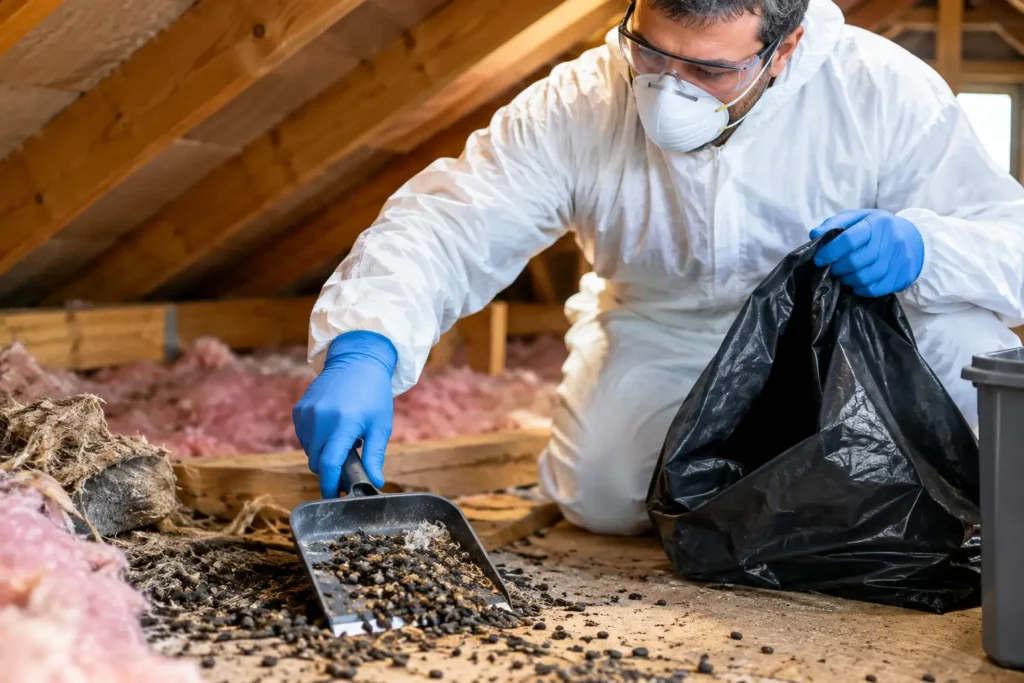
A rodent problem does not end when the scratching stops. Droppings, urine, nesting debris, and torn insulation can remain hidden above your ceiling, affecting odors, air quality, and the condition of your home. Professional attic rodent clean up addresses what rodents leave behind – then closes the openings that allowed them inside.
For homeowners, this is not a basic pest-control task. An attic may contain contaminated materials across hard-to-reach areas, and disturbed insulation can send dust and particles into the air. The right response is a controlled cleanup and restoration process performed with protective equipment, proper containment, sanitization, and permanent exclusion work.
Why attic rodent contamination needs professional attention
Rodents use attic insulation as bedding, travel paths, and nesting material. As they move through the space, urine and droppings can accumulate in concentrated areas or spread across large sections of insulation. The result can be a persistent animal odor, visible staining, damaged ducting or wiring, and insulation that no longer performs as it should.
The condition of the attic matters because it is connected to the rest of the home. Gaps around light fixtures, vents, access hatches, and utility penetrations can allow attic air to move downward. If contamination is severe, homeowners may notice odors inside living areas or become concerned about what is circulating through the home.
Simply trapping or removing rodents does not restore damaged insulation or eliminate contamination. It also does not solve the problem if exterior entry points remain open. A complete service treats the infestation as both a sanitation issue and a home-restoration issue.
What a complete attic rodent clean up includes
Every attic has different levels of damage. A small, recent problem may require targeted removal and sanitization, while a long-term infestation can call for full insulation removal, deep cleaning, odor treatment, and replacement insulation. A professional inspection determines the scope based on visible droppings, nesting activity, urine damage, insulation condition, and likely access points.
Safe removal of contaminated materials
Technicians begin by removing rodent droppings, nests, carcasses when present, and contaminated insulation or debris. This work should be handled with full protective gear and procedures designed to limit unnecessary exposure and prevent contaminated material from being carried through the home.
Insulation is not always automatically removed. If it is clean, dry, and unaffected, targeted cleanup may be appropriate. But insulation with widespread droppings, urine saturation, nesting tunnels, or strong odor is often beyond practical restoration. Removing compromised material gives the attic a clean foundation for sanitization and repairs.
Sanitization and odor treatment
After removal, the attic surfaces are treated to address contamination and lingering odor. Odor control is especially important because urine can penetrate insulation, wood, and other porous materials. Masking the smell is not a solution. The source must be removed and the affected area properly treated.
This phase also gives technicians a clearer view of the attic’s condition. Damage to ductwork, wiring, ventilation screens, or structural areas can be identified once debris and insulation no longer conceal it.
Insulation restoration and rodent exclusion
New insulation can restore the thermal barrier that rodents damaged or contaminated. That can help the home hold conditioned air more effectively, particularly during Southern California heat or cooler evenings. The right insulation level depends on the attic layout, existing material, and the amount removed.
Then comes the step that protects the investment: exclusion. Technicians inspect rooflines, vents, eaves, utility openings, construction gaps, and other vulnerable areas before sealing access points with durable materials. This work is what locks rodents out for good, rather than leaving homeowners to face the same cleanup months later.
Signs you should schedule an attic inspection
A sudden odor near ceiling vents, scratching at night, droppings near attic access, chewed materials, or insulation visible around exterior vents all warrant a closer look. You may also need an inspection after rodents have been trapped or removed, since their absence does not reveal how much contamination remains overhead.
Do not wait for obvious damage to spread. Early inspection can make the cleanup more contained and help prevent further contamination, insulation loss, and rodent-related repairs. Professional Rodent Cleanup provides no-obligation inspections for homeowners in selected Southern California counties, with same-day availability when the situation cannot wait.
A clean attic should not be a source of odor, anxiety, or hidden damage. Have the space inspected, restore what rodents compromised, and make sure the entry points are sealed before the problem has a chance to return.