
Schedule a Professional Inspection: 833-END-RATS (833-363-7287)
A crawl space can hold contamination long after the scratching stops. Crawl space rat cleanup is not simply picking up visible droppings. Rats can leave urine residue, nesting debris, damaged insulation, grease trails, and odor-causing material across hard-to-reach areas beneath a home or commercial building. In Southern California, those conditions can affect indoor odors, air quality, insulation performance, and the overall condition of the property.
For homeowners, landlords, and facility managers, the difficult part is that crawl space damage is often out of sight. You may notice a sharp ammonia-like odor near floor vents, activity beneath the flooring, stained insulation, or a smell that becomes stronger on warm days. By the time those signs are obvious, contamination may extend well beyond one visible nest.
Professional cleanup addresses the contaminated materials, the odor source, and the access conditions that allowed rodents inside. That order matters. Cleaning a crawl space without addressing active entry points can leave a property vulnerable to another infestation and another round of cleanup.
Why Crawl Space Contamination Needs More Than a Quick Cleanup
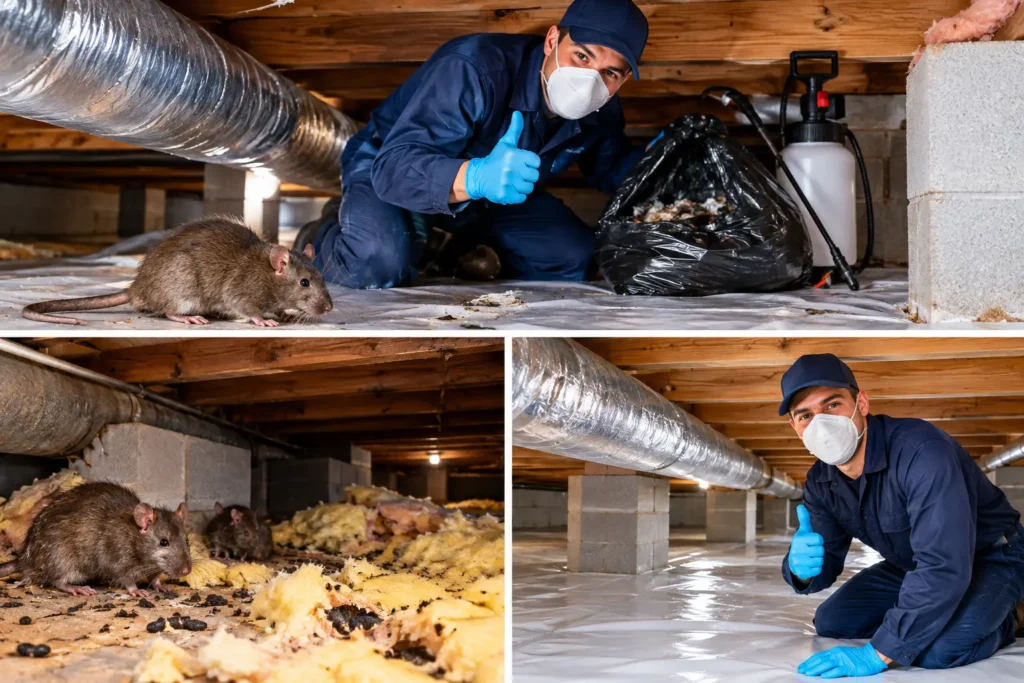
Crawl spaces are difficult environments to clean properly. They are low, dark, dusty, and often crossed by plumbing, HVAC ducts, electrical lines, and insulation. Rodent droppings and nests may be tucked against foundation walls, around pipe penetrations, under ductwork, or inside deteriorated vapor barriers.
Dry sweeping, brushing, or using an ordinary household vacuum can disturb contaminated dust and send particles into the air. That is not an appropriate cleanup method for rodent waste. A careful process uses proper personal protective equipment, controlled removal methods, wet disinfecting, sealed disposal, and specialized HEPA equipment when conditions call for it.
Urine is another reason surface-level cleaning often falls short. It can soak into insulation, wood, soil, cardboard, stored materials, and vapor barriers. Spraying fragrance over the area may mask an odor briefly, but it does not remove the contaminated source. If saturated materials remain in place, the smell can return when humidity or temperatures change.
The extent of work depends on the crawl space. A limited, recent issue may require targeted removal and sanitation. A long-running infestation with widespread droppings, compressed insulation, nesting debris, and strong odors may require removal of contaminated materials before the area can be properly treated and restored.
What Professional Crawl Space Rat Cleanup Includes
A reliable cleanup begins with an inspection, not an assumption. Technicians assess the crawl space access, visible contamination, insulation condition, moisture concerns, nesting areas, odor patterns, and possible rodent entry points. They also look for contamination around ducts, utility penetrations, subflooring, and stored items where applicable.
Site Preparation and Containment
Before removal begins, the work area needs to be prepared to limit the spread of debris. Access paths are protected as needed, and containment practices help keep disturbed material from moving into living or occupied areas. This is especially important in apartment buildings, schools, warehouses, and commercial properties where crawl space access may be near occupied spaces.
The goal is controlled work from the first bag of debris to the final removal. Cleanup should never mean tracking contaminated dust through a hallway, garage, or common area.
Removal of Waste and Contaminated Materials
Rodent droppings, nests, carcass remains when present, and heavily contaminated debris are removed using methods designed for rodent-contaminated environments. Technicians use appropriate PPE and apply disinfectant according to label directions, including the required contact time, before handling contaminated material.
Damaged insulation is evaluated carefully. Insulation may need removal when it contains widespread droppings, urine contamination, nesting material, or odor that cannot be reasonably addressed in place. Leaving contaminated insulation because it is hidden can preserve both the odor source and the evidence of prior activity.
Materials are placed in sealed bags or containers for disposal. Specialized HEPA equipment may be used where appropriate to capture fine debris without relying on an ordinary vacuum that is not designed for this type of contamination.
Targeted Sanitation and Odor Neutralization
Once waste and affected materials are removed, the crawl space is treated with targeted sanitation methods appropriate for the affected surfaces. This is not a promise to make every surface sterile. It is a careful effort to reduce contamination left by rodent activity and address the materials and areas most affected.
Odor work must focus on source removal first. After that, proprietary rodent scent neutralization can help address residual urine and nesting odors that ordinary cleaning products often leave behind. The right treatment depends on the surface, how deeply odor has penetrated, ventilation conditions, and whether contaminated insulation or vapor barrier remains.
A crawl space with exposed soil may require a different approach than one with a sealed vapor barrier. Likewise, wood subflooring may respond differently than duct insulation or fiberglass insulation. A professional should explain what can be cleaned, what should be removed, and why.
Prevention Is Part of Restoring the Space
Cleanup is only half the job if rats still have a route into the structure. Rodents commonly use gaps around utility lines, damaged foundation vents, openings at plumbing penetrations, broken screens, and other small exterior vulnerabilities. In some buildings, activity can move between crawl spaces, wall voids, attics, garages, and drop ceilings.
Identifying likely entry points helps property owners make informed decisions about exclusion. Professional Rodent Cleanup emphasizes poison-free, pet-conscious rodent control and practical sealing measures that help reduce repeat access. The exact exclusion plan depends on the property’s construction, current activity, and whether repairs are needed before cleanup is complete.
For a rental property or apartment complex, prevention also protects neighboring units and common areas. For a warehouse, school, or business, it helps preserve storage areas and reduce the chance that contamination spreads to additional parts of the building. A cleanup plan that ignores access points may solve the immediate mess while leaving the underlying problem in place.
Signs You Should Schedule an Inspection
Do not wait for a crawl space odor to become overwhelming. An inspection is warranted when you notice persistent urine-like smells, droppings near crawl space access, shredded insulation, noises beneath floors, staining around vents, or recurring rat activity after prior pest work.
It is also wise to inspect after a known infestation has been removed. Many property owners assume the space is clean because they no longer see rodents. But old nests, urine-contaminated insulation, and droppings do not disappear when activity stops. They can continue producing odors and may affect how the property feels to occupants, tenants, customers, or prospective buyers.
In Los Angeles, Orange, Ventura, Riverside, and San Bernardino counties, crawl spaces often vary widely by building age and construction. A thorough inspection gives you a clearer scope before deciding whether targeted sanitation, insulation removal, odor treatment, exclusion work, or restoration is necessary.
A Safer Path Back to a Usable Crawl Space
The best time to address rodent contamination is before it becomes a larger restoration issue. A professionally cleaned crawl space can help remove the source of persistent odors, protect insulation and structural areas from further damage, and create a cleaner foundation for exclusion and prevention work.
If you are unsure how extensive the contamination is, start with an inspection rather than disturbing the area yourself. A clear assessment can separate a manageable targeted cleanup from a larger project involving insulation removal, sanitation, deodorization, and entry-point repairs.