
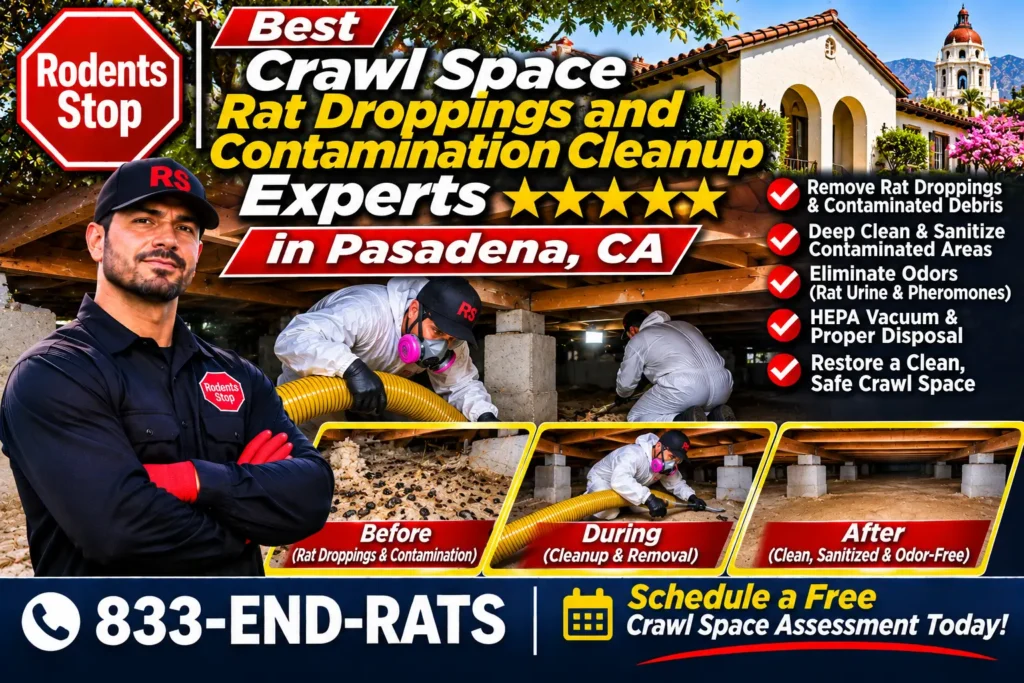
Need help now? Schedule a professional inspection by calling 833-END-RATS (833-363-7287).
A crawl space can look out of sight, but it is not out of the way of your home’s air, odors, or structural systems. When Pasadena homeowners search for crawl space rat droppings cleanup Pasadena, they are often dealing with more than a few visible pellets. Urine staining, nesting debris, damaged insulation, lingering odor, and repeat rodent activity can turn a confined area beneath the home into a serious property-condition concern.
Professional cleanup is not the same as removing what is easy to see from the access opening. A proper job addresses the contamination source, the materials affected by it, the odors that remain afterward, and the openings that may allow rodents to return. That is the difference between a crawl space that merely looks better and one that is genuinely ready for restoration.
Why rat contamination in a crawl space needs a careful response
Crawl spaces are difficult environments to inspect and clean. Low clearance, exposed soil, plumbing lines, ductwork, vapor barriers, old insulation, and limited lighting all make shortcuts tempting. Unfortunately, shortcuts can spread contaminated dust or leave urine and nesting material behind in places that continue to smell.
Rat droppings and nesting debris may collect along foundation walls, near utility penetrations, beneath insulation, and around stored materials. Urine can soak into insulation, vapor barriers, wood framing, and dust on surrounding surfaces. Even after rodents are gone, the odor can persist, especially during hot weather or when moisture is present below the structure.
This is also why dry sweeping, brushing, or using an ordinary household vacuum is not an appropriate cleanup method. Those methods can disturb contaminated material and move particles into the air. Professional crews use appropriate personal protective equipment, controlled removal practices, wet disinfecting methods with the needed contact time, sealed disposal, and specialized HEPA equipment when conditions call for it.
What professional crawl space rodent cleanup involves
Every property has different access, contamination levels, and restoration needs. A small, localized area near an entry point may need a different scope than a crawl space where rodents have traveled throughout insulation and along multiple utility routes. The right approach begins with a detailed inspection, not a one-size-fits-all price or procedure.
Inspection and site preparation
Technicians first assess where activity occurred, what materials were affected, and whether active entry points remain. In Pasadena homes, common concerns include gaps around plumbing and utility lines, foundation vents, access doors, aging screens, and openings created where different building materials meet.
Before material is removed, the work area is prepared to limit the spread of debris. This may include controlled access, protective sheeting or containment where appropriate, and a plan for safely moving contaminated materials out of the crawl space. Site preparation matters because cleanup should not create a second problem inside living areas, garages, or pathways around the property.
Removal of droppings, nests, and contaminated materials
The removal phase addresses rat droppings, urine-affected debris, nesting material, and other contaminated contents. Materials that cannot be reliably cleaned or that hold odor, such as heavily contaminated insulation, may need to be removed and replaced. The decision depends on the extent of contamination, the material type, and whether odor and staining have penetrated deeply.
Debris is collected using professional methods and placed in sealed disposal containers or bags. This includes contaminated insulation fragments, nesting material, and other rodent-affected debris that should not remain under the building. Simply spraying fragrance over contaminated insulation or leaving nests in inaccessible corners will not resolve the underlying issue.
Targeted sanitation and odor neutralization
After removal, affected surfaces receive targeted sanitation. This is not a quick misting of the entire crawl space. Professional application focuses on the surfaces and areas where contamination occurred, while allowing disinfectants the correct contact time to work as directed.
Odor control also requires more than perfume. Rodent urine odor is persistent because the source may be absorbed into porous materials or trapped beneath insulation and debris. Professional Rodent Cleanup uses proprietary rodent scent neutralization methods as part of a larger cleanup process. The goal is to address remaining odor at its source after contaminated materials have been removed, not to mask it temporarily.
Restoration and prevention planning
Once the crawl space is cleaned and treated, restoration may include replacing removed insulation, improving the condition of the crawl space, and identifying entry points that need sealing. Cleanup without exclusion can leave a property vulnerable to the same contamination cycle.
Professional Rodent Cleanup brings more than 20 years of hands-on experience through Rodents Stop to the work of removing contamination and helping property owners prevent repeat access. When exclusion is needed, the focus is on humane, poison-free solutions that help lock rodents out for good without introducing toxic bait concerns around homes, pets, or occupied properties.
When cleanup should include insulation removal
Not every crawl space needs full insulation removal. If droppings are limited to a small, accessible area and insulation is clean, dry, and odor-free, a more targeted service may be appropriate. But insulation often becomes the hidden reservoir for urine odor, nesting material, and fine debris.
Removal is commonly worth considering when insulation is visibly soiled, compressed by nests, stained, odor-heavy, water-damaged, or spread with droppings across multiple sections. In properties with flexible ductwork or plumbing above the crawl space, inspection should also consider whether rodent activity has affected nearby components.
For landlords, apartment owners, and property managers, this evaluation is especially useful between tenants or before a unit turnover. A crawl space problem can continue to generate odor complaints upstairs even when the interior appears clean. Addressing the lower-level source protects the condition of the building and helps avoid repeated, incomplete cleanup efforts.
Signs the problem may be larger than visible droppings
A crawl space access panel may reveal only a handful of droppings, while the broader space tells a different story. Persistent musky or ammonia-like odors, chewed insulation, shredded paper or fabric, greasy rub marks near entry points, and recurring sounds in walls or floors can indicate wider rodent activity.
Odor that becomes stronger after warm afternoons can also point to urine-contaminated insulation or debris beneath the home. In older Pasadena properties, tightly packed crawl spaces and decades of repairs can create hidden travel routes that are not obvious from a quick visual check.
Commercial properties face similar issues. Storage areas, small offices, schools, warehouses, and buildings with drop ceilings or underfloor utility spaces can harbor contamination long after rodents are no longer seen. The cleanup process must fit the property layout, occupancy needs, and affected materials.
Choosing rat feces removal specialists for the job
When comparing rat feces removal specialists, ask what happens after the droppings are collected. A credible scope should explain inspection, containment, removal, sanitation, deodorization, disposal, and prevention recommendations. It should also account for the actual condition of insulation and other porous materials rather than treating every job as surface cleaning.
Look for a company that understands confined-space work and uses proper protective procedures. Ask whether the crew avoids unsafe practices such as dry sweeping and ordinary vacuuming, how contaminated materials are sealed for disposal, and how odor sources are evaluated. Clear answers are a sign that the company is planning a true rodent contaminated crawl space cleanup, not a cosmetic visit.
If rodent activity is ongoing, cleanup and exclusion should be coordinated. Cleaning before the access points are addressed can mean paying to remove contamination that returns weeks later. On the other hand, sealing a building without cleaning the existing debris can trap odors and leave contaminated materials under the structure.
Don’t wait for crawl space odor to reach the living area
Rodent contamination tends to worsen quietly. Every additional day of activity can mean more droppings, more urine absorption, more nesting debris, and more damage to insulation. A professional inspection gives you a clear picture of what is under the building and what level of cleanup is actually needed.
For Pasadena homeowners, landlords, and commercial property managers, the practical next step is to have the crawl space evaluated before odor, damaged insulation, or repeat rodent access becomes a larger restoration issue. A clean, properly treated crawl space helps protect the condition of the property and gives you a better foundation for long-term prevention.
Ready when you are. Schedule your professional inspection at 833-END-RATS (833-363-7287).