
Schedule a Professional Inspection: 833-END-RATS (833-363-7287)
A few dark specks behind the toaster or an unfamiliar smell beneath the sink can be easy to dismiss. But five signs that mice are getting into your kitchen often point to more than a single mouse passing through. Kitchens provide warmth, water, and reliable food sources, while nearby wall voids, attics, garages, and crawlspaces can give rodents a protected place to nest.
For Southern California homeowners, landlords, and property managers, early action matters. Finding activity before contamination spreads into insulation, cabinets, ceilings, or storage areas can limit odor, cleanup, and restoration work.
Five signs mice are getting into your kitchen
1. Droppings in quiet, protected areas
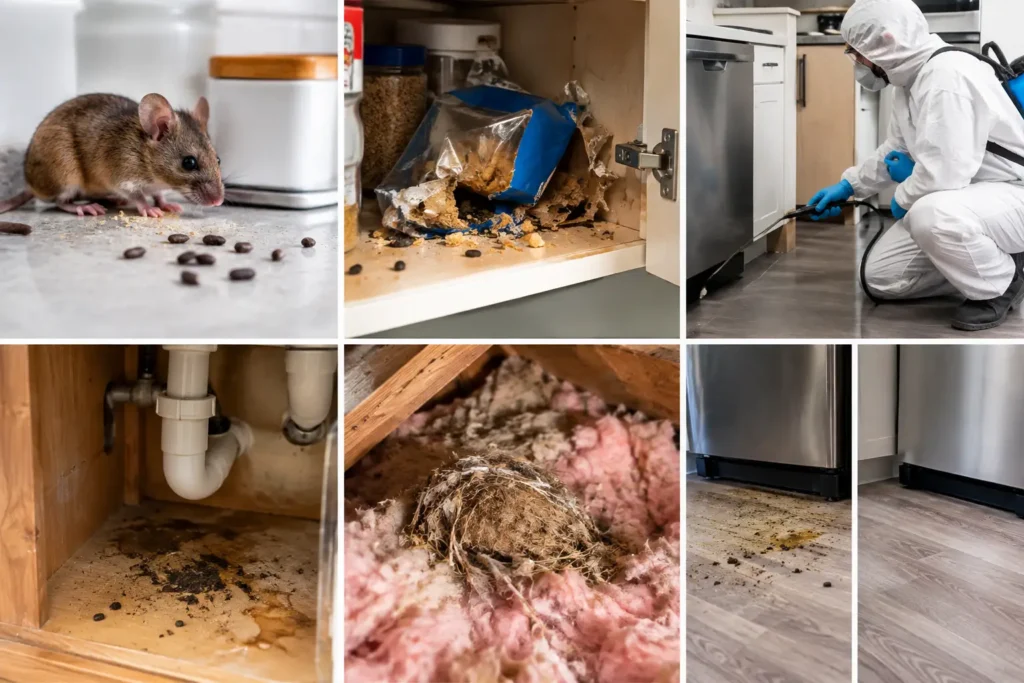
Mouse droppings are often found where people rarely look: under the kitchen sink, behind the refrigerator, along cabinet kick plates, inside pantry corners, or near stored paper goods. Fresh droppings tend to look darker and may have a slight sheen; older droppings become dry and grayish.
Do not dry sweep, brush, or use an ordinary household vacuum on droppings. Disturbing dried waste can send contaminated dust into the air. The area should be handled with proper personal protective equipment, wet disinfecting using the correct product contact time, sealed disposal, and specialized HEPA equipment when appropriate.
2. A persistent musky or urine-like odor
A mouse odor is not always obvious at first. It may become stronger when the kitchen is closed overnight, when the HVAC system runs, or after warm afternoons. Urine can soak into unfinished wood, cabinet bases, insulation, and debris inside wall voids, making surface cleaning ineffective.
Air fresheners may cover the smell briefly, but they do not remove the contamination source. Professional cleanup involves locating affected materials, removing contamination where necessary, targeted sanitation, and scent neutralization designed for rodent odors.
3. Food packaging has small chew marks or tears
Mice can enter boxes, bags, and thin plastic packaging with little effort. Look for small ragged holes in cereal boxes, snack bags, pet food containers, or pantry staples. You may also find food scattered in drawers or on shelves.
Discard food that appears contaminated or has been stored in packaging with evidence of rodent activity. Then inspect the surrounding cabinet for droppings, urine staining, and nesting material. The damage may be limited to a pantry, but it can also indicate a travel route behind cabinets or through a wall opening.
4. Scratching sounds after dark
Mice are most active when a property is quiet. Light scratching, rustling, or faint movement behind kitchen walls, above ceilings, or beneath cabinetry can signal active travel routes. In apartment buildings and commercial properties, sounds may be more noticeable near utility penetrations, shared walls, drop ceilings, and storage rooms.
Sound alone does not identify the full extent of an issue. An inspection can help determine whether activity is current, where rodents are entering, and whether contamination has reached concealed areas.
5. Nesting debris or unexplained damage near appliances
Mice use shredded paper, insulation, fabric, cardboard, and other soft materials to build nests. Check behind appliances, under sinks, inside rarely used drawers, and around utility lines. Grease marks, chewed foam, gnawed plastic, or damaged wiring should also be taken seriously.
A nest near a kitchen is rarely just a housekeeping concern. It may contain droppings and urine, and it can indicate that rodents have access to nearby wall voids, attic spaces, or crawlspaces. Removing visible debris without checking the connected areas can leave odor sources and entry points behind.
What to do when you find mouse activity
First, protect people and prevent further contamination. Keep children and pets away from the affected area, avoid disturbing droppings or nesting debris, and move unsealed food away from suspected activity. If the evidence is limited to one small, accessible area, it still deserves careful cleanup using wet methods and appropriate protection.
If you notice recurring droppings, strong odor, nesting material, damaged insulation, or signs in more than one room, professional service is the safer choice. Professional Rodent Cleanup can inspect the kitchen and connected spaces, establish containment where needed, remove contaminated materials, sanitize affected surfaces, neutralize persistent odors, and identify entry points that allow repeat activity.
For properties in Los Angeles, Ventura, Orange, Riverside, and San Bernardino counties, this approach is especially useful when the kitchen signs are connected to an attic, crawlspace, garage, wall void, or drop ceiling. Removing the visible evidence without addressing those areas can allow the problem to return.
A prompt inspection gives you a clear picture of what needs attention before contamination and odor spread farther through the property.