
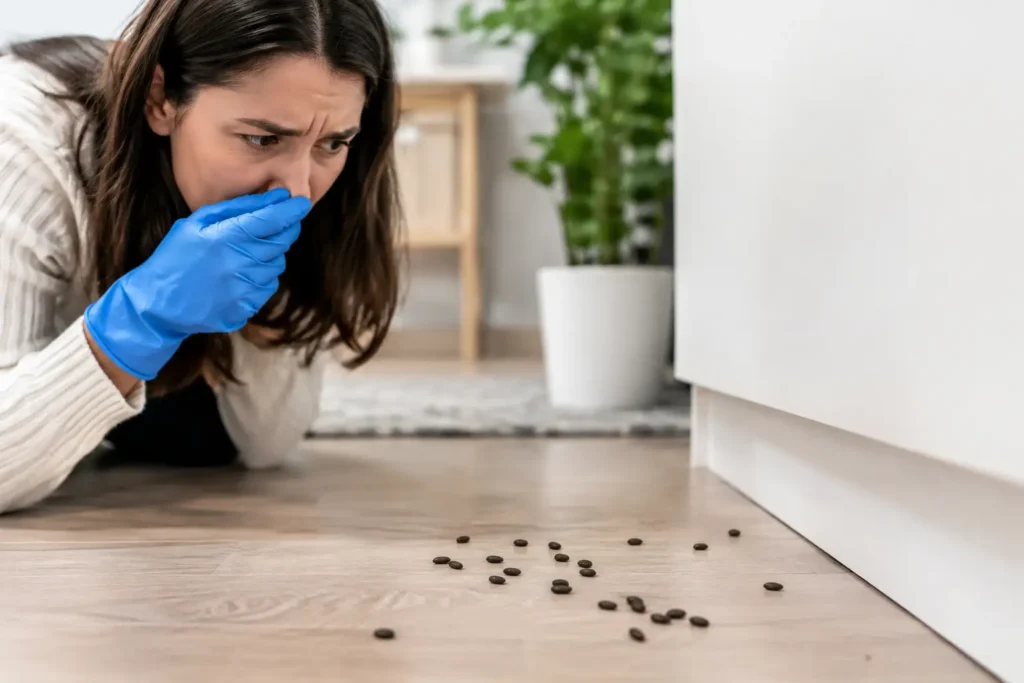
A few droppings in an attic may look like a pest issue. But health problems from rat droppings can turn it into a contamination issue, especially when droppings, urine, nesting debris, and damaged insulation have been sitting in enclosed parts of the home.
How Rat Droppings Can Affect Your Household
Rodent waste can carry bacteria and other disease-causing organisms. The concern increases when dried droppings or contaminated dust are disturbed during sweeping, vacuuming, insulation work, or storage cleanup. Particles can become airborne and affect the air moving through attic or crawlspace openings.
Exposure does not guarantee illness, and the level of risk depends on the rodent species, the amount of contamination, ventilation, and how the material is handled. Still, homeowners should take visible droppings seriously. Rodent contamination has been associated with illnesses such as salmonellosis, while rodent urine can also contribute to health concerns. Hantavirus is more commonly linked to deer mice than rats, but any unknown rodent waste in a confined area deserves careful handling.
Children, older adults, people with asthma, and anyone with a weakened immune system may be more sensitive to contaminated dust and poor indoor air quality. Even when no one becomes sick, lingering urine odor and degraded insulation can make a home feel unhealthy and uncomfortable.
Do Not Sweep or Vacuum Rat Droppings
Dry cleanup can spread contaminated particles farther than the original affected area. Avoid using a household vacuum, dry broom, or leaf blower on droppings, nests, or soiled insulation. Keep people and pets away from the area, and do not enter a heavily contaminated attic or crawlspace without appropriate protective equipment.
Small, accessible messes may be manageable with the right disinfecting procedure and disposable protective gear. But widespread droppings, strong odors, chewed ductwork, nests, or contaminated insulation call for professional remediation. The material often extends well beyond what is visible from the attic opening.
Cleanup Must Include Prevention
Removing droppings without sealing entry points leaves the home open to another infestation. A complete restoration should remove contaminated materials, sanitize affected surfaces, address odor sources, replace insulation when needed, and close the exterior gaps rodents use to get inside.
Professional Rodent Cleanup provides this full approach for homeowners who need more than traps or a quick surface cleanup. Don’t wait for odors, contamination, or insulation damage to worsen – a professional inspection can identify what needs to be removed, restored, and sealed so your home is clean and rodent-resistant again.