
Call 833-END-RATS (833-363-7287) for a Professional Inspection
A few droppings on attic framing can be the visible part of a much larger contamination problem. If you are asking, “is rat poop dangerous?” the practical answer is that it can be – especially when droppings, urine, nesting debris, and damaged insulation have collected in an enclosed area over time. This guide addresses rat droppings health risks, attic rat droppings cleanup in Glendale, contaminated attic insulation removal, and professional rodent feces cleanup for Southern California properties.
The concern is not limited to what can be seen from the attic hatch. Rodents travel through insulation, wall voids, duct chases, crawlspaces, and storage areas. They leave urine trails, fecal material, oils, and nesting debris behind. When the affected material is disturbed without proper controls, contaminated dust and odor can spread beyond the original nesting area.
Why Rat Droppings Create a Health and Property Concern
Rat and mouse waste may contain germs that can cause illness. The specific level of risk depends on the type and amount of contamination, how long it has been present, ventilation, and whether waste has been disturbed. Some rodent-borne diseases are uncommon, but the potential consequences are serious enough to justify careful handling.
The greatest concern often comes from dry, accumulated waste in a confined space. Opening an attic, moving boxes, pulling insulation, or sweeping droppings can send contaminated particles into the air. Urine-soaked insulation and nests can also hold persistent odor, even after the rodents are gone.
For homeowners and property managers, the problem is both a sanitation issue and a building-condition issue. Rodents can compress or destroy insulation, contaminate duct-adjacent areas, chew wiring, and turn an attic or crawlspace into a recurring source of odor. In apartment buildings, warehouses, schools, and commercial facilities, contamination may affect storage areas, drop ceilings, utility rooms, and occupied spaces below.
Do Not Dry Sweep or Use a Household Vacuum
A common mistake is trying to clean visible pellets with a broom, shop vacuum, or ordinary household vacuum. Do not dry sweep, brush, or vacuum rodent droppings, urine residue, or nesting material. These methods can aerosolize contaminated particles and spread material across the room or through the vacuum exhaust.
For a small, accessible area with limited contamination, CDC-aligned precautions include wearing appropriate personal protective equipment, thoroughly wetting the material with an approved disinfectant, allowing the product to remain wet for its labeled contact time, and placing waste into sealed disposal bags. The surface should then be cleaned and disinfected according to product directions.
That approach is not a substitute for professional remediation when there is widespread attic contamination, heavily soiled insulation, a strong urine odor, dead rodents, extensive nesting, or uncertainty about where rodents have traveled. Attics and crawlspaces are difficult to access safely, and the material may extend well beyond the area visible from the entry point.
When Contaminated Attic Insulation Should Be Removed
Contaminated attic insulation removal is not automatically necessary every time a rodent is found. The decision depends on the extent of urine staining, droppings, nesting debris, odor, moisture, and how deeply contamination has worked into the insulation.
Insulation is often the hardest material to restore because it is porous. Droppings may be picked up from the surface, but urine can soak into fibers and beneath them. A lingering odor after basic cleaning is a strong sign that contaminated material remains. In some cases, selective removal of affected sections is appropriate. In other cases, widespread activity calls for removal of larger areas so the attic deck, framing, and other underlying surfaces can be properly accessed and sanitized.
A professional inspection should distinguish between light, localized activity and an attic that has been used as a long-term nesting site. Removing insulation without containment can spread dust through the home. Leaving deeply contaminated insulation in place can leave odors and attract new rodent activity. The right scope is based on actual conditions, not a one-size-fits-all recommendation.
What Professional Rodent Feces Cleanup Looks Like
Professional rodent feces cleanup is a controlled restoration process, not a quick sweep-out. The work begins with an inspection to identify active and historic rodent activity, contaminated materials, entry routes, odor sources, and spaces that may need repair or exclusion.
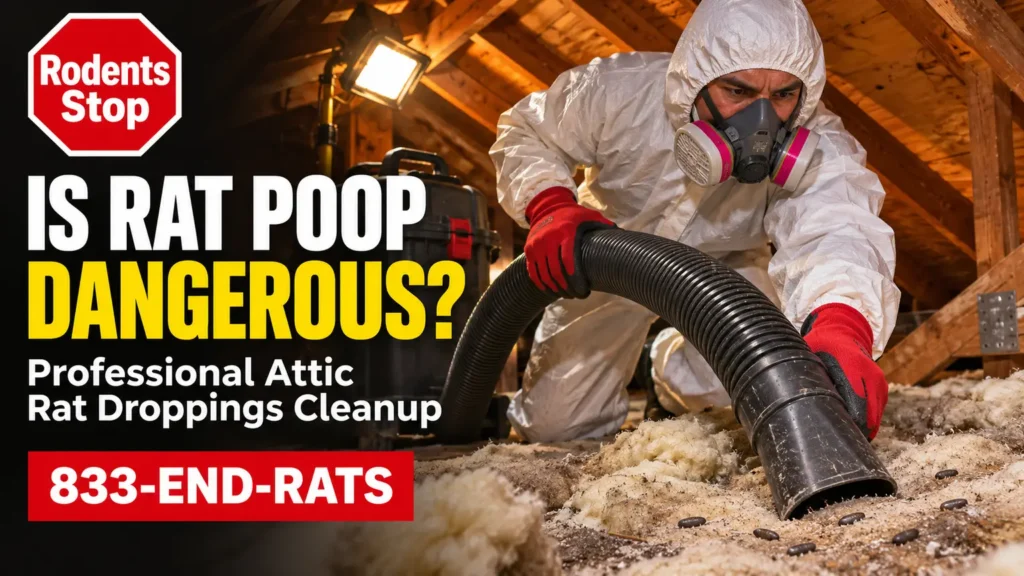
Before removal begins, technicians prepare the site and establish containment to limit the movement of dust and debris into clean areas. Appropriate protective equipment is used throughout the job. Contaminated droppings, nests, carcass material when present, and affected insulation are removed using controlled methods and sealed for disposal. Specialized HEPA equipment may be used where appropriate as part of the removal process, but only after material has been properly treated and handled to avoid dispersing contamination.
Once accessible contaminated materials are removed, surfaces receive targeted sanitation. This step is different from masking an odor with a fragrance. Effective restoration addresses the residue that is causing the problem. Professional Rodent Cleanup also uses proprietary rodent scent neutralization to treat persistent odor conditions in affected attic, crawlspace, and structural areas.
The final phase is restoration and prevention. Depending on the property, that may include replacing removed insulation, cleaning crawlspace surfaces, addressing damaged materials, and identifying openings rodents used to enter. Cleanup without exclusion can leave a property vulnerable to another infestation. Exclusion and poison-free rodent control help address the reason contamination occurred in the first place.
Glendale Attic Rat Droppings Cleanup: Why Timing Matters
In Glendale and throughout Los Angeles County, attic contamination can remain hidden during warm weather because most of the affected space is out of sight. The first warning may be a sharp urine smell near ceiling vents, scratching noises, droppings around the attic access, or insulation that looks flattened and matted.
Do not wait for the odor to become overwhelming. Heat can intensify rodent urine odor, while ventilation systems and gaps around recessed fixtures may allow odors to reach living areas. For landlords and property managers, prompt evaluation also helps document conditions and prevent an isolated unit or storage area from becoming a larger property issue.
The same concerns apply across Ventura, Orange, Riverside, and San Bernardino counties. A clean-looking attic hatch does not prove the attic is clean. A thorough inspection should consider the full travel path of rodents, including insulation, corners, utility penetrations, wall voids, crawlspaces, garages, and adjacent storage areas.
Signs You Should Schedule a Professional Inspection
Professional help is warranted when there is a strong or recurring urine odor, visible accumulations of droppings, damaged or displaced insulation, nesting debris, stains around attic openings, or evidence that rodents are moving through more than one part of the structure. It is also a wise step after rodents have been removed but odor or contamination concerns remain.
Commercial owners and facility managers should act quickly when contamination is found near inventory, ceiling systems, employee areas, electrical equipment, or ventilation pathways. The cleanup plan may need to account for operational access, containment around occupied areas, and safe restoration sequencing.
A proper inspection gives you a clear answer about what needs to be removed, sanitized, deodorized, repaired, or sealed – and what does not. That clarity can prevent unnecessary work while ensuring contaminated materials are not left behind.
A rodent-free property should also be a clean, usable, odor-free property. Addressing contamination thoroughly now helps protect the condition of the space and gives prevention measures a real chance to hold.