
Concerned about rodent contamination below your property? Schedule a professional inspection: 833-END-RATS (833-363-7287)
Mice in crawlspace areas are easy to overlook because the activity is out of sight. But droppings, urine, nesting debris, and damaged insulation can build up beneath floors long before an odor reaches the living space. For homeowners, landlords, and facility managers, the issue is not solved simply because the mice are gone. The affected area still needs careful cleanup, sanitation, odor treatment, and prevention work.
Why are mice avoiding traps in the crawlspace?
An empty trap can miss activity a few feet away. Fresh droppings along a foundation wall or beside a pipe can help identify the route mice are using. During an assessment, we trace that route and look for the opening that lets them reach the crawlspace.
Why Mice in Crawlspace Areas Create Lasting Problems
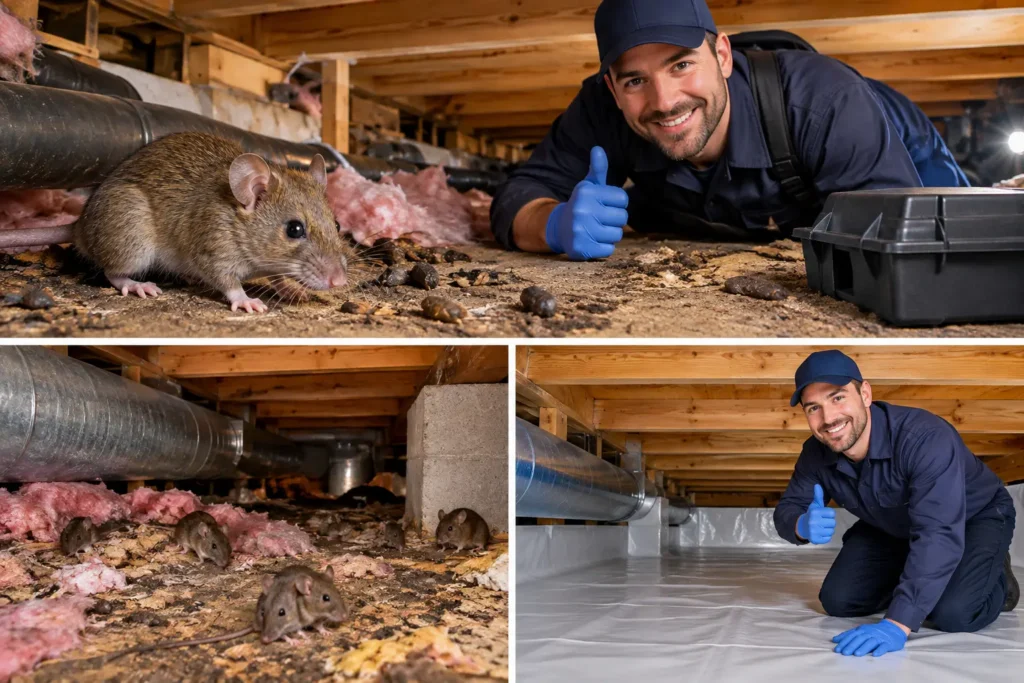
A crawlspace is dark, sheltered, and often difficult to access, which makes it an appealing route and nesting area for rodents. Mice can travel along utility lines, foundation gaps, vents, and openings around pipes. Once inside, they may contaminate soil vapor barriers, insulation, stored materials, ductwork surfaces, and framing.
The most common concern is persistent odor. Rodent urine can soak into porous materials and continue releasing odor when temperatures rise or humidity changes. In a home with ducts or gaps around plumbing and electrical penetrations, those odors can move upward into bedrooms, hallways, and living areas.
Droppings and nests also should not be dry swept, brushed, or vacuumed with an ordinary household vacuum. Disturbing contaminated material can send particles into the air. A proper response uses appropriate personal protective equipment, controlled wet disinfecting with the correct contact time, sealed disposal, and specialized HEPA equipment where appropriate.
What Professional Crawlspace Cleanup Involves
A credible cleanup begins with an inspection, not a one-size-fits-all quote. The technician needs to identify where rodent activity occurred, how extensive the contamination is, whether insulation is affected, and whether rodents still have active entry points.
Containment and controlled removal
Before contaminated materials are moved, the work area should be prepared to limit cross-contamination. Nesting debris, droppings, and heavily contaminated insulation are removed using controlled methods and sealed for disposal. This matters in tight crawlspaces where disturbance can spread contamination to previously unaffected sections.
Not every crawlspace requires complete insulation removal. It depends on the material, the amount of contamination, the extent of urine saturation, and whether odor remains after treatment. Insulation that is extensively soiled or holds a persistent odor is often better removed than treated in place.
Targeted sanitation and odor neutralization
After removal, exposed surfaces receive targeted sanitation rather than a cosmetic spray-and-go treatment. The goal is to address the affected surfaces and materials based on the actual conditions found below the property.
Odor control requires more than masking fragrance. Professional Rodent Cleanup uses a proprietary rodent scent neutralization process designed to address the odor source after contaminated waste and materials have been removed. If the source remains in insulation, debris, or hidden voids, deodorizing alone will have limited results.
Exclusion to help stop repeat infestations
Cleanup without prevention can leave a property vulnerable to the same problem again. Entry points around foundation penetrations, vents, utility lines, and structural gaps should be identified and addressed with durable exclusion methods. Poison-free rodent control and exclusion are especially valuable for properties with children, pets, tenants, customers, or sensitive operations.
For an apartment building, warehouse, school, or commercial site, prevention may also require attention to multiple access points and connected crawlspace sections. A thorough inspection helps prioritize the openings that matter most rather than relying on temporary treatments.
Signs You Should Schedule an Inspection
A musty or urine-like smell near floor vents is a common warning sign, but it is not the only one. Call for a professional inspection if you notice new odors after warm weather, droppings near foundation access doors, scratching beneath floors, chewed vapor barriers or insulation, or recurring mouse activity despite prior control efforts.
Property owners in Los Angeles, Ventura, Orange, Riverside, and San Bernardino counties should also consider an inspection after a known infestation, even when activity appears to have stopped. A crawlspace can retain contamination that is not visible from the access opening.
Don’t Leave Contamination Below the Floor
A crawlspace cleanup should restore more than appearances. It should remove contaminated materials where needed, reduce lingering rodent odor, and help close off the paths that allowed the infestation to start. With more than 20 years of hands-on rodent cleanup experience, Professional Rodent Cleanup approaches the work as restoration and prevention, not a quick surface treatment.
A clean, properly assessed crawlspace can protect indoor comfort, support better property conditions, and give owners a clearer path forward after rodent activity.
Ready when you are. Schedule a professional inspection: 833-END-RATS (833-363-7287)