
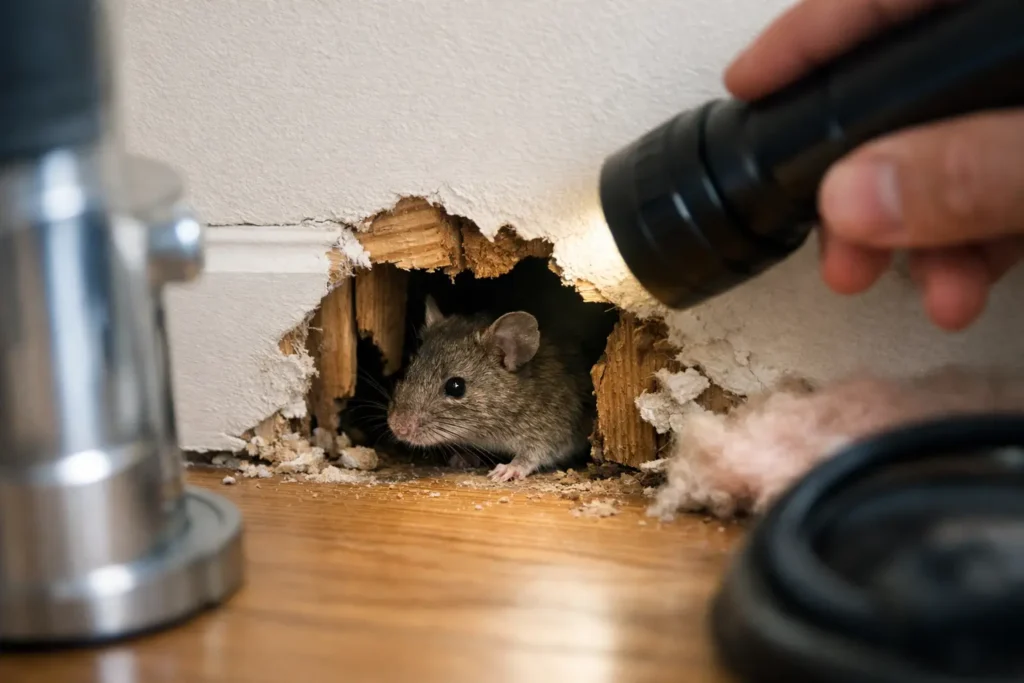
Scratching after dark can make any home feel unsettled. Noises in the walls are often one of the first signs that mice or rats have moved into an attic, crawlspace, wall void, or ceiling area. The sound itself matters, but what may be happening out of sight matters more: nesting, chewing, urine contamination, damaged insulation, and new entry points that allow the activity to continue.
A trap may catch one animal. It does not remove contaminated nesting material, restore insulation, or close the openings that let rodents in. When wall noises are paired with odors, droppings, or visible damage, treat the issue as a home-cleanup and exclusion problem, not just a pest sighting.
What Noises in the Walls Can Mean
Rodents are usually most active from dusk through early morning, when the house is quiet. Mice often create light, quick scratching or scurrying sounds. Rats can sound heavier, with more deliberate movement, gnawing, or thumping in an attic or between floors.
Chewing is especially concerning. Rodents gnaw to keep their teeth worn down, and they may damage wood, insulation, plastic piping, duct materials, and wiring along the way. A faint scratch may be hard to locate, but repeated chewing or movement in the same area deserves prompt attention.
Not every noise is a rodent. Pipes can expand, HVAC systems can click, and birds or squirrels may enter attic spaces. The timing, sound, and supporting evidence help narrow it down. Nighttime scurrying, droppings, greasy rub marks, a musty urine odor, or torn insulation make rodent activity more likely.
Why Waiting Can Turn a Small Problem Into a Bigger Cleanup
Rodents do not stay neatly inside one wall cavity. They travel through attics, crawlspaces, ceiling voids, garages, and utility openings. As activity grows, so can the spread of droppings, urine, nesting debris, and damaged insulation.
That contamination can affect more than appearances. Urine odors may move through the home, especially when HVAC systems or temperature changes disturb attic air. Insulation can become compressed, shredded, or saturated, reducing its ability to control indoor temperatures. In Southern California homes, attic and crawlspace access points are often easy for rodents to exploit year-round.
There is also a safety concern. Disturbing rodent droppings or nesting material without proper protective equipment can send contaminated dust into the air. Homeowners should avoid sweeping, vacuuming, or pulling out heavily soiled insulation themselves. The goal is not simply to make the area look clean. It is to remove contaminated materials safely, sanitize affected surfaces, and prevent another infestation.
Signs You Need a Professional Inspection
A professional inspection is a practical next step when the sounds persist or when there is evidence of activity. You should schedule one promptly if you notice repeated nighttime scratching, visible droppings, strong urine odors, chewed materials, stained ceilings, disturbed attic insulation, or gaps around rooflines, vents, pipes, and exterior utility penetrations.
An inspection should look beyond the sound’s location. Technicians need to identify where rodents entered, where they traveled, and how extensively they contaminated the structure. A wall noise near a bedroom may originate from activity in the attic directly above it or from an exterior opening several feet away.
The Right Response Is Cleanup, Restoration, and Exclusion
Rodent removal alone is not a complete solution when contamination is present. A full restoration approach addresses the active problem and the conditions that make a repeat infestation possible.
First, affected areas are assessed for droppings, urine, nests, carcasses, damaged ducting, and compromised insulation. Contaminated insulation and nesting materials may need to be removed using appropriate containment and full protective gear. Once debris is removed, affected areas can be sanitized and treated for persistent odor.
Then comes the step that protects the home long-term: exclusion. Entry points at roof intersections, vents, eaves, crawlspace openings, utility lines, and foundation gaps must be professionally sealed with durable materials. This work should account for how rodents climb, squeeze, and return to familiar routes. Sealing one visible hole while leaving several others open will not solve the problem.
If insulation was removed or damaged, replacement should restore the attic or crawlspace’s thermal performance. That helps protect comfort, energy efficiency, and the value of the home while leaving the space clean and usable again.
Do Not Ignore the Sound Just Because It Stops
Rodent activity can seem to disappear for a few nights and still be present. Animals may shift their routes, leave temporarily, or remain quiet while nesting. Odors, droppings, chewed materials, and damaged insulation often remain even after the noises stop.
The most reassuring outcome is a documented inspection and a clear plan that removes contamination, sanitizes affected areas, restores insulation where needed, and locks rodents out for good. If you hear recurring movement inside walls, acting early can keep a hidden problem from becoming a larger restoration project.