
Schedule a professional inspection: 833-END-RATS (833-363-7287)
A professional attic clean out is not the same as removing a few visible droppings and calling the space clean. Rats and mice can leave urine, nesting debris, damaged insulation, and contamination in areas that are hard to see and even harder to reach safely. In Southern California homes and commercial buildings, the lingering odor often becomes the problem people notice first – especially when attic heat pushes contaminated air into living or working areas.
If rodents have been active above the ceiling, the goal is to remove the contamination, address the odor source, and correct the access points that allowed the infestation to continue. Anything less can leave the property vulnerable to repeat activity and recurring smells.
What a Professional Attic Clean Out Addresses
An attic can look relatively normal from the access opening while insulation below is heavily affected. Rodents travel along framing, ductwork, wiring routes, and perimeter edges. Their droppings and urine may be concentrated in nests, but contamination can also be spread across insulation as they move through the space.
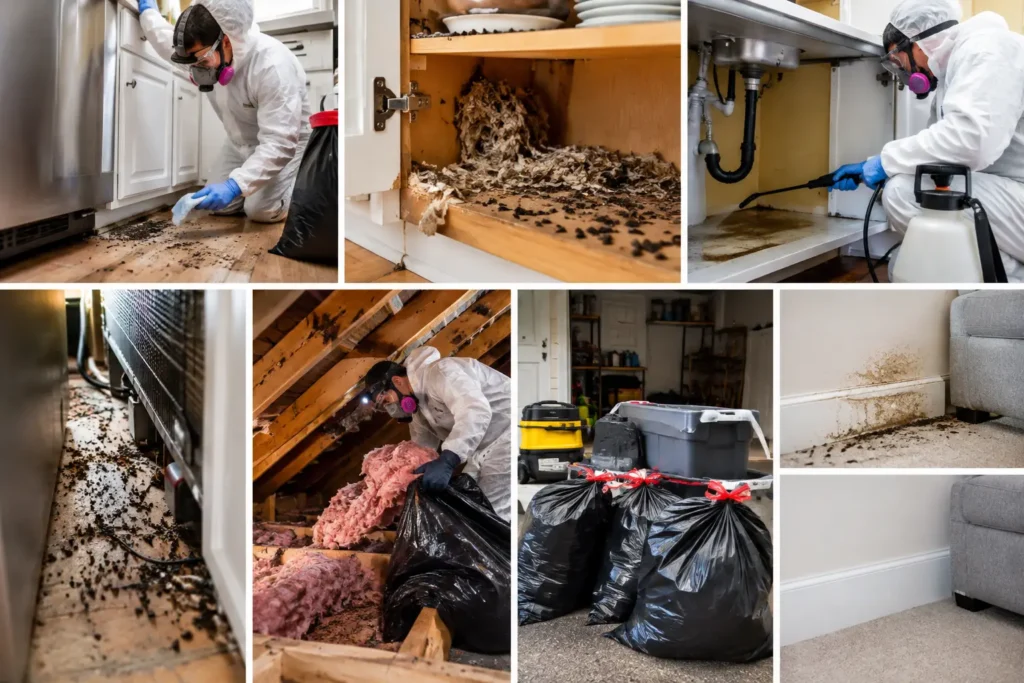
A proper cleanup evaluates the condition of the insulation, the amount and location of waste, nesting material, odor levels, and signs of active entry. In some cases, localized removal and sanitation may be appropriate. When insulation is saturated, broadly contaminated, or holding persistent odor, removal and replacement may be the more responsible option.
This matters for homeowners, landlords, and facility managers because odor does not always disappear when rodents are gone. Old nesting material and urine-contaminated insulation can continue to affect the attic long after the original infestation.
Why Ordinary Cleanup Can Create More Problems
Dry sweeping, brushing, or using an ordinary household vacuum can disturb contaminated dust and debris. Attic spaces also present practical hazards: low clearance, exposed nails, fragile ceiling areas, and limited ventilation. A cleanup needs controlled methods, appropriate protective equipment, and a plan for keeping debris contained from the moment work begins.
Professional Rodent Cleanup uses site preparation and containment to isolate the affected work area. Technicians remove contaminated material carefully, bag and seal it for disposal, and use specialized HEPA equipment where appropriate. Remaining affected surfaces are treated with wet disinfecting methods that allow the product the proper contact time rather than being immediately wiped away.
The process follows CDC-aligned precautions for rodent-contaminated materials. It is designed to reduce unnecessary disturbance of droppings, urine residue, and nesting debris while protecting the occupied areas below.
Odor Removal Requires More Than a Fragrance
Strong attic odors are often caused by urine absorbed into insulation, wood, dust, and nesting materials. Covering that odor with a deodorizer may make the space smell better temporarily, but it does not remove the source.
After contaminated materials are removed, targeted sanitation and proprietary rodent scent neutralization can address residual odor in the affected area. The right approach depends on how long rodents were present, the condition of the insulation, and whether odor has migrated into wall voids, duct pathways, or adjacent ceilings.
The Right Order: Exclusion, Cleanup, Restoration
Cleaning an attic before rodent access is controlled can waste time and money. If rats or mice can still enter through roofline gaps, utility penetrations, vents, or construction openings, they can contaminate the restored space again.
That is why a professional inspection should consider both cleanup and prevention. Identifying and sealing rodent entry points helps break the cycle without relying on poison-based solutions. For a rental property, apartment building, warehouse, or school, this coordinated approach also helps management address the property condition rather than repeatedly responding to odor complaints or new droppings.
Once cleanup is complete, restoration may include replacing removed insulation and making sure the attic is left in a condition that supports long-term maintenance. The scope should match the actual contamination – not every attic needs full insulation replacement, but severely affected insulation should not be left behind simply because it is out of sight.
When to Schedule an Inspection
Do not wait for a severe odor to develop. An inspection is warranted when you find droppings near the attic access, hear movement overhead, notice chewed insulation or stored materials, see nesting debris, or smell a persistent ammonia-like odor near ceilings and vents. Property owners in Los Angeles, Ventura, Orange, Riverside, and San Bernardino counties often discover the issue only after the rodents have left or after insulation damage becomes visible.
A careful inspection gives you a clear picture of what needs to be removed, what can be sanitized, and what steps can help keep rodents from returning. The best outcome is not an attic that merely looks cleaner at the access hatch. It is a properly contained, deodorized, restored space with the conditions that invited rodents addressed.
Ready when you are: schedule a professional inspection at 833-END-RATS (833-363-7287)