
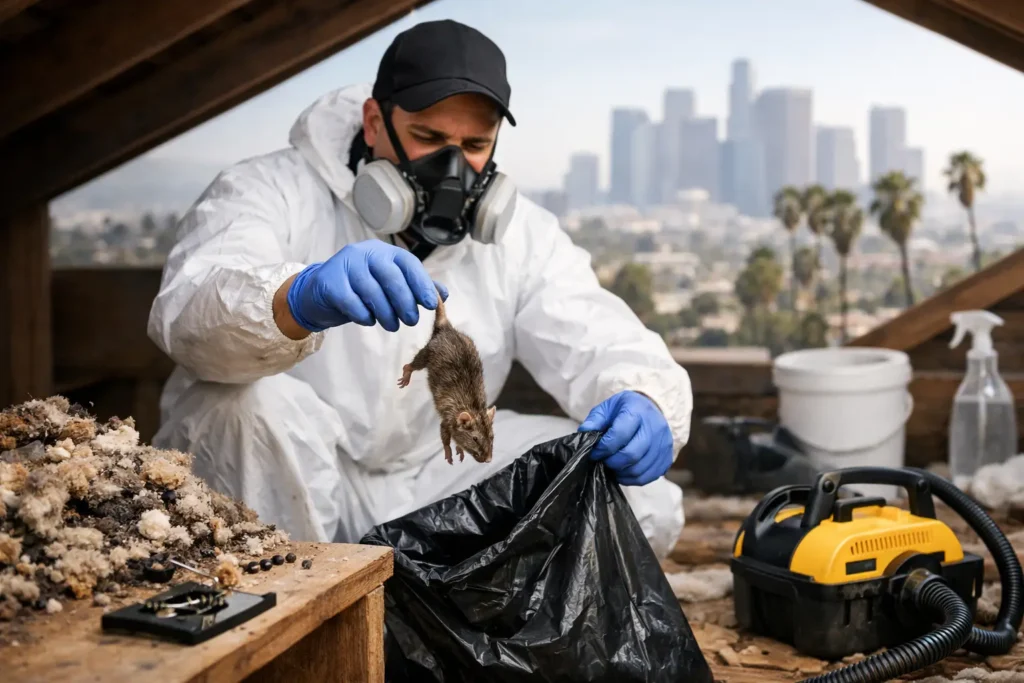
If your attic smells foul, your insulation is falling apart, or you keep hearing scratching overhead at night, you may be dealing with more than a pest problem. Professional Rodent cleanup Los Angeles services are built for what comes after an infestation leaves behind urine, droppings, nesting debris, and damaged insulation that can continue affecting air quality, odor, and household comfort.
Many property owners wait too long because the damage is hidden. Rodents settle into attics and crawlspaces because those areas are dark, protected, and rarely checked. By the time the warning signs become obvious, contamination has often spread across insulation, wood framing, ducting, and stored materials. That is when a simple trap-and-remove approach is no longer enough.
Why rodent cleanup is different from pest control
Pest control and contamination cleanup are not the same service. Removing rodents addresses the active infestation. Cleanup addresses what they leave behind. That distinction matters because droppings, urine trails, nesting materials, and soiled insulation do not stop being a problem just because the animals are gone.
In many homes, the attic or crawlspace becomes the center of the issue. Rodents tear apart insulation for nesting, contaminate large sections of the space, and create odor that can linger inside the house. In severe cases, the damage affects HVAC efficiency and contributes to poor indoor air conditions. If the contaminated material stays in place, the space remains unhealthy and vulnerable to future infestation.
A professional cleanup team handles the part most homeowners should not attempt on their own. Disturbing droppings and infested insulation without the right protection and containment can spread contaminants further. A trained crew follows a controlled process to remove the damaged material, bag and seal debris, sanitize affected surfaces, treat odor, and prepare the area for restoration.
What professional rodent cleanup in Los Angeles usually includes
The right service should do more than vacuum up visible debris. A true remediation job starts with inspection and ends with protection. That means identifying how far the contamination has spread, what materials need removal, and what structural gaps allowed rodents in to begin with.
In most attic and crawlspace projects, cleanup includes removal of contaminated insulation and nesting material, safe collection and sealing of infested debris, surface sanitization, and deodorization. If insulation has been heavily damaged, replacement is often part of the job because cleanup alone will not restore the space. When the area is reinsulated correctly, the home can become cleaner and more energy-efficient at the same time.
Exclusion work is also a major part of lasting results. Without sealing entry points, cleanup becomes a temporary fix. Rodents can return through roofline gaps, vents, utility penetrations, crawlspace openings, and other small access points that are easy to miss without experience. The most effective service addresses both the contamination and the path rodents used to get inside.
Signs your attic or crawlspace needs immediate cleanup
Some signs are obvious, but many are easy to dismiss until the problem grows. Persistent odor is one of the most common reasons homeowners call. If the smell gets worse during warm weather or when the HVAC runs, contaminated insulation may be holding rodent waste and urine in hidden areas.
Noise is another warning sign, especially scratching, movement, or activity at night. But even if the noises stop, the damage may remain. Staining around ceiling penetrations, torn ductwork, visible droppings near access points, and sudden declines in attic insulation performance all point to a deeper issue.
Allergy-like irritation can also raise concern. While every home is different, rodent contamination can affect how a space smells and feels. If occupants notice musty air, ongoing odor, or discomfort that seems tied to attic or crawlspace conditions, it makes sense to inspect the hidden areas instead of assuming the problem will fade on its own.
The cleanup process homeowners should expect
A professional team should be able to explain the process clearly before work begins. That matters because homeowners want to know what is being removed, what is being treated, and what the home will look like when the work is complete.
The process usually starts with a detailed inspection. This confirms the level of infestation, identifies contaminated materials, and checks whether insulation, vapor barriers, or structural surfaces have been affected. It should also include looking for likely rodent entry points so the cause of the infestation is not ignored.
Next comes controlled removal. Contaminated insulation, nesting materials, and droppings are removed using protective equipment and proper containment methods. Debris is bagged and sealed rather than loosely handled. In severe cases, large sections of the attic or crawlspace may need to be cleared so the space can be properly sanitized and restored.
After removal, technicians sanitize the affected surfaces and apply odor treatment where needed. This step is not cosmetic. It helps address residue and contamination left behind on structural components. Then comes exclusion and repair work, followed by insulation replacement if the original material was damaged beyond recovery.
That before-during-after structure is what separates a complete service from a partial cleanup. Homeowners are not just paying for debris removal. They are paying to turn an unsafe, contaminated space back into a clean and functional part of the property.
Why DIY cleanup often makes the problem worse
Attic and crawlspace cleanup sounds straightforward until you see the actual condition of the material. Rodent activity is rarely limited to one neat corner. Insulation may be saturated, compressed, or spread with contamination across a much larger area than expected. Trying to spot-clean only the visible sections usually leaves odor and health concerns behind.
There is also the issue of safety. These spaces are tight, dusty, and difficult to access. Without proper protective protocols, cleanup can expose homeowners to contaminated debris and airborne particles. The work also requires knowing what must be removed, what can be treated, and where reinfestation risks remain.
The other major problem with do-it-yourself cleanup is that it often ignores restoration. Even if debris is removed, damaged insulation still needs replacement, and entry points still need sealing. If those steps are skipped, the house may continue to smell poorly, waste energy, or invite rodents back into the same area.
What to look for in a rodent cleanup company
Not every company that handles pests is equipped for full contamination remediation. Homeowners should look for a provider that specifically works on attic and crawlspace cleanup, understands insulation removal and replacement, and offers a clear remediation process from inspection through prevention.
Certified technicians, protective handling procedures, and detailed scope of work all matter. So does communication. You should know whether the service includes contaminated insulation removal, bagging and sealing of debris, sanitization, odor treatment, and exclusion. If a company only talks about trapping, that is a sign the sanitation issue may still be left behind.
For many homes in Los Angeles County and surrounding areas, speed also matters. Odor, contamination, and insulation damage can affect comfort quickly, especially in warmer conditions. A responsive inspection and a practical remediation plan help property owners move from uncertainty to action without dragging the issue out for weeks.
Cleanup and insulation replacement often go together
One of the biggest missed opportunities in rodent remediation is stopping at cleanup and not restoring the space. If insulation has been torn, flattened, or saturated with contamination, it no longer performs the way it should. That means the attic or crawlspace may stay unhealthy and less efficient even after debris is removed.
Replacing insulation after cleanup can improve both sanitation and comfort. It helps remove odor sources trapped in the old material and restores the thermal barrier that protects the home. For cost-conscious homeowners, that combination often makes more sense than piecing together separate services over time.
This is where a full-service company stands apart. Instead of hiring one provider for rodents, another for cleanup, and another for insulation, homeowners can address the contamination, deodorization, exclusion, and recovery of the space in one coordinated job. That reduces delays and gives a clearer path back to a clean attic or crawlspace.
If you suspect rodent contamination above your ceiling or below your floors, the smartest next step is to inspect the space before the damage spreads further. A thorough cleanup does more than remove a mess. It protects the home, restores comfort, and helps make sure the problem does not come back.