
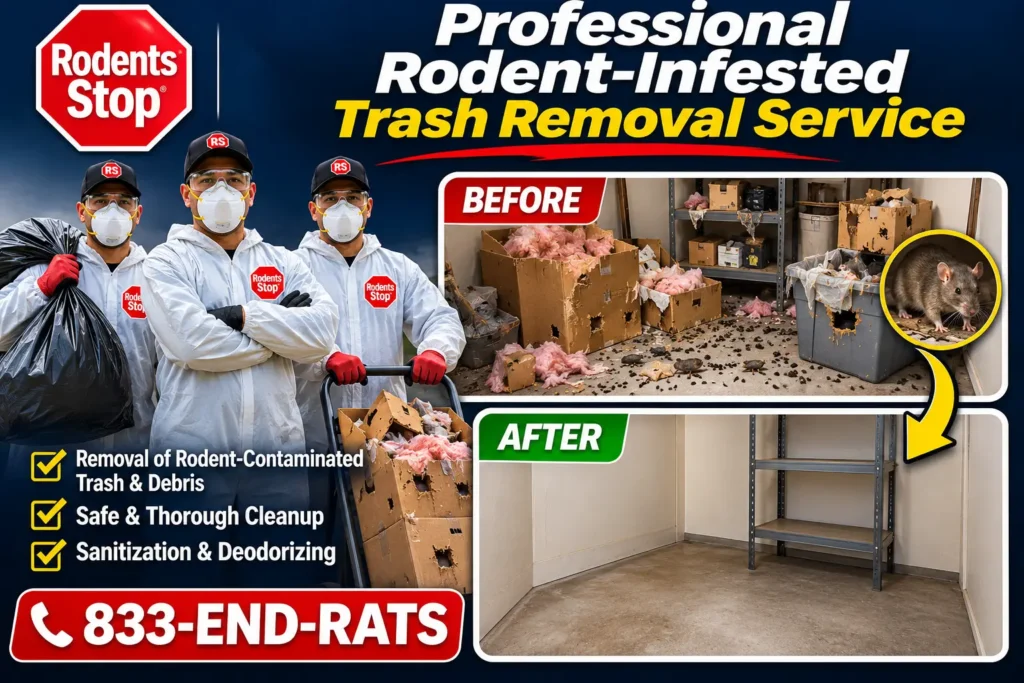
Schedule a Professional Inspection: 833-END-RATS (833-363-7287)
A torn trash bag in a garage, a neglected storage room, or debris left beneath an apartment stairwell can become more than an unpleasant cleanup. When rats or mice have been feeding, nesting, or traveling through discarded materials, professional rodent-infested trash removal in Los Angeles helps address the contamination that remains after the visible mess is gone.
For homeowners and property managers, the concern is rarely just the trash itself. Rodent droppings, urine residue, nesting debris, and odor can spread into nearby insulation, wall voids, crawlspaces, and stored belongings. In warm Southern California conditions, smells can become stronger quickly, especially in enclosed garages, attics, and commercial storage areas.
Why Rodent-Infested Trash Requires More Than Hauling
Ordinary junk removal can take bags away, but it may not address what rodents left behind. If contaminated trash was stored against a building, under shelving, or near utility penetrations, rodents may have already established travel routes into the structure. Removing the pile without inspecting the surrounding area can leave behind odor sources and the conditions that attract repeat activity.
A professional cleanup begins by identifying the full affected area. That may include the trash location, nearby flooring, baseboards, storage racks, ceiling voids, attic access points, or crawlspace openings. In properties from Sherman Oaks and Pasadena to Anaheim and Rancho Cucamonga, cluttered side yards, garages, dumpsters, and utility rooms are common places where a small rodent issue becomes a contamination and odor problem.
The goal is not to make the area merely look clean. It is to remove contaminated materials safely, sanitize affected surfaces appropriately, neutralize lingering rodent scent, and identify entry points that can lead to another infestation.
What Professional Rodent-Infested Trash Removal Includes
The correct cleanup plan depends on how long the trash was exposed, how much rodent activity is present, and whether contamination has moved beyond the disposal area. A light surface issue is different from a heavily soiled garage corner, a contaminated apartment storage area, or a warehouse section with nesting materials behind stacked inventory.
Professional Rodent Cleanup uses a controlled process designed for contaminated environments:
- Technicians inspect the trash, surrounding surfaces, and nearby access points for droppings, urine staining, gnawing, nesting, and odor migration.
- The work area is prepared with containment as needed to keep debris and contaminated dust from spreading into clean sections of the property.
- Crews wear appropriate personal protective equipment and use wet disinfection methods with proper contact time before carefully removing droppings, nesting debris, and contaminated trash.
- Materials are sealed for disposal. Specialized HEPA equipment may be used where appropriate, rather than dry sweeping, brushing, or using a household vacuum.
- Affected surfaces receive targeted sanitation and proprietary rodent scent neutralization to address persistent odor sources.
If rodents contaminated insulation, cardboard storage boxes, fabric items, or porous building materials, those items may need removal instead of surface treatment. This is especially common when trash was stored beside an attic access, beneath drop ceilings, or near a crawlspace opening. Keeping contaminated materials to save disposal costs can prolong odor and leave a hidden source of concern behind.
Cleanup and Prevention Work Best Together
Trash removal alone does not lock rodents out. Once contaminated materials are removed, the next question is how rodents got there and whether they can return. Gaps around plumbing lines, damaged vent screens, openings at rooflines, and unsealed utility penetrations can allow rodents to move from exterior trash areas into the building.
For homes, apartments, schools, warehouses, and businesses, a practical solution may include identifying and sealing entry points after cleanup. Professional Rodent Cleanup focuses on poison-free, pet-conscious rodent control and exclusion strategies that support long-term prevention rather than relying on temporary treatments.
There is a trade-off to consider. Sealing entry points before confirming rodent activity and exit routes can create problems if rodents are still inside. A professional inspection helps determine the right order of work: address active access, complete cleanup, then close vulnerable points to reduce repeat contamination.
When to Call for Professional Cleanup
Do not wait for the odor to become overwhelming. Call when you find repeated droppings around trash storage, shredded paper or insulation, urine odor that returns after basic cleaning, chewed packaging, or debris that appears to have been used for nesting. Property managers should also act promptly when a tenant turnover, storage cleanout, or maintenance inspection reveals rodent activity near discarded materials.
With more than 20 years of hands-on experience through Rodents Stop, Professional Rodent Cleanup helps Southern California property owners remove contamination, restore affected areas, and make informed prevention decisions. A clean-looking trash area is a good start, but a properly inspected and sanitized space gives you a better path forward.