
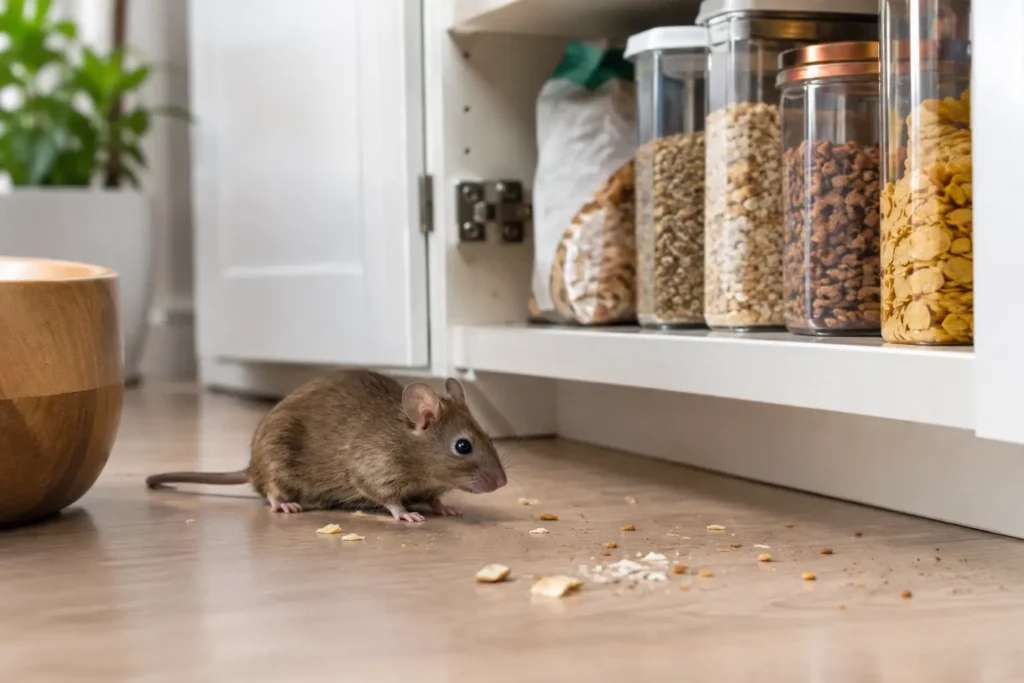
A few droppings near the water heater can become a contaminated attic, a persistent urine odor, and insulation that no longer protects your home. If a rodent infestation is getting worse, waiting for more obvious evidence often gives rodents more time to nest, breed, and spread contamination through hidden parts of the property.
The problem is rarely limited to the rodents you see. Attics, crawlspaces, wall voids, and garage areas offer darkness, warmth, and protection from predators. Once rodents establish a nest, they can damage insulation, chew wiring and stored belongings, and leave urine and droppings in areas that affect odor and indoor air quality. The right response is not simply removing an animal. It is restoring the affected area and closing the routes that allowed rodents inside.
Signs Your Rodent Infestation Is Getting Worse
An active infestation does not always look dramatic at first. In fact, many homeowners notice a small clue and assume it is old damage. The more useful question is whether the evidence is increasing, spreading, or returning after cleaning.
Fresh droppings are one of the clearest indicators. They are typically dark, moist-looking, and concentrated along travel paths, near food sources, or around nesting areas. New droppings after you have cleaned an area point to continuing activity, not a leftover problem.
Other signs that require prompt attention include:
- Stronger urine or ammonia-like odors, especially when the attic heats up or the HVAC system runs
- Scratching, squeaking, or movement sounds in ceilings and walls, often after dark
- Shredded insulation, paper, fabric, or plant material gathered into nesting pockets
- Gnaw marks on wood, plastic, wiring, ducts, or stored items
- Droppings appearing in new rooms, cabinets, garages, or along exterior walls
A rise in activity during cooler weather is common, but seasonality should not be mistaken for a short-term inconvenience. Rodents seeking shelter can remain inside and reproduce if entry points are not sealed. In Southern California, mild conditions can allow activity to continue well beyond a single season.
Why a Small Problem Can Escalate Fast
Rodents are skilled at using gaps that homeowners may never notice. Openings around rooflines, utility lines, vents, crawlspace access points, garage penetrations, and damaged screens can provide direct access to concealed areas. A trap in the kitchen may catch one rodent without addressing the population nesting above the ceiling or below the floor.
As the infestation expands, rodents establish more travel paths and contaminate more materials. Urine can soak into insulation and framing. Droppings can accumulate beneath loose-fill insulation or behind stored items. Nesting material can block ventilation or create localized damage that is not visible from the attic hatch.
That is why a rodent issue can seem to disappear, then return with a stronger odor or fresh droppings weeks later. The animals were removed from one area, but the contamination and access points were left behind.
The Hidden Cost of Delaying Rodent Cleanup
The longer rodents remain in a home, the more difficult and costly restoration can become. This is not meant to create panic. It is the practical reality of contamination in enclosed spaces.
Contamination Can Affect More Than One Surface
Droppings and urine are not confined to a neat, easy-to-clean spot. Rodents travel across framing, ducting, insulation, stored belongings, and crawlspace vapor barriers. Disturbing contaminated material without proper protective equipment can send dust and particles into the air.
A professional cleanup approach focuses on containment, safe removal, sanitization, and disposal of affected materials. This is especially important in attics and crawlspaces, where contamination can sit undisturbed for months and be difficult to assess from a quick visual check.
Odors Can Linger After the Rodents Are Gone
Odor is one of the most frustrating signs of a worsening infestation. Homeowners may clean visible droppings, use odor sprays, or place traps, only to find that the smell returns on hot days. That often happens because urine has absorbed into insulation, wood, or other porous materials.
Surface cleaning alone cannot reliably solve contamination embedded in insulation or concealed building materials. Depending on the level of damage, affected insulation may need to be removed, the area sanitized, and new insulation installed to restore both cleanliness and thermal performance.
Damaged Insulation Can Raise Energy Costs
Rodents tunnel through insulation, flatten it, and use it for nests. Even when contamination is not immediately visible, disturbed insulation may no longer provide consistent coverage. That can make a home harder to cool in summer and heat during colder periods.
Replacement is not necessary in every case. It depends on the extent of contamination, how widely nests are distributed, and whether the insulation can be safely restored. A thorough inspection helps determine whether targeted removal or full attic insulation replacement is the right solution.
Why Traps Alone Often Do Not Stop the Cycle
Trapping has a place in active rodent control, but it is only one part of the job. It may reduce immediate activity, yet it does not remove contaminated nesting material, repair damaged insulation, sanitize urine-affected areas, or stop new rodents from entering.
A complete solution addresses three connected issues: the active rodent presence, the contamination left behind, and the openings that made the infestation possible. Skipping any one of these can leave homeowners dealing with repeat odors, new droppings, or another infestation months later.
Exclusion work is the long-term protection step. Technicians inspect the exterior and vulnerable structural areas to identify potential entry points, then seal and reinforce them with materials suited to the location. The goal is to lock rodents out for good, not create a temporary pause in activity.
What Professional Rodent Restoration Looks Like
A responsible remediation project begins with a detailed property inspection. The technician should assess signs of activity, likely entry routes, contamination levels, insulation condition, and the scope of cleanup required. This gives homeowners a clear picture of what is happening above the ceiling or below the floor, rather than an estimate based only on what is visible indoors.
The cleanup phase involves removing contaminated insulation, nesting materials, droppings, and debris where needed. Trained technicians use full protective gear and appropriate containment practices to handle affected material safely. The space is then treated and sanitized to address contamination and odor at the source.
After cleanup, damaged or removed insulation can be replaced to restore coverage and energy performance. The final protection step is exclusion: sealing access points around the home so rodents cannot use the same pathways to return.
This complete approach is what separates restoration from basic pest removal. Homeowners need a clean, sanitized, insulated, and rodent-resistant home, not just fewer noises in the attic for a few days.
When to Request an Inspection
Do not wait for a severe odor, a visible nest, or a rodent sighting inside a living area. An inspection is a sensible next step when droppings are recurring, attic insulation looks disturbed, scratching sounds have increased, or a urine smell persists without a clear source.
It is also wise to act after a previous trapping service if the home was never cleaned or sealed. The infestation may appear resolved while contaminated insulation and unprotected entry points remain. For older homes, homes near open space, and properties with accessible crawlspaces or aging roofline details, early inspection can prevent a manageable problem from becoming a larger restoration project.
Professional Rodent Cleanup provides homeowners across selected Southern California counties with inspections, contamination removal, sanitization, insulation restoration, and exclusion work designed to prevent reinfestation. Fast scheduling and emergency response can be especially valuable when activity is active or odors are affecting daily life.
A worsening rodent problem does not get better because it becomes quieter. A careful inspection can replace uncertainty with a clear plan to remove the contamination, restore the space, and protect the home from the next intrusion.