

Hearing scratching in your Ventura County attic? We find where rats or mice get in, seal the openings, and clean up what they leave behind.
Call 833-END-RATS for an assessment
I hear something in the attic at night. What should I tell the assessor?
In a Thousand Oaks or Simi Valley home, start with the room below the sound. Is it one scratch above the bedroom, or does it travel from the garage toward the hallway? Note when it happens and whether you’ve also noticed an odor at the attic hatch. You can describe all of that from downstairs. If you’re arranging help for a parent, give us their address and tell us who should receive the findings.
Why Rodent Cleanup Matters After Removal
An attic, crawlspace, wall void, garage, warehouse storage area, or suspended ceiling can hold contamination long after rodent activity has stopped. Insulation may trap urine odor. Nests can be tucked behind ducting or along framing. Droppings may be scattered across ceiling joists, equipment, boxes, and stored materials.
This is not a situation for dry sweeping, brushing, or an ordinary household vacuum. Those methods can disturb contaminated material and spread particles into the surrounding air. CDC-aligned precautions call for appropriate personal protective equipment, wet disinfection with sufficient contact time, careful pickup, sealed disposal, and specialized HEPA equipment where appropriate.
The level of cleanup depends on the affected area. A small, accessible section of a garage may require a targeted cleanup. A heavily contaminated attic with urine-soaked insulation and widespread nesting material may need removal of affected insulation, detailed sanitation, odor neutralization, and restoration. The right scope should be based on what is actually present, not a one-size-fits-all package.
Ventura County Pest Control for Rodents Starts With Inspection
Rodents do not need a large opening to get inside. Gaps around utility penetrations, damaged vent screens, roofline openings, crawlspace access points, and poorly sealed transitions can all create access. In Ventura County, homes near open space, hillsides, agricultural areas, and dense residential neighborhoods can all experience pressure from rats and mice looking for shelter, warmth, water, and food.
A professional inspection should identify more than visible droppings. It should look for travel paths, urine staining, nesting locations, contaminated insulation, entry points, odor sources, and signs that rodents may still be active. In apartment buildings and commercial properties, the inspection should also consider shared walls, common utility routes, storage rooms, loading areas, and ceiling voids where activity can move between spaces.
For a property manager, that distinction matters. Cleaning one unit while leaving an access route open in a shared wall can lead to another complaint weeks later. For a homeowner, deodorizing an attic without removing contaminated nesting material may leave the odor source in place. Effective work connects inspection findings to a practical cleanup and prevention plan.
What Professional Rodent Cleanup Looks Like
Professional Rodent Cleanup approaches contaminated spaces as restoration work. The process is designed to protect occupied areas while removing the material causing odor, contamination, and property-condition concerns.

Site Preparation and Containment
Before removal begins, technicians prepare the work area and establish containment as needed. This helps limit the movement of dust and debris from an attic, crawlspace, or other affected space into clean areas of the property. Access paths are protected, and materials are handled with care rather than carried loosely through a home or business.
Containment is especially valuable when the affected area is above living space, near HVAC components, or inside a commercial building that must remain operational. The setup depends on the site, but the goal stays the same: complete the work without creating a larger cleanup problem elsewhere.
Removal of Droppings, Nests, and Contaminated Materials
Rodent droppings, nesting debris, and heavily contaminated materials are removed using appropriate PPE and controlled methods. When insulation has absorbed urine, contains extensive droppings, or has been disturbed by nesting, removal may be the more responsible choice than attempting a surface treatment.
Affected materials are placed into sealed disposal bags or containers. This is a key difference between professional remediation and a quick attic tidy-up. The objective is to remove the source material, not merely make the area look cleaner from the access opening.
Targeted Sanitation and Odor Neutralization
After source removal, affected surfaces receive targeted sanitation using products and methods appropriate for the location and materials involved. Wet disinfecting requires proper contact time to work as intended. Rushing this step or spraying over debris does not provide meaningful remediation.
Odor work should also go beyond fragrance. Rodent urine odor often persists because contamination has penetrated insulation, wood surfaces, debris, or hard-to-reach cavities. Proprietary rodent scent neutralization is used to address remaining odor at the source after contaminated materials have been removed and surfaces have been properly treated.
Restoration and Prevention
Once cleanup is complete, restoration may include replacing removed attic insulation, improving the condition of a crawlspace, and repairing or sealing identified rodent entry points. Exclusion is not an optional add-on when openings remain active. It is part of reducing the chance that rodents return and contaminate the same area again.
Professional Rodent Cleanup emphasizes humane, poison-free solutions and practical exclusion measures. This approach is particularly important for homes with pets, apartment communities, schools, and facilities where uncontrolled poison use can create additional concerns. The best prevention work is specific to the property’s construction and access points, not a generic checklist applied without inspection.
Signs You Should Not Wait
Illustrated attic cleanup example
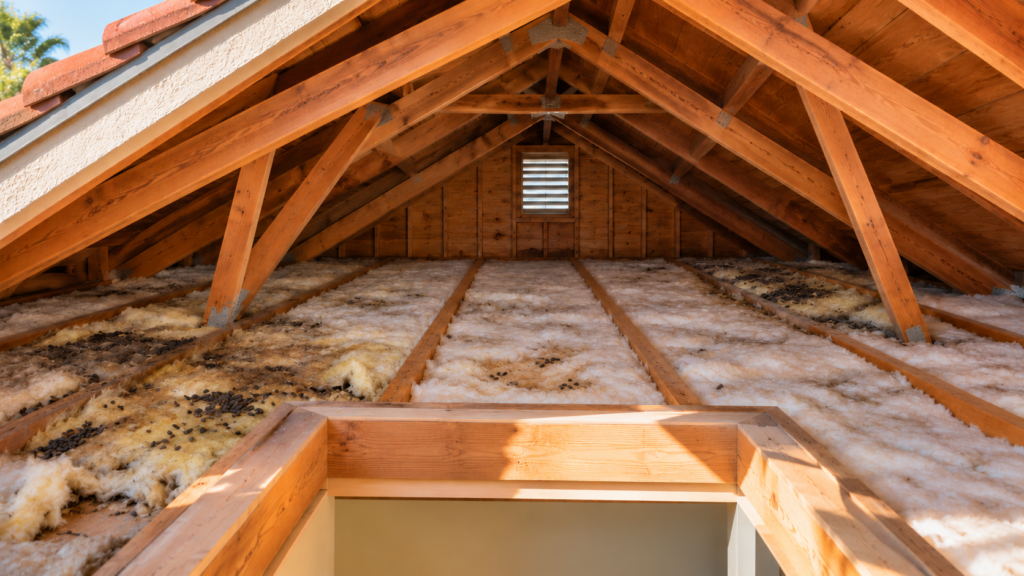

A persistent musky or ammonia-like odor near an attic hatch, in a hallway, or beneath a ceiling can point to rodent contamination above. Other warning signs include visible droppings, torn or flattened insulation, shredded paper or fabric used for nests, stains near access points, scratching sounds, or recurring activity after previous pest treatment.
Commercial owners and warehouse operators should take odor complaints and contamination around stored goods seriously. Rodents can travel through shelving, ceiling systems, utility corridors, and loading areas. In schools and multi-unit properties, a prompt inspection can help isolate the affected zones before a small issue becomes a larger restoration project.
Do not wait for an odor to become overwhelming or for insulation damage to spread. Early inspection can clarify whether the problem is limited, whether rodents remain active, and what level of cleanup is appropriate.
Choosing the Right Cleanup Partner
Rodent cleanup requires more than basic pest control knowledge. Ask whether the company performs contamination removal, insulation removal when necessary, crawlspace sanitation, odor neutralization, and exclusion work. Ask how they protect occupied areas, how contaminated materials are contained and disposed of, and whether the recommended scope is based on a detailed inspection.
Experience matters because every affected space is different. A low-clearance crawlspace in Ventura, an older attic in Moorpark, and a commercial ceiling system in Oxnard present different access, containment, and restoration challenges. With more than 20 years of hands-on rodent cleanup and restoration experience through Rodents Stop, Professional Rodent Cleanup is equipped to address the condition rodents leave behind, not just the infestation itself.
A clean-looking attic is not always a restored attic. The difference is careful source removal, targeted sanitation, odor treatment, and prevention work that helps protect the property after the crew leaves.
Ready when you are. A professional inspection can give you a clear picture of the contamination, the needed cleanup, and the steps that help keep rodents from coming back.
Schedule a professional inspection: 833-END-RATS >> 833-363-7287