
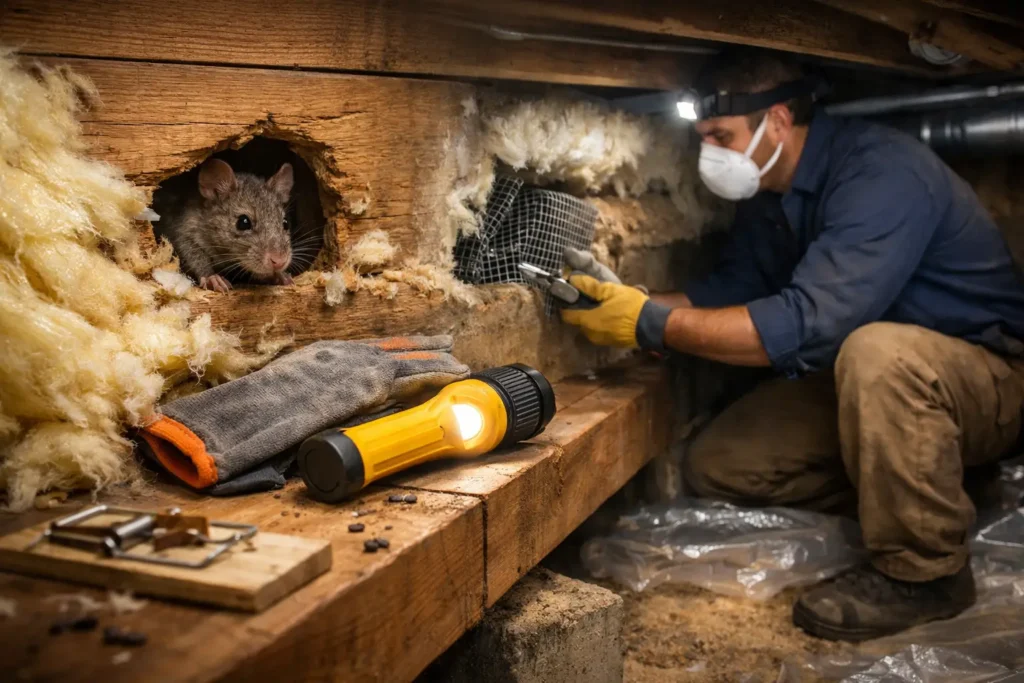
If your attic smells foul, your insulation looks torn up, or you have scratching sounds above the ceiling, the problem is bigger than pest activity alone. Rodent Damage Repair is what turns a contaminated attic or crawlspace back into a safe, sealed, usable part of the home. That means removing hazardous waste, replacing damaged materials, treating odor, and closing the gaps that let rodents in to begin with.
Many homeowners wait too long because they assume the issue ends once rodents are trapped or removed. It does not. The mess they leave behind keeps affecting air quality, insulation performance, and the overall condition of the property. In severe cases, the damage spreads through ducting, wiring areas, vapor barriers, and framing edges, creating both sanitation and repair problems that need a coordinated solution.
What rodent damage actually looks like
Most attic and crawlspace damage is not obvious from inside the living space. You may notice musty or urine-like odors, hot and cold spots in the home, worsening allergies, or dust that seems harder to control. Above the ceiling or below the floor, rodents often shred insulation for nesting, leave droppings throughout the space, contaminate surfaces, and track debris through structural cavities.
The longer the infestation continues, the worse the environment becomes. Compressed or displaced insulation stops doing its job. Nesting materials hold odor and bacteria. Contaminated droppings and urine soak into wood and insulation. In some properties, rodents also chew around access points, vents, duct boots, and stored items, making the area harder to clean and restore.
This is why surface-level cleanup rarely works. If contaminated insulation stays in place, odor and airborne particles can continue circulating through the home. If entry points remain open, the infestation often returns and the damage starts again.
Why rodent damage repair needs more than pest control
Pest control addresses the animals. Repair and remediation address the environment they leave behind. Those are related problems, but they are not the same service.
A homeowner may remove the active rodents and still be left with an attic full of feces, urine contamination, nesting debris, and ruined insulation. That space can continue to smell bad and perform poorly even after the infestation is over. If the goal is to protect the home, improve comfort, and prevent reinfestation, the work has to go beyond trapping.
Professional rodent damage repair typically includes careful removal of contaminated materials, bagging and sealing infested debris, sanitization, deodorization, exclusion work, and insulation replacement where needed. That full process matters because every stage supports the next one. Cleanup without sealing is incomplete. Sealing without cleanup leaves health and odor issues behind. Replacing insulation before contamination is removed only covers the problem.
The biggest risks homeowners overlook
The most common mistake is treating attic or crawlspace contamination like a basic housekeeping issue. It is not. Rodent waste can affect indoor air quality, especially when insulation is disturbed or HVAC systems draw air from connected spaces. Odor is often the first warning sign, but it is rarely the only issue.
Another overlooked problem is energy loss. Damaged insulation creates temperature swings and can drive up utility costs. Homeowners often focus on the infestation and miss the fact that their attic or crawlspace is no longer functioning properly as part of the building envelope.
There is also the issue of hidden spread. Contamination may extend farther than expected, especially near soffit lines, eaves, duct runs, and low-clearance crawlspace areas. A quick visual check from the access opening does not tell the full story. That is why a proper inspection matters before anyone decides what should be cleaned, removed, or replaced.
Rodent Damage Repair in the right order
The process should start with a clear inspection of the affected space. The goal is to identify the level of contamination, locate damaged insulation and nesting zones, and determine how rodents are entering the structure. Without that step, repair plans are often incomplete.
Once the scope is known, contaminated insulation and debris need to be removed using protective protocols that keep waste contained. This is especially important in attics and crawlspaces, where disturbed particles can spread easily. Debris should be bagged and sealed rather than dragged loosely through the property.
After removal, the exposed surfaces can be treated and sanitized. This step helps reduce bacteria, odor, and residue left behind after nesting and waste contamination. In some cases, deodorization is just as important as sanitation because odor can linger even after visible debris is gone.
Then comes exclusion. Any active or likely entry points should be sealed so the cleaned space does not become infested again. This is one of the most valuable parts of the job because it protects the money spent on remediation and restoration.
Only after cleanup and sealing should new insulation be installed. Fresh insulation improves comfort and energy efficiency, but it also signals that the job was completed properly from the base up, not just covered over.
When insulation replacement is the smarter move
Not every attic needs full insulation replacement, but many heavily infested spaces do. If the material is soaked with urine, flattened by rodent traffic, or filled with droppings and nesting debris, keeping it in place usually means keeping the contamination in the home.
Replacement also makes sense when insulation performance has dropped. Homeowners in Los Angeles County, Ventura County, Orange County, Riverside County, and San Bernardino County often deal with intense seasonal heat, so damaged attic insulation can have a direct impact on indoor comfort and cooling costs. Restoring that layer does more than clean the space. It helps the house function better.
There is a trade-off, though. Spot replacement can cost less upfront if damage is limited to a specific area. Full removal and replacement may be the better long-term decision when contamination is widespread. The right approach depends on how far the infestation spread and whether the remaining insulation is clean enough to keep.
Signs you should not delay repair
Some homes can wait a few days for scheduling. Others should be addressed immediately. Strong odor, visible droppings around attic access points, worsening indoor air concerns, and major insulation disturbance are all signs that the problem has moved beyond simple pest activity.
You should also move quickly if the infestation has affected multiple areas at once, such as the attic and crawlspace, or if previous pest treatment did not fix the smell or contamination. That usually means the source materials are still in place.
For property owners, delay often leads to higher restoration costs. The longer rodents remain active, the more insulation they damage and the more extensive the cleanup becomes. Acting early usually means a cleaner repair path and a better result.
What to expect from a professional service
A qualified service should be able to explain the job in plain terms from start to finish. That includes what will be removed, how contamination will be contained, what sanitization methods will be used, where exclusion work is needed, and whether insulation replacement is recommended.
You should also expect a service team that treats attic and crawlspace remediation as hazardous cleanup, not just debris hauling. Protective equipment, containment practices, and a clear before-during-after process all matter. They show that the company understands what is at stake for the home and the people living in it.
Professional Rodent Cleanup approaches the work as full restoration, not partial cleanup. That matters because homeowners are not just paying to get rid of a smell or a nest. They are paying to make the space clean, deodorized, protected, and functional again.
Choosing repair that actually lasts
The best rodent damage repair is not the cheapest line item on paper. It is the one that solves the whole problem. If a service removes waste but skips sealing, the infestation can return. If a service seals entry points but leaves contaminated insulation behind, the air quality and odor issues may continue. If cleanup happens without insulation restoration, the home may stay less comfortable and less efficient than it was before.
That is why homeowners should think in terms of recovery, not just removal. A properly restored attic or crawlspace should be cleaner, healthier, and better protected against future infestations. It should also leave you with confidence that the problem was handled thoroughly instead of temporarily.
When the warning signs are already there, waiting rarely makes the cleanup easier. The right next step is a professional inspection that identifies the damage, outlines the repair, and puts protection in place before the space gets worse.