
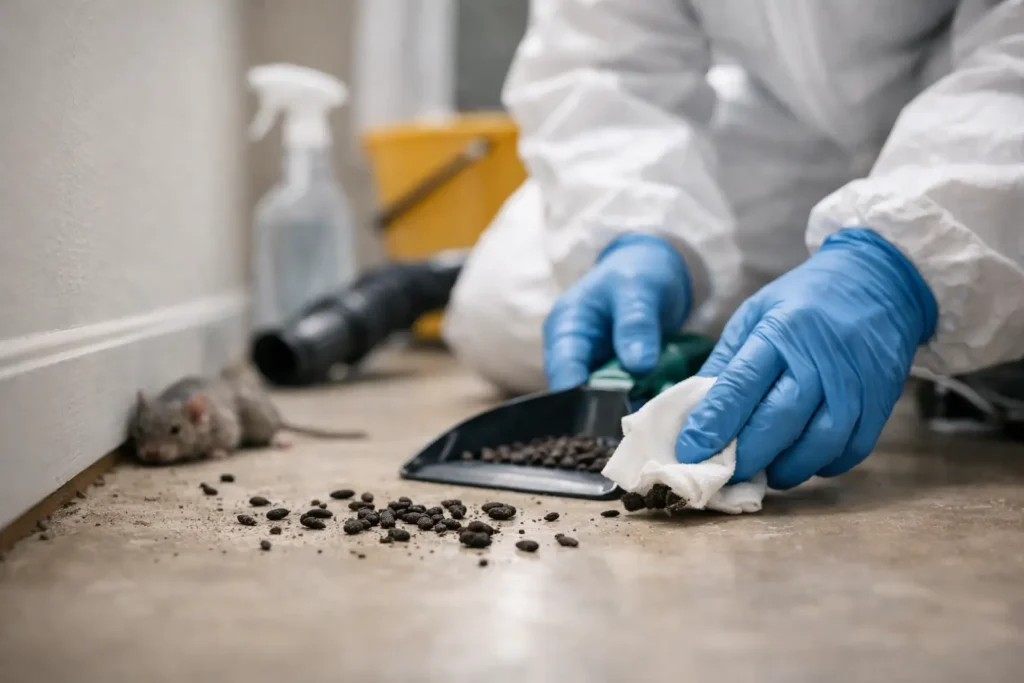
Finding droppings in an attic, crawlspace, garage, or wall void is more than a mess issue. Rodent droppings clean up needs to be handled carefully because disturbed waste can spread contamination, trigger odors, and worsen air quality inside the home. What many property owners think is a small cleanup job often turns out to be a larger sanitation and restoration problem.
If you are seeing pellets, smelling strong urine odors, or noticing damaged insulation, the goal should not be to simply sweep it up and move on. The real job is to remove contaminated materials, sanitize the affected area, and stop the infestation from returning.
Why rodent droppings are a serious problem
Rodent waste builds up fast in enclosed spaces. Attics and crawlspaces are especially vulnerable because rodents can live there for long periods without being noticed. During that time, they leave behind droppings, urine, nesting materials, grease trails, and damaged insulation.
The biggest concern is contamination. Rodent droppings do not stay neatly in one corner. As insulation is disturbed, foot traffic increases, or air moves through the space, particles from dried waste and nesting debris can circulate. That can affect indoor air quality and create an unhealthy environment for the people living in the home.
There is also the structural side of the problem. Rodents often shred insulation, chew wood and wiring, and leave behind concentrated waste in key areas near vents, access points, and beams. If the infestation has been active for weeks or months, cleaning the visible droppings is only a small part of the work.
Rodent droppings clean up is not the same as basic house cleaning
A common mistake is treating rodent contamination like regular debris removal. Sweeping, vacuuming with a standard household vacuum, or dry brushing can make the situation worse. These methods can stir up harmful particles and spread contamination to a wider area.
Proper cleanup starts with protection and containment. Technicians should wear the right personal protective equipment, isolate the work area when needed, and use safe removal methods for contaminated materials. In severe cases, the insulation itself has absorbed urine and odors and cannot be saved.
This is why professional remediation usually includes more than waste pickup. It often involves removing infested insulation, bagging and sealing debris, disinfecting affected surfaces, deodorizing the space, and identifying where rodents got in to begin with.
What to do if you find droppings in your attic or crawlspace
The first step is simple: avoid disturbing the area. Do not sweep the droppings, do not use a leaf blower, and do not vacuum them with your regular vacuum. If the contamination is in an attic or crawlspace, limit access until the area can be inspected.
Next, pay attention to the surrounding signs. Droppings rarely show up alone. You may also notice scratching sounds, dark rub marks, nesting materials, chewed wires, compressed insulation, or a sour ammonia-like odor. Those clues help determine whether the issue is isolated or part of a larger active infestation.
If the affected area is small and easy to access, some owners try spot cleaning. That can work in very minor cases, but the trade-off is that visible droppings do not tell the full story. Hidden contamination under insulation, behind stored items, or along framing members is easy to miss. In attics and crawlspaces, that hidden damage is often where the real cost comes from.
When cleanup becomes a full restoration job
Once rodent activity reaches a moderate or heavy level, cleanup usually turns into restoration. At that point, the waste has spread through insulation and nesting areas, and odors may have soaked into porous materials. Simply spraying disinfectant on top of the problem will not solve it.
A thorough process usually includes inspection first, so the full extent of contamination can be documented. Then the damaged insulation and nesting materials are removed. Debris is bagged and sealed to control spread during disposal. After that, the exposed surfaces are sanitized, and odor treatment is applied where needed.
The final stage is just as important as the cleanup itself. If entry points are not sealed, new rodents can move right back in and contaminate the restored area all over again. That is why exclusion work and insulation replacement are often part of the same service, especially in homes dealing with recurring attic infestations.
What professional rodent cleanup should include
Not every cleanup service handles rodent contamination at the same level. Some providers remove droppings but stop short of full remediation. For homeowners dealing with attic or crawlspace contamination, the better approach is a service that addresses the problem from start to finish.
A complete job should include inspection, contaminated material removal, proper bagging and disposal, sanitization, deodorization, and sealing of rodent access points. If insulation has been compromised, replacement matters too. Fresh insulation does more than improve appearance. It helps restore energy efficiency and removes a major source of lingering odor and contamination.
This is where a specialized company has an advantage. Professional Rodent Cleanup focuses on the spaces most homeowners do not want to enter and most basic cleaning crews are not equipped to restore. That kind of focused remediation is especially important when contamination is heavy, odors are strong, or the home has had repeated rodent issues.
Signs you should call for help right away
Some situations should not wait. If you smell strong urine odors through the ceiling or vents, if the droppings are widespread, or if the insulation is visibly damaged, the problem is already beyond a simple spot cleanup. The same is true if anyone in the home has sensitivities to poor air quality or if the contamination is in a commercial property where health and sanitation standards are critical.
Properties in Los Angeles County, Ventura County, Orange County, Riverside County, and San Bernardino County often deal with rodent pressure year-round because of weather patterns, dense construction, and easy roofline access. In those cases, fast action matters. The longer waste stays in place, the more time odors and contamination have to spread.
There is also a cost factor many owners overlook. Waiting can increase the amount of insulation that needs to be removed and raise the chance of additional repairs. Acting early is usually less disruptive than delaying until the problem reaches extreme levels.
Why sealing entry points matters after cleanup
A clean attic is not protected unless the home is protected. Rodents enter through small gaps around vents, rooflines, utility penetrations, and crawlspace openings. If those points stay open, new contamination can begin almost immediately after cleanup.
That is why exclusion work should be part of the conversation from the start. Cleanup removes the existing hazard. Sealing work helps prevent the next one. The two services support each other, and one without the other leaves the home vulnerable.
This also gives property owners a clearer path forward. Instead of paying for repeated cleanup visits, they can move from contamination removal to actual prevention. For many families, that shift brings the biggest sense of relief.
Choosing the right rodent droppings clean up service
The right provider should be able to explain the process clearly: what is contaminated, what must be removed, how the space will be sanitized, whether odor treatment is needed, and what will be done to prevent reinfestation. If a company cannot describe the before, during, and after stages of the work, that is a warning sign.
Homeowners should also look for technicians who use protective protocols and have direct experience with attic and crawlspace remediation. These are confined, dirty, and physically demanding areas. Cleanup done halfway usually leaves behind odor sources and contaminated materials that continue affecting the property.
A good service call should leave you with a safer, cleaner, and more usable space, not just fewer visible droppings. In many cases, the best outcome is not only sanitation but full recovery of the damaged area, including fresh insulation and a sealed structure.
Rodent waste does not fix itself, and covering up the smell is not a solution. If droppings are showing up in your home or building, the safest move is to treat it as a contamination issue, not a housekeeping issue. Fast, thorough cleanup protects the property, improves comfort, and helps restore confidence in the space above or below your ceiling.
5 Responses