
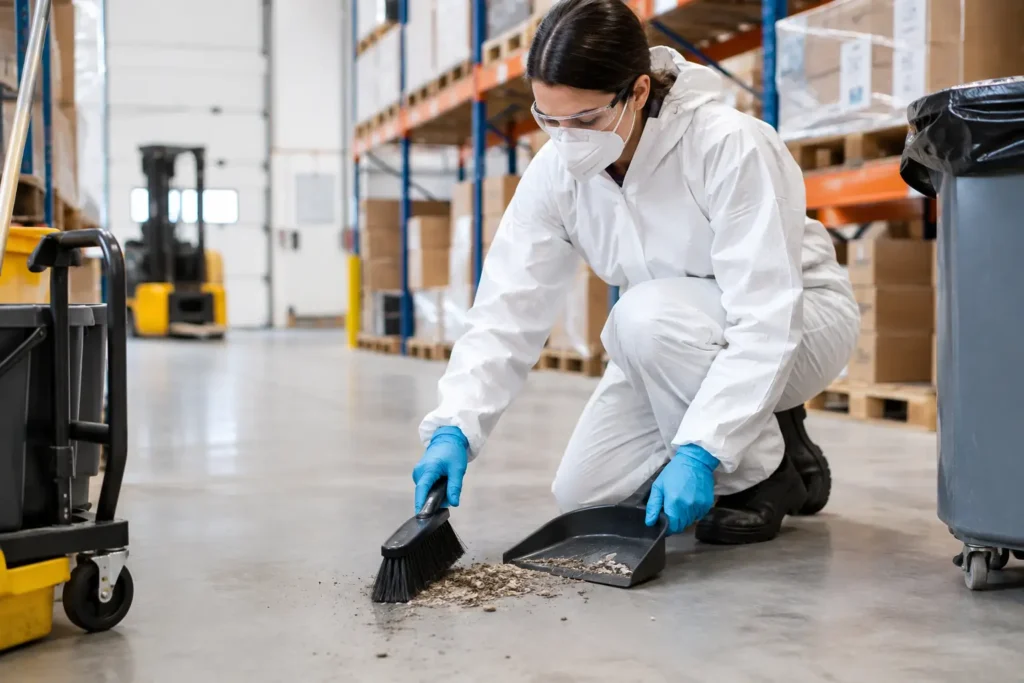
A rodent sighting in a warehouse is rarely just a pest-control issue. Professional warehouse rodent cleanup addresses the contamination left behind in storage areas, wall voids, loading zones, and mechanical spaces – not simply the animal that was seen. Droppings, urine, nesting debris, chewed packaging, and damaged insulation can create sanitation concerns, unpleasant odors, product loss, and disruptions that grow more costly the longer they are ignored.
For a warehouse, cleanup needs to protect people, inventory, and day-to-day operations at the same time. That means finding the extent of the activity, removing contaminated materials safely, sanitizing affected surfaces, and closing the access points that allowed rodents inside. Traps alone may reduce activity temporarily, but they do not restore a contaminated area or prevent the next entry.
What Professional Warehouse Rodent Cleanup Should Cover
A complete cleanup starts with a careful inspection. Rodents travel along walls, behind pallet racks, above ceilings, around dock doors, and near utility penetrations. The area where droppings are most visible may not be where the infestation began. A qualified cleanup team should identify active routes, nesting sites, food and water sources, damaged materials, and exterior gaps before deciding what must be removed or repaired.
The scope depends on the building and the severity of the contamination. A small, isolated issue near a loading area may require localized cleaning and sealing. Widespread activity in overhead spaces, storage rooms, or insulation can require a more involved remediation plan. The right response is based on evidence, not a one-size-fits-all package.
Contamination Removal Comes Before Surface Cleaning
Rodent droppings and nesting materials should not be swept, vacuumed with ordinary equipment, or disturbed casually. Dry cleanup methods can send contaminated dust into the air, especially in enclosed spaces. Professional technicians use appropriate protective gear and controlled removal methods to collect droppings, soiled nesting material, and other debris without spreading contamination through the work area.
Porous materials need special attention. Cardboard, damaged product packaging, insulation, paper goods, and fabric-like materials can retain urine odor and contamination. In some cases, these materials can be isolated and discarded. In others, the affected section may need to be removed and replaced. Trying to deodorize heavily contaminated porous material without removing the source often leaves the problem behind.
Sanitization Must Reach the Actual Travel Areas
After contaminated debris is removed, affected surfaces need professional sanitization. The goal is not to mask an odor with fragrance. It is to treat the urine residue, droppings, and contact areas that can continue to affect sanitation conditions and air quality.
Cleanup teams should focus on the places rodents actually used: floor-wall junctions, shelving bases, voids around pipes, ceiling areas, dock-side corners, and spaces behind stored materials. If urine odor is present, it may point to contamination that is hidden under shelving, inside insulation, or behind a wall. Treating only the visible floor area can leave odor and activity indicators in place.
Damaged Insulation and Building Materials Need Restoration
Rodents tear insulation to build nests, compress it as they travel, and contaminate it with urine and droppings. Once insulation is heavily affected, it may no longer perform as intended. In warehouses with insulated ceiling cavities, office areas, or conditioned storage zones, that can contribute to heat loss, higher energy use, and lingering odor.
A professional cleanup plan should distinguish between materials that can be safely cleaned and materials that should be removed. Replacement insulation may be appropriate after contaminated material is taken out, particularly when odor persists or the insulation has been extensively disturbed. Restoring the area is part of completing the job properly, not an optional extra after rodent removal.
Exclusion Is What Stops the Repeat Problem
Every cleanup plan needs a prevention phase. Rodents can enter through surprisingly small gaps around utility lines, roof edges, exterior vents, dock seals, foundation openings, and damaged door sweeps. If those access points remain open, a cleaned warehouse can quickly become contaminated again.
Exclusion work should address the building envelope as well as operational weak points. A gap beneath a loading door, for example, may need a physical repair as well as a change in how the door is maintained. Exterior trash storage, standing water, spilled grain or food materials, and dense vegetation near walls can also make a property more attractive to rodents. Sealing the structure works best when sanitation and site conditions support it.
Why Basic Pest Control Is Not Enough
Pest control and cleanup serve different purposes. Pest control is focused on reducing or eliminating rodent activity. Cleanup is focused on removing the physical evidence and health-related residue left behind. A facility may have no recent rodent captures and still have contaminated insulation, old nests, urine odor, or droppings in inaccessible areas.
This distinction matters when a warehouse handles food-related products, packaging, medical supplies, or inventory that cannot be exposed to contamination. It also matters for employee confidence. Staff members who smell urine or find recurring droppings near work areas need more than reassurance that traps have been set. They need to see that the source has been identified, removed, sanitized, and prevented from returning.
A rushed approach can also create avoidable business disruption. Closing large sections of a warehouse without a clear scope wastes time. Cleaning only the visible area can result in repeat closures later. The best plan isolates affected zones, sequences the work around operations when possible, and documents what was found, removed, treated, and sealed.
Signs the Problem May Be More Extensive Than It Looks
Fresh droppings near pallets or walls are an obvious sign, but they are not the only one. Urine odor, greasy rub marks along travel routes, shredded insulation, gnawed wiring, chewed cardboard, and nesting debris can all indicate ongoing or previous rodent activity. Smudges around gaps and penetrations may show where rodents are entering.
Pay close attention to areas that are rarely accessed. High storage racks, electrical rooms, attic-like ceiling voids, compactors, janitorial closets, and spaces around loading docks can allow activity to continue unnoticed. If sightings occur during the day, if droppings reappear after cleaning, or if multiple areas show signs of activity, the infestation may be established enough to require a broader inspection and cleanup scope.
How to Choose the Right Cleanup Provider
The provider should be able to explain the difference between trapping, contamination removal, sanitization, restoration, and exclusion. Ask how they will contain debris, what protective measures their technicians use, which materials they recommend removing, and how they will identify all likely entry points. Clear answers are a good sign that the work will be planned rather than improvised.
It is also reasonable to ask how the team will protect inventory and coordinate access to affected areas. The right approach depends on whether the warehouse is occupied, what is stored there, whether food or sensitive materials are present, and how extensive the contamination is. A professional should assess these factors before promising a timeline or cleanup method.
For homeowners, the same principle applies in a different part of the property. Attics and crawlspaces often hide rodent contamination for months, allowing odor, damaged insulation, and air-quality concerns to build. A complete residential remediation service removes contaminated material, sanitizes the area, restores insulation when needed, and seals entry points so rodents are locked out for good.
Act Before Contamination Spreads
Rodent cleanup is easiest when the problem is contained early. Once droppings, urine, nesting debris, and damaged materials spread through concealed areas, the work becomes more involved and the risk of recurring odors and reinfestation increases. Treat the first signs as a reason to inspect thoroughly, not as a reason to wait and see.
A clean building is not simply one where rodents are no longer visible. It is one where contamination has been removed, affected materials have been restored, and the openings that invited rodents in have been closed.
One Response