
Schedule a professional inspection: 833-END-RATS (833-363-7287)
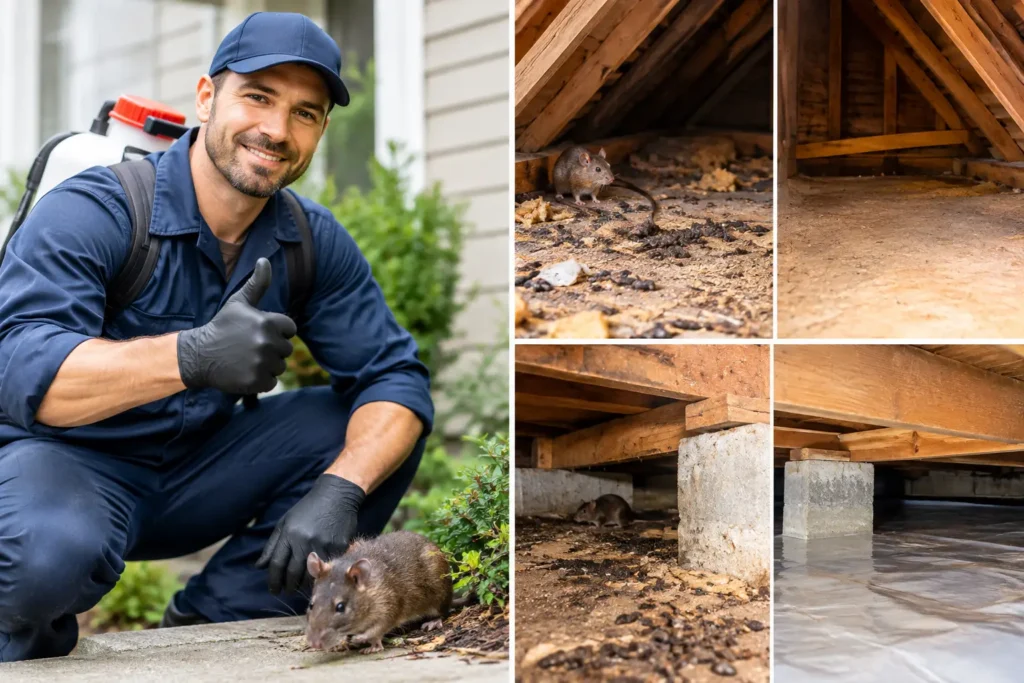
A rodent problem in a Westwood property does not end when the scratching stops. Professional Rodent control & cleanup Westwood services address what rats and mice leave behind: contaminated insulation, droppings, urine residue, nesting debris, persistent odor, and damage in places people rarely see until the problem has grown. In attics, crawlspaces, wall voids, garages, drop ceilings, and storage areas, that contamination can affect property condition and indoor air quality long after rodent activity is no longer obvious.
For homeowners near busy residential streets, landlords managing multi-unit buildings, and commercial property owners responsible for clean, usable space, cleanup is not a cosmetic add-on. It is the work that restores an affected area after rodent activity and helps keep the same conditions from attracting rodents again.
Why Rodent Cleanup Requires More Than a Quick Sweep
Rodent droppings and nesting material should never be dry swept, brushed, or collected with an ordinary household vacuum. Those methods can disturb contaminated dust and spread it into the surrounding area. A proper response starts by treating the affected space as a contained work area, not as a typical housekeeping job.
The extent of cleanup depends on where the rodents traveled, how long activity continued, and what materials were affected. A few isolated droppings on a sealed garage floor may require a very different approach from an attic where urine-soaked insulation, shredded nesting material, and droppings are distributed across multiple sections. Older buildings, properties with additions, and structures with complicated rooflines can have hidden access routes and hard-to-reach contamination.
Odor is often the clue that moves the issue from inconvenient to urgent. Rodent urine can absorb into insulation, framing, dust, and porous materials. Air movement from HVAC systems, ceiling gaps, or attic ventilation may carry that smell into bedrooms, offices, hallways, or tenant spaces. Spraying fragrance into the area may temporarily cover the odor, but it does not remove the source.
What Professional Rodent Control & Cleanup in Westwood Looks Like
A professional cleanup should begin with a careful inspection. The goal is to identify active or past rodent areas, determine which materials can be cleaned, and recognize which materials need removal. Technicians look for droppings, rub marks, urine staining, nesting debris, damaged insulation, openings around utility lines, gaps at rooflines, and evidence of activity in connected spaces.
1. Site preparation and containment
Before contaminated material is handled, the work area is prepared to reduce the chance of debris moving into clean parts of the property. This may involve controlled access, protective barriers, and appropriate personal protective equipment. The right setup is especially important in occupied homes, apartments, offices, schools, and facilities where work must be organized around residents, employees, or daily operations.
Containment is not just about making the job look orderly. It helps technicians remove waste and affected material without tracking contamination through hallways, stairwells, or living areas. In attic and crawlspace work, access paths matter as much as the visible contamination.
2. Controlled removal of waste and damaged materials
Rodent waste, nests, and heavily contaminated materials are removed using professional methods and sealed for disposal. Where insulation has been saturated with urine, filled with droppings, or used for nesting, removal may be the most practical option. Trying to deodorize insulation that has absorbed extensive contamination can leave the source in place.
Specialized HEPA equipment may be used where appropriate to collect remaining fine debris after removal and treatment. This is not the same as using a standard vacuum. The equipment, filtration, handling process, and disposal method must be suited to contamination work.
Not every attic requires full insulation replacement. If activity was limited to a defined area and surrounding insulation remains clean and dry, a targeted removal plan may be reasonable. An honest inspection should explain that distinction rather than treating every property the same.
3. Targeted sanitation and odor neutralization
After removal, affected surfaces are treated with an appropriate disinfecting process. Wet application matters because it helps prevent contaminated particles from becoming airborne. The disinfectant must remain on the surface for the product’s required contact time before the area is handled further. Rushing this step weakens the process.
Professional Rodent Cleanup uses targeted sanitation and proprietary rodent scent neutralization to address the residue and odor left behind. Odor work should be matched to the source. Framing, subflooring, duct-adjacent areas, crawlspace surfaces, and attic components may need different treatment than a hard garage floor or a storage room shelf.
A persistent rodent odor does not always mean an active infestation, but it should not be ignored. It can indicate hidden contamination, a missed nesting site, or material that needs removal rather than another surface treatment.
4. Restoration and prevention
Once cleanup is complete, the affected area may need restoration. This can include replacing removed attic insulation, restoring access areas, or preparing a crawlspace or storage area for safe use again. The right restoration scope depends on the condition of the property and the level of contamination found.
Prevention belongs in the same conversation. If rodents can still enter through gaps around pipes, vents, utility penetrations, roof returns, or damaged screening, cleanup alone may not solve the larger problem. Identifying and sealing likely entry points helps reduce the chance of repeat activity without relying on poison-based approaches.
When a Westwood Property Needs Prompt Attention
Some situations should not wait for a convenient weekend. Strong urine odor indoors, fresh droppings in an attic or utility area, visible nesting debris, damaged insulation, or sounds in ceilings and walls all justify a professional inspection. The same is true when residents or staff report recurring activity after a previous pest treatment.
Property managers should take reports seriously even when the affected area is out of sight. In apartment buildings, rodent pathways can connect units through wall voids, utility chases, ceiling cavities, and shared crawlspaces. Addressing one visible area while leaving contaminated common pathways untouched can lead to repeat complaints and more extensive work later.
Commercial spaces bring their own complications. Warehouses may have storage racks, loading areas, and wide perimeter gaps. Offices can have drop ceilings and equipment rooms. Schools and institutional facilities need work planned carefully around access, scheduling, and occupied spaces. The cleanup principles remain consistent, but the work plan must fit the building.
Why Poison-Free Prevention Matters After Cleanup
A cleanup plan should focus on removing contamination and preventing entry, not creating another problem inside the building. Poison-free rodent control strategies emphasize inspection, exclusion, trapping where appropriate, and closing the gaps rodents use to get inside. This approach is more compatible with homes that have pets, families, and sensitive indoor areas, while avoiding the risk of rodents dying in inaccessible wall or ceiling spaces.
That last point matters for odor control. A rodent that dies inside a wall void, attic corner, or ceiling cavity can create a new odor issue that is difficult to locate. Exclusion and humane control methods put the emphasis on removing access and resolving the conditions that support repeat infestations.
What to Do Before the Cleanup Team Arrives
Avoid disturbing droppings, nests, or insulation. Keep people and pets away from the affected area when possible, and do not move contaminated boxes or stored items through the property. If you notice a strong odor in a bedroom or office below an attic, note when it is strongest and whether it changes with heat, ventilation, or HVAC use. Those details can help guide the inspection.
If you are a landlord or facility manager, document the location of reports and any areas where activity has been seen. A clear picture of the property helps determine whether the issue is isolated or part of a larger access problem.
A clean, odor-controlled attic or crawlspace is easier to inspect, maintain, and protect over time. The right cleanup does more than make a space look better. It removes the evidence of rodent activity, addresses the materials that hold odor, and supports a prevention plan built for the property.
One Response