
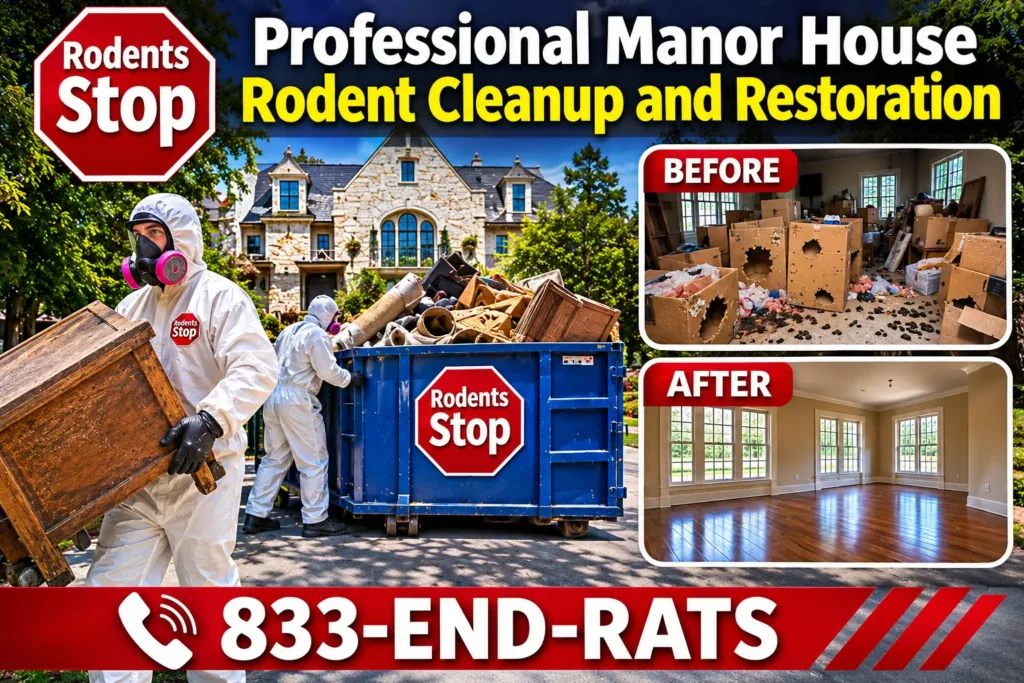
Schedule a Professional Inspection: 833-END-RATS (833-363-7287)
A manor house can conceal rodent contamination far beyond the area where a homeowner first notices droppings or odor. Professional Manor House Rodent cleanup and restoration addresses the full condition of the property: contaminated attic insulation, urine-soaked nesting debris, crawlspace activity, wall voids, and odors that can move through HVAC pathways and ceiling penetrations.
Large homes often have multiple attic sections, older additions, storage rooms, garages, and long utility runs. That creates more hidden travel routes for rats and mice – and more opportunities for a small infestation to leave behind widespread contamination. Removing the animals is only one part of the job. The affected space must be cleaned, deodorized, restored, and protected against repeat entry.
Why Manor House Rodent Cleanup Requires More Than Surface Cleaning
A few visible droppings near an access hatch may be only the evidence you can see. Rodents commonly travel along framing, insulation, pipes, ducts, and stored materials. In a large manor-style property, contamination may be concentrated in one attic bay or spread through connected cavities over time.
Urine can penetrate insulation and unfinished wood, while nests can hold droppings, shredded materials, and food debris. The result is often a persistent odor that becomes stronger during warm weather or when the HVAC system runs. Replacing a single soiled item may help in a limited situation, but it will not resolve odor or sanitation concerns if contaminated material remains elsewhere.
Dry sweeping, brushing, or using an ordinary household vacuum can disturb rodent waste and spread contaminated particles. A proper cleanup starts with trained technicians using appropriate personal protective equipment, controlled work practices, and specialized HEPA equipment where it is appropriate.
What Professional Manor House Rodent Cleanup and Restoration Includes
Every property needs an inspection before a cleanup plan is set. The goal is to identify active or historic rodent activity, determine how far contamination extends, and separate materials that can be treated from those that should be removed.
Containment and Careful Removal
Before removal begins, the work area is prepared to limit cross-contamination into living spaces. Technicians isolate access points and use controlled handling methods for droppings, nests, and damaged insulation. Waste and contaminated debris are collected for sealed disposal rather than carried openly through the property.
For heavier attic or crawlspace contamination, insulation removal may be the right decision. It depends on the amount of urine odor, visible waste, nesting activity, moisture conditions, and how deeply contamination has entered the material. Leaving compromised insulation in place can allow odor issues to continue even after a surface treatment.
Targeted Sanitation and Odor Neutralization
Once contaminated materials are removed, affected surfaces are treated with a professional disinfecting process. Products need the correct application and contact time to work as intended. This is not a quick spray-and-leave service.
Professional Rodent Cleanup also uses proprietary rodent scent neutralization to address the odor cues rodents leave behind. That matters because lingering scent can contribute to repeat activity when entry points remain available. Deodorizing is most effective after the source materials have been removed, not as a cover-up for contamination.
Restoration and Prevention
Restoration may include installing new insulation after the area is cleaned and dry, sanitizing crawlspaces, and addressing damaged or contaminated storage areas. The final step is prevention. A cleanup can restore the space, but it cannot keep rodents out if gaps around rooflines, vents, utility penetrations, or foundation openings remain open.
For that reason, a complete plan may include identifying and sealing likely rodent entry points with poison-free, pet-conscious exclusion methods. This approach is especially valuable for properties in areas such as Los Angeles, Pasadena, Thousand Oaks, and Irvine, where mature landscaping, older construction, and connected rooflines can create easy access routes.
When to Schedule an Inspection
Do not wait for odors to become overwhelming or for ceiling staining to appear. Schedule an inspection when you notice recurring droppings, ammonia-like odors, shredded insulation, scratching above ceilings, damaged duct insulation, or evidence that rodents were removed but the smell remains.
Landlords and property managers should act quickly between tenants as well. Unaddressed attic or crawlspace contamination can become a larger restoration issue, particularly in apartment buildings and commercial properties with multiple connected units or service areas.
With more than 20 years of hands-on experience through Rodents Stop, Professional Rodent Cleanup provides clear inspection findings and a practical scope based on the actual condition of the property. The right cleanup protects the usable space, improves property condition, and helps close the door on the next infestation.
Ready when you are – get the contamination, odor, and damaged materials professionally addressed before the problem spreads further.