
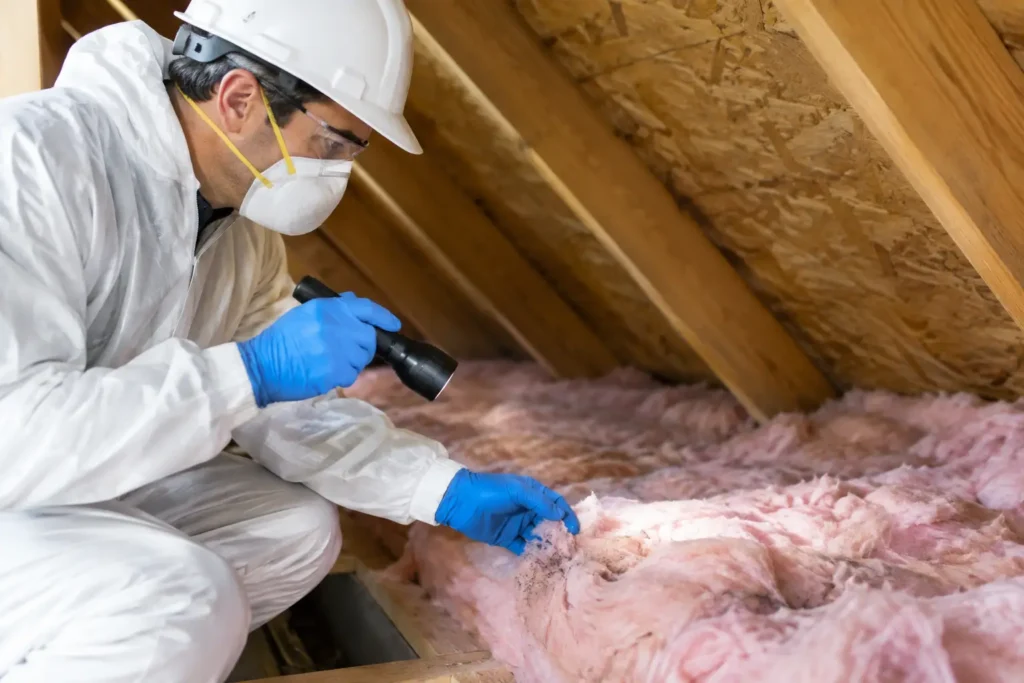
A rodent problem can stay hidden above the ceiling or below the floor long after the scratching stops. By the time a homeowner notices an ammonia-like odor, a stained ceiling, or unusually high energy bills, insulation may already be holding urine, droppings, nesting debris, and animal dander.
Knowing how to assess insulation contamination helps you make a safer decision before opening an attic hatch or crawling into a confined space. The goal is not to handle contaminated material yourself. It is to identify the signs, limit exposure, and determine whether professional removal, sanitization, insulation replacement, and rodent exclusion are needed.
Start With What You Can See and Smell
You do not need to touch insulation to recognize a possible contamination issue. Start from accessible areas and look for evidence around the attic entrance, crawlspace access, utility penetrations, vents, and exterior eaves.
A persistent musky, stale, or ammonia-like odor is often one of the first clues. Rodent urine can soak into cellulose, fiberglass, and other porous insulation materials. Warm weather or changes in humidity may make the smell stronger, even if rodents are no longer actively moving through the space.
Visible droppings are another clear warning sign. Fresh droppings tend to look dark and may appear slightly shiny. Older droppings become dull, dry, and grayish. Their age can provide context, but it does not make the material safe to disturb. An attic can contain evidence from multiple periods of rodent activity.
Also watch for insulation that looks flattened, tunneled, clumped, displaced, or unusually dark. Rodents compress insulation as they travel and build nests, reducing its ability to hold conditioned air inside the home. Paper, fabric, leaves, plastic, chewed duct wrap, and shredded insulation are common nesting materials.
How to Assess Insulation Contamination Without Creating More Exposure
The most common mistake is treating an attic inspection like a quick cleanup job. Sweeping, vacuuming with a household vacuum, shaking insulation, or moving nests can send contaminated dust into the air. That increases the chance of exposure and can spread odor and debris beyond the affected area.
Keep the inspection visual whenever possible. Use a bright flashlight from the access point and avoid stepping across loose insulation. If you must enter a suspected area, do not do so without appropriate protective equipment and a clear understanding of the conditions. Attics may have poor footing, exposed wiring, extreme heat, damaged ductwork, or low-clearance hazards in addition to contamination.
Look for these patterns during a visual assessment:
- Droppings concentrated near walls, beams, HVAC equipment, or stored items
- Urine staining on joists, drywall, insulation, or around plumbing and electrical openings
- Nesting areas that are matted, darkened, or mixed with shredded materials
- Chewed wires, ducts, vapor barriers, or flexible conduit
- Tracks, grease marks, or rub marks along structural edges
- Gaps around pipes, vents, rooflines, and utility lines that may serve as entry points
One isolated dropping near an attic opening is different from broad contamination across the insulation field. The location, quantity, odor, and condition of the insulation all matter. A professional inspection can identify whether the issue is limited to a small area or whether contamination has spread into concealed sections of the attic or crawlspace.
Determine Whether the Insulation Can Be Saved
Not every rodent incident requires full insulation replacement. If contamination is confined to a small, accessible location and the surrounding insulation is dry, clean, and undisturbed, targeted removal may be possible. The right approach depends on the insulation type, how long rodents have been present, and whether urine has penetrated surrounding materials.
Replacement is usually the more reliable option when insulation has widespread droppings, urine saturation, nesting, heavy odor, or visible tunneling. Porous insulation is difficult to fully sanitize once it has absorbed biological contamination. Spraying deodorizer over affected insulation may temporarily mask an odor, but it does not remove the source.
Insulation performance matters, too. Compressed or displaced insulation leaves gaps that allow heat to move more easily through the ceiling or floor assembly. That can make rooms harder to cool or heat and place unnecessary demand on the HVAC system. A cleanup project is often the right time to restore proper insulation coverage after contaminated material is removed.
Check the Areas Beneath the Insulation
Contamination does not always stop at the insulation layer. Urine can reach ceiling joists, subflooring, drywall surfaces, ductwork, stored belongings, and wiring. Rodents may also leave behind nests in wall cavities, around furnaces, and near air-handling components.
This is why cleanup should include more than bagging visible debris. The underlying surfaces need to be evaluated, treated, and sanitized as appropriate. If a rodent infestation has affected ducts or penetrated living areas, the inspection should account for potential odor and indoor-air concerns throughout the home.
Assess Whether Rodent Activity Is Still Active
Removing contaminated insulation before rodents are excluded can create a frustrating and expensive cycle. If entry points remain open, rodents can return and contaminate new insulation almost immediately.
Signs of active activity include fresh droppings, new gnaw marks, nighttime sounds, recently disturbed nesting material, and visible access gaps. Exterior inspection is essential because rodents often enter through small openings near roof returns, attic vents, garage lines, plumbing penetrations, damaged screens, and foundation openings.
A complete assessment should answer two separate questions: How much contamination is present, and how are rodents getting in? Both need to be addressed for a lasting result. Trapping alone may reduce activity, but it does not restore damaged insulation or permanently close access points.
When to Call a Professional Cleanup Team
Professional help is strongly recommended when you see widespread droppings, strong urine odor, nests, dead rodents, damaged wiring, contaminated HVAC components, or evidence that rodents have been active for an extended period. It is also the safer choice for attics and crawlspaces with limited access, heavy insulation coverage, or uncertain contamination boundaries.
A proper remediation process generally starts with an inspection to identify contamination, damage, and entry routes. Technicians should use full protective gear and containment practices while removing soiled insulation and nesting debris. After removal, affected surfaces can be cleaned, treated, and deodorized as needed before replacement insulation is installed.
The last step is exclusion work. Openings that give rodents access must be sealed with durable materials and methods suited to the structure. Without that work, cleanup is incomplete. A clean attic is not truly protected if rodents can still enter through the roofline or utility gaps.
For homeowners in Los Angeles, Orange, Ventura, Riverside, and San Bernardino counties, Professional Rodent Cleanup provides inspections and full restoration services that address contamination removal, sanitization, insulation replacement, and rodent-proofing together. This approach helps protect the home rather than simply removing the visible evidence.
Do Not Rely on Odor Alone
Odor is a useful warning sign, but it is not a reliable measure of contamination severity. Some heavily affected attics have little noticeable odor because insulation, temperature, airflow, and building materials can contain it. Conversely, a smaller urine-affected area may smell severe when heat or humidity activates the odor.
Likewise, a clean-looking top layer of insulation does not always mean the space is clean. Rodents commonly travel below or through insulation, leaving droppings and urine along framing members that are difficult to see from the hatch. An assessment should consider the entire accessible area, not just the first spot where evidence was found.
Protect Your Home Before the Problem Grows
If you suspect contaminated insulation, close off casual access to the attic or crawlspace and avoid disturbing the material. Do not wait for a stronger smell, a ceiling stain, or another round of rodent noises to confirm the problem. Early inspection gives you a clearer picture of the damage and prevents a manageable cleanup from becoming a larger restoration project.
A clean, properly insulated, rodent-resistant home starts with finding the source, removing what cannot be safely restored, and sealing the paths rodents use to come back.
36 Responses