
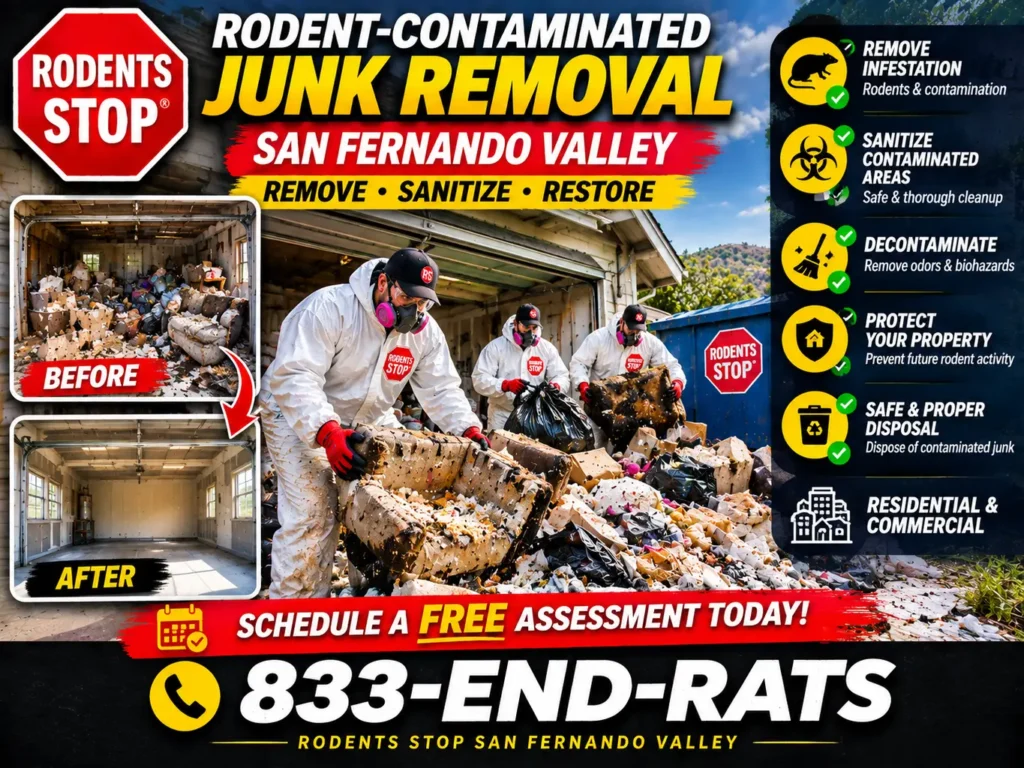
Schedule a Professional Inspection: 833-END-RATS (833-363-7287)
A cluttered attic, garage, storage room, or crawlspace can become much more than a junk-removal problem after rats or mice move in. Rodent contaminated junk Removal San Fernando Valley services address the materials rodents have soiled, shredded, nested in, or used as cover – along with the odors and contamination left behind.
For homeowners, landlords, and facility managers, the hard part is often deciding what can be cleaned and what needs to go. Old boxes, stored fabrics, damaged insulation, paper goods, and nesting debris may look disposable, but moving them incorrectly can disturb dried droppings, urine residue, and contaminated dust. This is not a job for dry sweeping, brushing, or a standard household vacuum.
When Rodent-Contaminated Junk Needs Professional Removal
Rodents commonly use stored belongings and abandoned materials to build nests. In San Fernando Valley properties, we frequently see this in attic storage areas, detached garages, utility closets, drop ceilings, crawlspaces, and warehouse corners. Cardboard boxes, loose paper, fabric, and insulation can hold urine odor long after the rodents are gone.
Some items can be evaluated for cleaning. Nonporous belongings with limited surface contamination may be recoverable after careful handling and targeted sanitation. Porous materials are different. Heavily soiled boxes, nesting material, contaminated insulation, damaged fabric items, and debris with persistent odor are often better removed in sealed bags or containers for proper disposal.
It depends on the location, amount of activity, and material involved. A few droppings on a sealed plastic storage bin call for a different response than a crawlspace filled with soiled insulation, shredded paper, and a strong urine odor. A professional inspection helps separate salvageable property from materials that continue to hold contamination or scent.
How Professional Junk Removal Protects the Rest of the Property
Cleanup should begin with site preparation, not hauling. Our crews use appropriate personal protective equipment, establish containment where needed, and plan a controlled route for removing contaminated debris. That keeps material from being dragged through clean hallways, living areas, offices, or common spaces.
The process generally includes:
- Controlled removal of rodent droppings, nesting debris, damaged stored materials, and contaminated insulation
- Sealed disposal practices to limit the spread of dust and odor during removal
- Wet disinfecting with properly selected products and the required contact time
- Specialized HEPA equipment when appropriate for fine contaminated debris and affected surfaces
- Targeted sanitation and proprietary rodent scent neutralization for persistent urine odors
Removing junk without addressing the surrounding surfaces can leave the real problem behind. Rodent urine can penetrate wood framing, subflooring, insulation, and porous storage materials. Simply masking the smell is rarely enough. Effective deodorization starts after contaminated materials have been removed and affected areas have been cleaned and treated.
Attics, Crawlspaces, and Storage Areas Need Different Approaches
Attic cleanup often involves insulation. If rodents have traveled through it, nested in it, or repeatedly urinated in it, selective removal may not solve the odor or contamination issue. Depending on the extent of activity, contaminated insulation may need to be removed so the attic floor, framing, and penetrations can be accessed, sanitized, deodorized, and restored.
Crawlspaces present another challenge because low clearance and poor ventilation can concentrate odor. Contaminated vapor barriers, nesting debris, insulation, and debris around plumbing or ductwork should be handled carefully. Commercial spaces can have similar hidden conditions above drop ceilings or behind stored inventory, where rodent activity may continue unnoticed until odor or staining becomes obvious.
Professional Rodent Cleanup brings more than 20 years of hands-on experience through Rodents Stop to these situations across Southern California. The focus is not temporary odor cover-up. It is controlled removal, practical sanitation, and restoration of the affected area.
Preventing the Same Cleanup From Happening Again
Cleanup works best when it is paired with prevention. Before replacing insulation or returning stored belongings, the property should be evaluated for access points that allowed rodents inside. Gaps around utility lines, damaged vents, roofline openings, crawlspace entries, and unsealed wall penetrations can all support repeat activity.
Poison-free rodent exclusion is especially valuable around homes, apartments, schools, and businesses where pets, residents, employees, or customers may be present. Closing entry points and correcting access conditions helps protect the investment in cleanup and reduces the chance that new contamination will develop behind walls or above ceilings.
Don’t wait for an attic odor to reach the living space or for a tenant complaint to become a larger property-condition issue. A prompt inspection gives you a clear plan for what should be removed, sanitized, deodorized, restored, and sealed against future rodent access.