
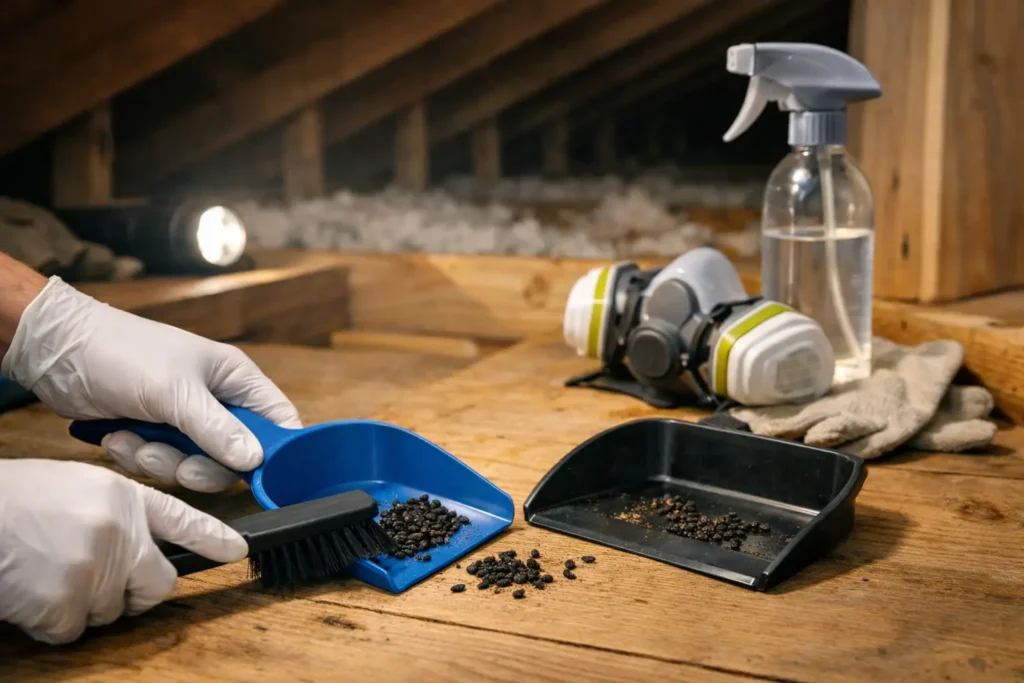
When homeowners search for ways to clean mouse droppings in attic spaces, the problem is often larger than the visible pellets near a storage box or air duct. Droppings can signal active rodent traffic, urine contamination, nesting materials, damaged insulation, and entry points that allow rodents to keep coming back. What looks like a simple cleanup can quickly become a health, odor, and indoor-air concern.
An attic is also one of the hardest areas to clean safely. It is enclosed, dusty, poorly ventilated, and often filled with insulation that can hold contamination long after rodents are gone. The right response depends on how much contamination is present, whether insulation has been affected, and whether the home has been sealed against reinfestation.
Why mouse droppings in an attic require care
Mouse droppings may carry germs, and disturbed droppings can release contaminated dust into the air. Sweeping, vacuuming with a standard household vacuum, or pulling apart a nest can make exposure more likely. Urine is another concern. It can soak into insulation, wood framing, ductwork, and stored belongings, creating persistent odors that become more noticeable when the attic heats up.
For households with children, older adults, pets, or anyone with respiratory sensitivities, an untreated attic can feel especially unsettling. Rodent contamination does not always stay isolated overhead. Air can move between the attic and living areas through gaps around ceiling fixtures, attic hatches, plumbing penetrations, and HVAC openings.
There is also the property issue. Mice shred insulation for nesting, tunnel through it, and leave waste throughout the material. Insulation that is badly contaminated may no longer perform as intended, contributing to heat gain, heat loss, and higher energy costs. If rodents have chewed wiring or damaged ducts, the condition deserves prompt professional assessment.
Do not sweep or vacuum droppings dry
The biggest mistake homeowners make is treating mouse droppings like ordinary dust. Dry sweeping and standard vacuuming can disturb particles that should be contained instead. Spraying a strong fragrance over the area is not a solution either. It may temporarily mask the odor while leaving urine-soaked insulation and nesting debris in place.
If you discover a small, isolated amount of droppings in an accessible attic area, keep people and pets away from it until it can be handled correctly. Avoid disturbing the material. Open the attic only when necessary, and do not use fans that can move dust into other areas of the home.
A limited spot cleanup and a full attic restoration are not the same job. A few older droppings on a hard, nonporous surface may be manageable with proper protective equipment and an approved disinfection process. But widespread droppings, visible nests, urine odor, damaged insulation, or signs of recent activity call for professional remediation. In those cases, the real objective is not simply to remove what you can see. It is to remove contaminated material, sanitize the affected space, restore insulation when needed, and close the routes rodents used to enter.
What a professional attic cleanup should include
A complete cleanup begins with an inspection, not a guess. Technicians should identify the extent of droppings, nesting, urine staining, insulation damage, and rodent pathways. They should also check vulnerable exterior areas, such as roofline gaps, vent openings, utility penetrations, crawlspace access points, and construction gaps around the home.
Containment and protected removal
Professional crews use full protective gear and controlled work practices to avoid spreading contaminated debris through the property. Loose droppings, nesting materials, and damaged insulation are removed and contained for proper disposal. This matters because insulation often hides the heaviest contamination beneath the surface, particularly near perimeter walls, eaves, ducts, and areas around attic access openings.
The removal decision depends on conditions. If contamination is isolated and insulation remains clean and dry, replacement may not be necessary. If rodents have traveled widely, urinated throughout the insulation, or built multiple nests, removing affected insulation is often the more dependable choice. Leaving contaminated insulation behind can allow odor and air-quality concerns to continue even after the rodents are gone.
Sanitization and odor treatment
Once contaminated materials are removed, exposed surfaces can be treated with appropriate sanitizing products. The goal is to address remaining contamination on framing, subflooring, and other attic components without damaging the home.
Odor treatment should be based on the source, not on perfume-like masking products. Rodent urine odor can persist because it has absorbed into porous materials. Proper treatment may include detailed sanitization, odor-neutralizing methods, and removal of the materials that are holding the odor. If the source remains, the smell usually returns.
Insulation restoration
Replacing damaged attic insulation is about more than making the space look clean again. New insulation helps restore thermal performance, supports more consistent indoor comfort, and protects the home from the energy loss associated with flattened, tunneled, or contaminated material.
The correct insulation level depends on the home, existing conditions, local building requirements, and the extent of removal. A qualified cleanup company should explain what needs to be replaced and why, rather than treating insulation replacement as an automatic add-on for every job.
Exclusion that locks rodents out
Cleaning an attic without sealing entry points is a short-term fix. Mice can enter through surprisingly small openings, and they often follow the same routes repeatedly. Effective exclusion identifies and seals those routes using durable materials suited to the location.
This can include sealing gaps along rooflines, around pipes and utility lines, at vents, near fascia boards, and at other structural openings. Exclusion work should account for drainage, ventilation, and the way the home was built. Closing the wrong opening without understanding its purpose can create another issue, which is why professional inspection matters.
Signs you need more than a spot cleanup
The amount of droppings is not the only factor. A strong musky or ammonia-like odor, chewed wiring, shredded insulation, visible nests, greasy rub marks, scratching sounds, or droppings that reappear after cleaning all point to a more established rodent problem.
You should also take the situation seriously if the attic has not been inspected in years, if you recently found rodents in the crawlspace or walls, or if you are preparing to sell, renovate, or move into the home. An attic may look undisturbed from the hatch while contamination is concentrated along edges and behind insulation.
In Southern California, older homes and homes with complex rooflines can be especially vulnerable to recurring entry points. Heat, dry conditions, and nearby construction can push rodents toward sheltered attic spaces. Addressing the contamination and the access points together gives homeowners a much stronger chance of avoiding a repeat problem.
What to expect from a full-service rodent cleanup
A trustworthy remediation provider should be able to explain the work in plain language before it begins. You should know where the activity was found, which materials need removal, how the area will be sanitized, whether insulation replacement is recommended, and which entry points will be sealed.
Professional Rodent Cleanup approaches attic contamination as a restoration project, not a basic pest-control visit. Certified technicians inspect the condition, remove contaminated materials, sanitize affected areas, address odor, restore insulation where needed, and complete exclusion work designed to keep rodents out. Homeowners should also expect clear scheduling, proof of licensing and insurance, and a workmanship guarantee on qualifying exclusion work.
If there is active rodent activity, trapping or removal may be part of the immediate response. But trapping alone does not clean urine, restore insulation, or repair the gaps that allowed rodents inside. A clean attic should also be a sanitized, properly insulated, and rodent-resistant attic.
A safer next step for your home
Do not let a few visible droppings convince you that the issue is minor. The attic is where rodent contamination can stay hidden, affect insulation, and build into an odor problem long before it becomes obvious downstairs. A professional inspection gives you a clear picture of the condition and a practical plan for restoring the space.
The goal is simple: remove the contamination, protect the air your family breathes, restore the attic’s function, and make it far harder for rodents to return. Once the source is gone and the entry points are sealed, you can use your home without wondering what is still overhead.
9 Responses