
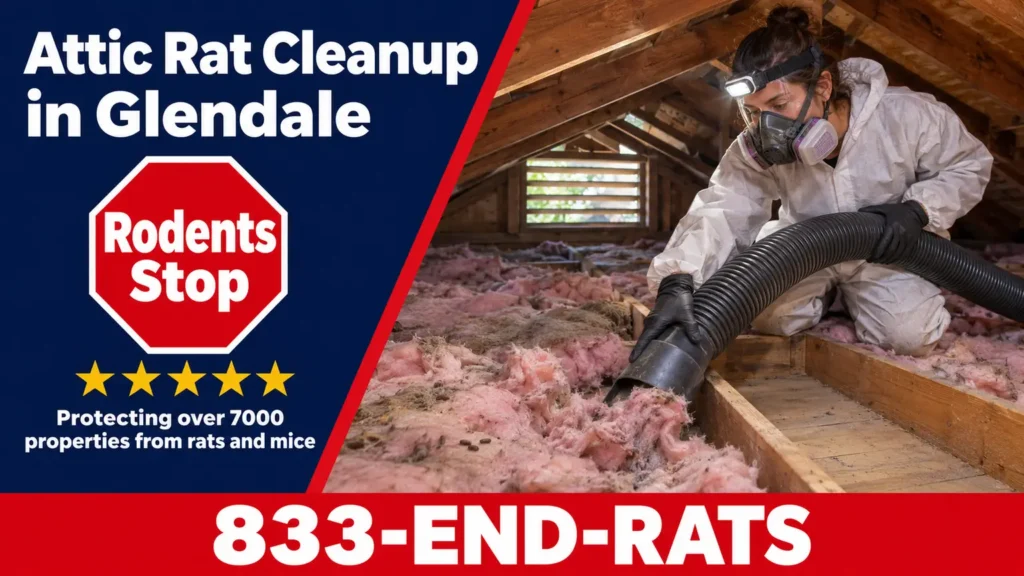
Need attic rodent cleanup in Los Angeles? We assess droppings, nesting material, damaged insulation, and possible entry points, then explain what needs cleaning or removal. Call 833-END-RATS to schedule an attic assessment.
If you need vermin attic cleanup in Los Angeles County, Rodents Stop specializes in the droppings, nests, and soiled insulation that rats and mice leave behind. Rats can leave droppings, urine staining, nesting material, chewed insulation, and persistent odor throughout spaces you cannot easily see or safely reach. In a Southern California home, apartment building, warehouse, or commercial property, that contamination can affect indoor comfort, air quality, and the condition of the insulation above your ceilings.
The hard part is that removing the rodents and restoring the attic are two different jobs. A property may be quiet for weeks yet still hold contaminated insulation and odor sources that continue to cause concern. Professional cleanup addresses what was left behind, contains the work area, removes affected materials safely, sanitizes targeted surfaces, neutralizes rodent scent, and helps identify the conditions that allowed rodents inside.
Why Attic Rat Contamination Needs More Than Surface Cleaning
Attics hide the extent of rodent activity. Insulation can absorb urine, droppings may be scattered far from the main nest, and rats often travel along framing, ducts, pipes, and wiring. A single visible pile of debris may be only one part of a larger contamination pattern.
Urine odor is especially frustrating because heat can make it more noticeable. Homeowners often smell it near recessed lights, ceiling registers, or hallway access panels. In properties from Encino and Woodland Hills to Irvine and Rancho Cucamonga, warm attic conditions can intensify lingering odors even after an infestation has ended.
Contaminated insulation is another concern. Loose-fill insulation can be difficult to clean effectively once it contains widespread droppings, urine, or nesting debris. Batts may also need removal when contamination is extensive, compressed, or heavily soiled. The right approach depends on the material, the amount of activity, the location of contamination, and whether odors have penetrated surrounding building materials.
What Professional Attic Rat Cleanup Involves
A proper cleanup begins with inspection, not assumptions. Technicians assess accessible attic areas, identify signs of current and past activity, look for damaged insulation and nesting zones, and check likely travel paths. They also evaluate entry points and structural gaps that may allow a new infestation to begin after cleanup is complete.
Containment and site preparation
Before contaminated materials are disturbed, the work area needs to be prepared. Professionals use appropriate personal protective equipment and establish containment practices designed to limit the spread of dust and debris into occupied areas. This matters in homes, multi-unit properties, schools, and commercial facilities where occupants may be directly below the attic.
Rodent droppings, urine-contaminated debris, and nests should never be dry swept, brushed, or vacuumed with an ordinary household vacuum. Those methods can disturb contaminated particles and distribute them through the space. CDC-aligned precautions call for wet disinfecting methods with appropriate contact time before removal, along with sealed handling and disposal practices.
Removal of contaminated debris and insulation
After site preparation, cleanup crews remove droppings, nesting debris, carcass remnants when present, and insulation that cannot be reasonably restored. Specialized HEPA equipment may be used where appropriate to support controlled removal of loose debris and fine particulate material.
This step is not about making an attic look tidy. It is about removing materials that hold contamination and odor. In some attics, the affected area is limited and targeted removal is practical. In others, widespread activity makes full insulation removal the more responsible choice. An inspection should explain that difference clearly before work starts.
Targeted sanitation and odor neutralization
Sanitizing comes after contaminated materials have been removed. Technicians treat accessible affected surfaces, including framing and selected hard surfaces, using professional sanitation methods rather than covering odor with fragrance. The goal is to address the remaining contamination sources without damaging the property.
Odor control also requires a specific plan. Rodent urine scent can linger in wood, insulation, wall voids, and around attic penetrations. Professional Rodent Cleanup uses targeted sanitation and proprietary rodent scent neutralization to address the odor at its source. Results depend on how long the infestation lasted, the materials affected, moisture conditions, and whether contaminated insulation or debris remains behind.
Restoration and prevention
Once the attic is clean, restoration may include installing replacement insulation, removing residual debris, and restoring access areas affected by the work. Just as important, the property needs a prevention plan. If rodents can still enter through roofline gaps, utility penetrations, vents, or construction voids, a clean attic can become contaminated again.
Poison-free rodent control and exclusion work are practical choices for property owners who want to address access points and active rodent pressure without introducing toxic bait into attic spaces. For landlords, facility managers, and homeowners, prevention protects the cleanup investment and reduces the chance of repeat odor and insulation damage.
When to Call for Attic Cleanup
Do not wait for a strong odor to become a larger restoration problem. An inspection is warranted when you find droppings near the attic access, notice a musky or urine-like smell around ceilings, hear recurring activity overhead, see chewed insulation, or discover nesting debris around ducts and stored materials.
Property managers should also take reports seriously when residents mention ceiling odors, stains near vents, or scratching in upper-floor units. In apartment buildings and commercial properties, rodent pathways can cross units and travel through utility routes, drop ceilings, wall voids, and shared attic areas. Cleaning only the most obvious location may leave connected contamination untreated.
If rodents are still active, cleanup should be coordinated with exclusion and humane control measures. Removing contaminated material before entry points are addressed can create a clean space that remains exposed to the same problem. Conversely, trapping or exclusion without cleanup leaves odors, waste, and damaged insulation behind.
Questions to Ask Before Approving the Work
A professional attic cleanup estimate should explain what is being removed, what can remain, and how the crew will protect occupied areas during the process. Ask whether the scope includes contaminated insulation, droppings and nesting debris, sanitation, odor neutralization, disposal, and recommendations for entry-point sealing.
It is also reasonable to ask how odor concerns will be evaluated after removal. No responsible company should promise to sterilize an entire structure or claim that every possible health risk disappears. The better standard is a documented cleanup process that removes known contamination, treats accessible affected areas, addresses odor sources, and reduces the conditions that support recurring rodent activity.
For older homes in Los Angeles, hillside properties in Ventura County, or large facilities in Riverside and San Bernardino counties, access and building layout can change the scope. Tight attic clearances, multiple additions, HVAC equipment, and deep insulation all affect how cleanup and restoration should be planned.
A Clean Attic Should Also Be a Protected Attic
The best time to address attic contamination is before the odor spreads further into living or working spaces or rodents cause additional damage. A careful inspection gives you a practical answer: what is contaminated, what needs removal, what can be restored, and what should be sealed to help keep rodents out.
A clean attic is not simply an empty attic. It is a space where contamination has been addressed methodically, odors have been treated at the source, and the property has a clear path toward long-term protection.