
Schedule a professional inspection at 833-END-RATS (833-363-7287)
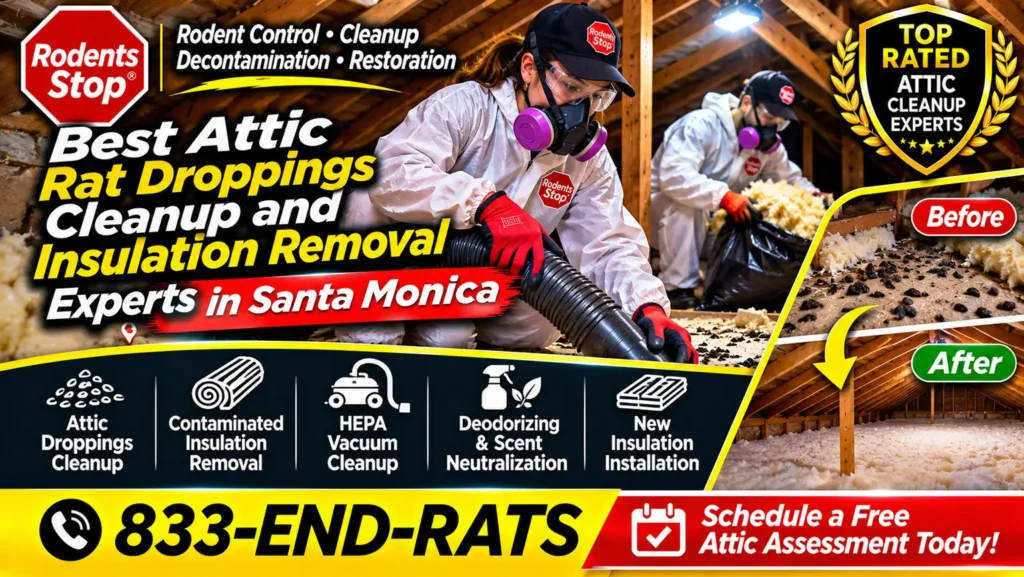
A Santa Monica attic can look untouched from the access hatch while hiding years of rat droppings, urine staining, shredded nesting material, and contaminated insulation. Attic rat droppings cleanup in Santa Monica is not a cosmetic chore. When rodents have traveled through insulation or nested near ductwork, the problem can affect odors, indoor air quality, and the condition of the space above your ceiling. The right response is careful containment, removal, sanitation, deodorization, and prevention – not a quick sweep and a can of deodorizer.
Why attic contamination needs more than a surface cleanup
Rats often use attic insulation as both a travel path and nesting material. Their droppings and urine can be scattered across framing, electrical runs, stored items, and insulation rather than confined to one visible corner. In coastal areas such as Santa Monica, mild weather can also support ongoing rodent activity if entry points around rooflines, vents, utility penetrations, or construction gaps remain open.
The odor problem is often what brings property owners to the attic hatch. Urine can absorb into porous insulation, wood framing, and nesting debris. Air movement from recessed lighting, ceiling penetrations, and HVAC systems may carry that odor into living areas or common spaces. Simply removing the most visible droppings may leave behind the materials causing the smell.
This is also why ordinary household cleanup methods are not appropriate for rodent waste. Dry sweeping, brushing, or using a standard vacuum can disturb contaminated particles and spread them through the work area. A professional cleanup plan uses appropriate personal protective equipment, controlled removal methods, wet disinfecting with proper contact time, sealed disposal, and specialized HEPA equipment where it is appropriate.
Professional attic rodent cleanup starts with the condition of the space
Before materials come out, the attic needs a thorough inspection. The goal is to determine where contamination is present, whether the insulation can be retained, where rodents entered, and what conditions could support a repeat infestation. This matters in single-family homes, apartment buildings, retail spaces, offices, schools, warehouses, and other Southern California properties.
A qualified inspection looks beyond a few droppings near the hatch. Technicians assess the depth and spread of contamination, urine odor, nesting locations, damaged ducts or wiring, compressed insulation, access pathways, and potential entry points. In some cases, contamination is concentrated near a vent or wall void. In others, it extends across much of the attic and calls for broader removal and restoration.
The scope should fit the property. Removing all insulation is not automatically necessary, but leaving heavily contaminated insulation in place simply because it is out of sight can allow odor and contamination concerns to continue. A professional should explain what can be cleaned, what needs removal, and why.
Containment protects the occupied areas below
Attic cleanup should be handled as a controlled work process, especially in occupied homes and multi-unit properties. Technicians prepare the work area to reduce the chance of debris traveling through hallways, living spaces, or common areas. Containment, protected access routes, and sealed waste handling are practical safeguards, not unnecessary add-ons.
This preparation is especially valuable for landlords and property managers coordinating work around residents. It helps keep the project organized while allowing technicians to remove contaminated material without treating the property like a demolition site.
Rodent contaminated insulation removal: when replacement makes sense
Insulation is designed to trap air, but it can also trap rodent urine, feces, oils, nesting debris, and odor. Once rats have tunneled through it repeatedly or used it for nesting, the material may no longer perform as intended. Compressed areas can lose insulating value, and the contamination may be too widespread for targeted cleaning to be a reliable solution.
Rodent contaminated insulation removal is often recommended when there is extensive droppings activity, strong persistent odor, widespread urine staining, nests throughout the material, or a long-running infestation. Removal also makes it possible to inspect the attic deck, framing, utility lines, and other surfaces that were previously covered.
The process should not involve tossing loose material through the attic opening or dragging it uncovered through the property. Contaminated insulation is removed with professional equipment and placed into sealed disposal containers or bags. After removal, exposed surfaces can be addressed with targeted sanitation and scent neutralization before new insulation is considered.
Replacement is not just about making the attic look clean. It helps restore insulation performance while removing a major source of trapped odor. However, new insulation should not be installed until the active rodent issue and entry points have been addressed. Otherwise, rodents may return and contaminate the new material.
Rat feces removal specialists address odor at its source
Rat feces removal specialists do more than collect visible waste. The work involves locating droppings and nesting debris, treating affected surfaces correctly, and dealing with odor sources that remain after debris is gone. This is particularly important when an attic smell seems to return after a homeowner has already cleaned the area or after a pest control visit has stopped rodent activity.
Professional Rodent Cleanup uses a detailed approach built around removal, targeted sanitation, proprietary rodent scent neutralization, and restoration of affected areas. Deodorizing alone can mask a problem temporarily. Effective odor control begins with removing contaminated materials and treating the locations where urine and nesting activity occurred.
Odor intensity does not always tell the whole story. A small, concentrated nest can produce a strong smell, while a larger but older contamination area may have less noticeable odor. That is why inspection findings matter more than assumptions based on smell alone.
Prevention is part of a cleanup that lasts
An attic can be cleaned thoroughly and still become contaminated again if rodents can enter. After cleanup, vulnerable points should be identified and sealed with durable exclusion methods. This is the practical step that turns a cleanup project into a longer-term property protection plan.
For a Santa Monica home, that may mean addressing gaps along eaves, roof intersections, attic vents, utility lines, or areas altered by previous repairs. The exact approach depends on the building design and where activity was found. Poison-free rodent control and exclusion strategies are often the better fit for property owners who want to avoid temporary measures and focus on keeping rodents out.
What property owners can do before an inspection
Avoid disturbing droppings, nests, or loose insulation. Keep children, pets, tenants, and staff away from the affected attic or crawlspace access point when possible. If there is a strong odor in a bedroom, hallway, storage room, or ceiling area, note when it is strongest and whether it changes when heating or air conditioning runs. Those details can help identify the pathway between the contaminated area and occupied rooms.
Property managers can also document resident reports, recurring odor locations, and any prior rodent activity. This is useful in apartment buildings where contamination may extend above more than one unit. The inspection can then focus on the actual travel routes and affected spaces rather than treating each complaint as an isolated issue.
Do not wait for a minor attic odor to become a larger restoration project. A careful inspection can clarify whether you need localized droppings removal, full contaminated insulation removal, crawlspace sanitation, odor treatment, exclusion repairs, or a combination of services. The goal is a cleaner space and a plan that helps lock rodents out for good.
Ready when you are: schedule a professional inspection at 833-END-RATS (833-363-7287)
A clean attic should not leave you wondering what is still hidden under the insulation. Clear answers, careful cleanup, and prevention-focused repairs give your property a better path forward.
For help with an attic infestation in Santa Monica or elsewhere in the county, see our Los Angeles County rodent infestation cleanup service or call 833-END-RATS to request an assessment.
One Response