
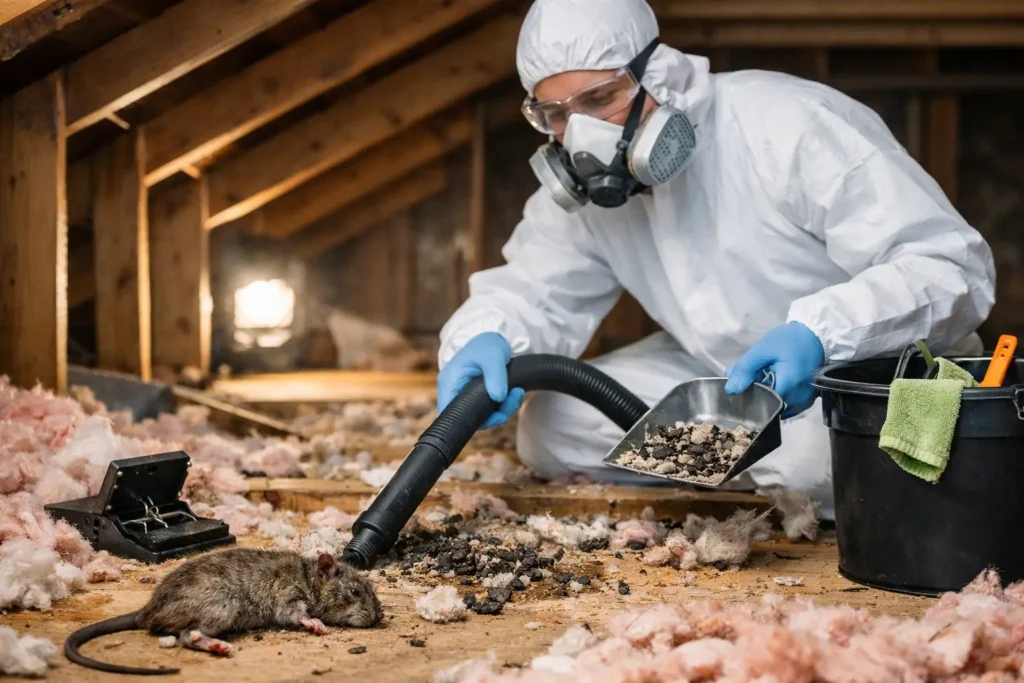
If your attic smells musty, insulation looks torn up, or you are hearing scratching overhead at night, the problem is bigger than nuisance wildlife. Attic Rodent cleanup is about removing hazardous contamination, restoring damaged materials, and stopping the source before it turns into an ongoing health and odor issue inside your home.
Many homeowners assume the biggest concern is the animal itself. In reality, the mess left behind is often the more serious problem. Rodent droppings, urine, nesting debris, and contaminated insulation can affect air quality, create persistent odors, and leave your attic unsafe to enter. Once that contamination spreads across insulation and framing, quick surface cleaning is not enough.
What attic rodent cleanup should actually include
A proper cleanup starts with inspection, not guesswork. The goal is to identify how far the infestation reached, where contamination is concentrated, how much insulation is affected, and whether entry points are still open. Without that first step, it is easy to clean part of the problem and leave the rest behind.
Professional attic rodent cleanup usually involves removing droppings, urine-soaked nesting material, and contaminated insulation. Debris should be carefully bagged and sealed to limit cross-contamination. After removal, the attic needs sanitization and odor treatment so the area is not just cleaner, but genuinely safer and more livable.
There is also a structural side to the job. Rodents often tunnel through insulation, chew wood and wiring, and leave multiple access points along rooflines, vents, and utility openings. If those gaps are not sealed, reinfestation can happen quickly, even after a thorough cleanup.
Why DIY cleanup often falls short
The biggest issue with do-it-yourself attic work is exposure. Disturbing droppings and insulation without the right protective procedures can send contaminated dust into the air. For homeowners, that creates unnecessary risk and often spreads debris into other parts of the house.
The second issue is incomplete removal. It is common to clear visible droppings while missing urine saturation, nesting pockets, and damaged insulation underneath. Odors then remain, and so does the contamination. A clean-looking attic is not always a clean attic.
There is also the question of disposal and disinfection. Cleanup is not just sweeping and spraying. It requires controlled removal, proper protective equipment, and a process that accounts for the entire attic environment, including insulation replacement when needed.
Signs your attic needs professional rodent cleanup
Some homes show obvious evidence, while others have quieter warning signs. If you notice strong odors, stained ceilings, scratching sounds, insulation that looks compressed or shredded, or increased dust and allergy irritation, your attic may already have widespread contamination.
In more advanced cases, homeowners find droppings near attic access points or discover that HVAC performance has dropped because insulation has been disturbed. That matters because rodent damage is not only a sanitation issue. It can also reduce energy efficiency and make your home less comfortable year-round.
For homeowners in Ventura County, heat can intensify attic odors and make contamination problems feel worse faster. That is one reason fast action matters. The longer contaminated material stays in place, the harder it can be to control smell and restore the space fully.
The before, during, and after process
The most effective service follows a clear sequence. First comes inspection and scope. This reveals where the contamination is, how severe the infestation has been, and whether exclusion work is needed before restoration moves forward.
Next comes controlled removal. Contaminated insulation, droppings, and nesting materials are removed and sealed for disposal. Then the attic is sanitized and treated for odor so the environment is cleaned at the source, not masked.
After cleanup, damaged areas can be restored with insulation replacement and rodent sealing work. This final stage matters more than many homeowners expect. A restored attic is not just cleaner. It can also be healthier, more energy efficient, and less likely to attract future activity.
Choosing the right attic rodent cleanup company
Not every pest company is built for contamination remediation. If the problem includes droppings, urine, odor, and damaged insulation, you need more than trapping alone. Look for a company that handles inspection, hazardous debris removal, sanitization, deodorization, exclusion, and insulation replacement as one coordinated process.
It also helps to work with technicians who follow protective protocols and understand how to isolate and remove contaminated materials safely. When cleanup and restoration are treated as separate jobs, delays and gaps are more common. A single team with a full process can move faster and protect your home more thoroughly.
If your attic has signs of rodent contamination, waiting usually makes the cleanup larger, more expensive, and harder on indoor comfort. The right next step is a professional inspection that identifies the damage, explains the scope clearly, and gives you a path to a clean, sealed, and protected attic.
One Response