
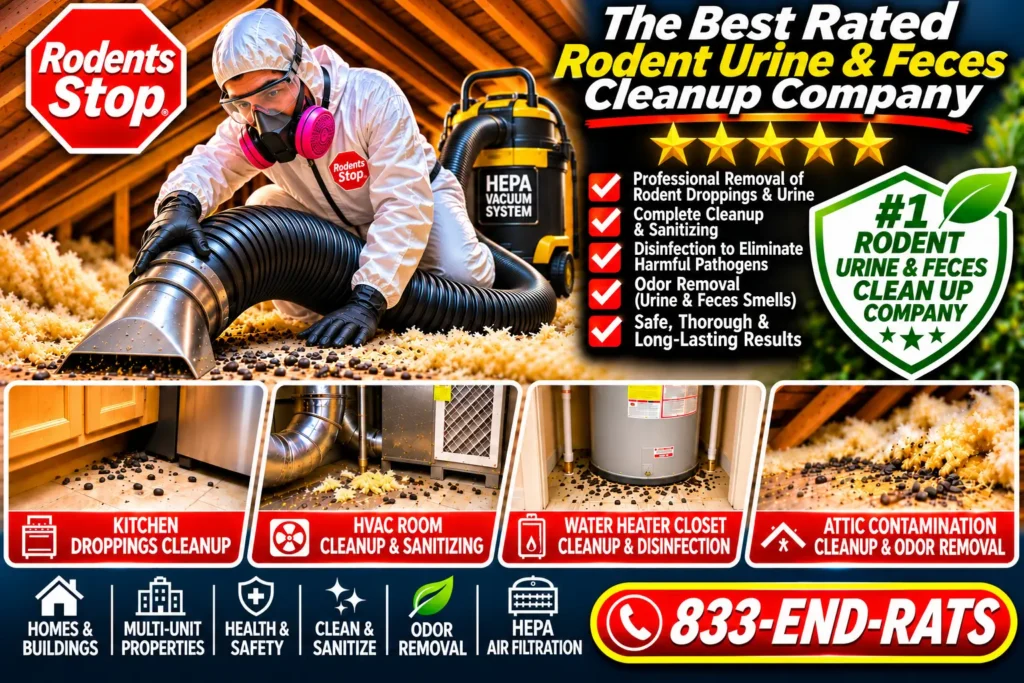
Rodent contamination does not end when the rats or mice are gone. Droppings, urine residue, nesting debris, damaged insulation, and persistent odor can remain in an attic, crawlspace, wall void, or storage area long after activity stops. The Best Professional Rodent Cleanup Company is the one that treats the contamination, the odor source, and the conditions that allowed rodents inside in the first place.
Call now to schedule a professional inspection.
833-END-RATS (833-363-7287)
What separates a professional rodent cleanup from basic attic cleaning?
A contaminated attic is not a routine housekeeping job. Rodent waste can be spread through insulation, around HVAC equipment, across framing, and into hard-to-reach corners. Urine can soak into porous materials and create an odor that returns when temperatures rise, especially in Southern California attics.
A qualified cleanup crew begins with a detailed inspection. The goal is to identify active or past contamination, locate damaged or contaminated insulation, trace odor concentration, and look for entry points that could lead to a repeat infestation. This matters for homes in Sherman Oaks and Encino as much as it does for apartment buildings, warehouses, and schools throughout Los Angeles, Orange, Ventura, Riverside, and San Bernardino counties.
The work should then follow a controlled process: site preparation, containment, safe removal, targeted sanitation, odor treatment, and restoration where needed. Simply removing visible droppings without addressing urine residue, nesting material, or compromised insulation leaves the real problem behind.
How the best professional rodent cleanup company handles contamination
Containment comes before removal
Before contaminated materials are disturbed, technicians should establish controlled work areas and use appropriate personal protective equipment. This helps prevent debris from being tracked through the property or spread into occupied areas.
Dry sweeping, brushing, and ordinary household vacuuming are not appropriate for rodent droppings or nests. Professional work uses CDC-aligned precautions, including wet disinfecting methods that allow the proper contact time before material is handled. Waste and contaminated debris should be collected into sealed disposal bags, while specialized HEPA equipment may be used where appropriate for controlled cleanup.
Removal must address the full source
The visible droppings are often only part of the issue. A thorough service removes accessible waste, nesting debris, heavily contaminated insulation, and other affected materials identified during inspection. In a crawlspace, that may mean addressing contamination along soil barriers, plumbing penetrations, and perimeter areas. In an attic, it may include insulation removal when the material has absorbed urine odor or contains widespread droppings.
There is a trade-off to consider. Limited contamination may be cleaned and sanitized without full insulation replacement. Widespread contamination, strong odor, or insulation damage can make removal and replacement the more responsible long-term option. An honest inspection should explain why, rather than pushing a one-size-fits-all service.
Sanitation and odor neutralization are different steps
Sanitation treats contamination on affected surfaces. Odor control addresses the scent residues that can remain after debris is removed. Both are needed when a property still smells of rodent urine after trapping or exclusion work.
Professional Rodent Cleanup uses targeted sanitation and proprietary rodent scent neutralization to treat affected areas rather than masking odors with fragrance. The objective is to reduce the source of the odor and restore the space for normal use. For landlords and property managers, that can be especially valuable before turnover or after rodents have affected multiple units or shared ceiling spaces.
Prevention should be part of the cleanup plan
The best cleanup will not stay clean if rodents can still enter. A dependable provider looks for gaps around utility lines, roof transitions, vents, foundations, crawlspace access points, and other openings that may allow repeat activity. Sealing these access points as part of a poison-free prevention strategy helps protect the cleanup investment.
This approach is especially useful for properties with pets, children, tenants, inventory, or sensitive operations. Poison-free rodent control focuses on exclusion and removal strategies instead of leaving toxic bait in attic or crawlspace areas. It is a more deliberate process, but it is built around long-term property protection rather than a temporary treatment.
Questions to ask before hiring a rodent cleanup company
Ask whether the company performs an inspection before quoting, uses containment and proper protective equipment, removes contaminated materials in sealed disposal bags, and explains whether insulation can be cleaned or should be replaced. Also ask how odors are treated, whether entry points are identified, and what restoration work is available after cleanup.
Be cautious of a service that promises to spray an odor product and leave. Persistent rodent odor usually has a physical source: urine-affected insulation, nesting material, droppings, or contamination in an enclosed void. The right scope depends on the property, but the explanation should be clear.
If your attic, crawlspace, garage, drop ceiling, or storage area has been affected by rodents, do not wait for odor and damage to worsen. A careful inspection can show what needs to be removed, sanitized, sealed, and restored so you can move forward with confidence.
Ready when you are. Schedule your professional inspection today.