
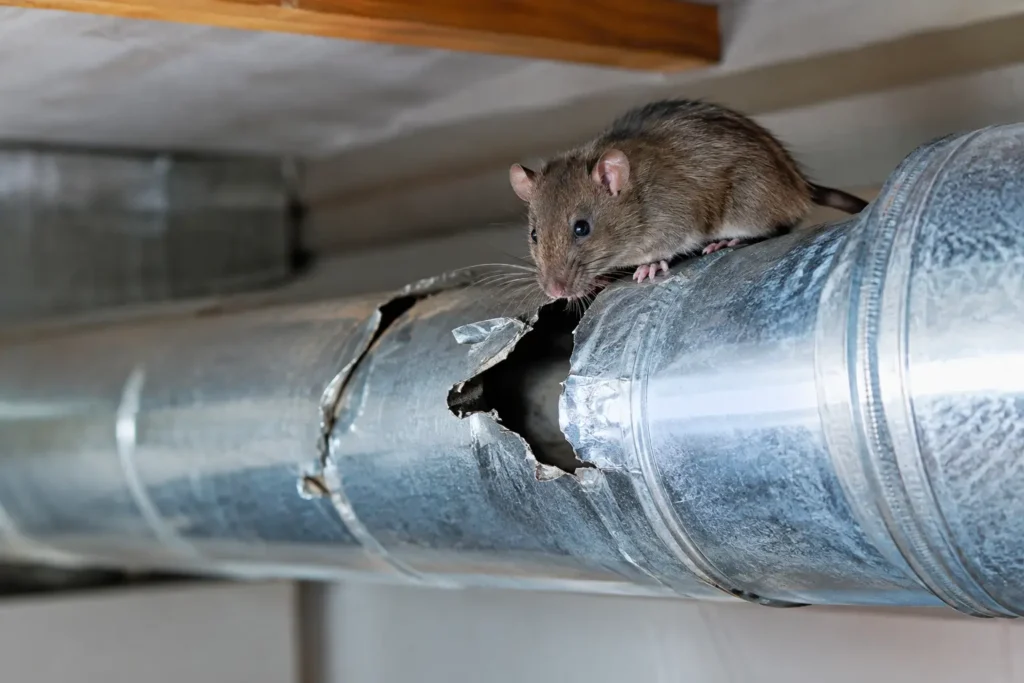
A rodent problem in the attic or crawlspace can reach far beyond droppings and ruined insulation. Can rodents damage HVAC ducts? Yes. Rats, mice, and other rodents can chew duct materials, pull apart insulation, build nests around equipment, and leave urine and feces in areas connected to your home’s air system. The result may be higher energy bills, persistent odors, poor airflow, and contamination that should not be ignored.
For homeowners, the difficult part is that much of this damage is concealed. Your ducts may run above ceilings, beneath floors, or through a tight crawlspace where a quick visual check cannot tell the full story. A professional inspection can determine whether rodents have damaged the ductwork itself, contaminated nearby materials, or both.
Can Rodents Damage HVAC Ducts and Airflow?
Rodents can damage several types of residential ductwork, but flexible ducts are often the most vulnerable. Flex ducts typically have a thin inner liner, wire support, and an insulated outer jacket. A mouse or rat looking for nesting material can shred the outer insulation and chew through the liner. Even a small opening can allow conditioned air to escape into an attic or crawlspace instead of reaching the rooms you are paying to heat or cool.
Sheet-metal ducts are tougher, but they are not automatically safe. Rodents may not chew through solid metal as easily, yet they can damage duct tape, insulation wrap, connecting boots, and joints. They may also nest on top of ducts or around HVAC equipment, creating blockages and leaving contaminated debris behind.
Damage is not always dramatic. A partially crushed flex duct, a loose connection, or insulation stripped from a duct line can reduce airflow and force your HVAC system to work harder. You might notice one room that never seems comfortable, unusually dusty vents, or heating and cooling costs that have climbed without a clear explanation.
How Rodents Get Into Duct Areas
Rodents generally do not need to enter through a supply vent to reach ductwork. In many homes, they access the attic, crawlspace, wall voids, or garage first. From there, ducts become a convenient route, shelter, or nesting surface.
Common entry points include gaps around rooflines and eaves, openings near utility lines, damaged crawlspace vents, gaps beneath garage doors, and unsealed penetrations where pipes or cables enter the home. Mice can fit through openings about the size of a dime, while rats can enter through surprisingly small gaps as well.
Once inside, rodents are drawn to the protected, insulated conditions around ductwork. In Southern California, attics and crawlspaces can stay quiet and undisturbed for long periods, giving an infestation time to grow before a homeowner sees the first sign.
The Bigger Concern: Contamination Near Your Air System
Chewed ducts require repair, but physical damage is only one part of the problem. Rodents leave droppings, urine, nesting debris, fur, and other biological contaminants in the spaces surrounding HVAC runs. Their urine can soak into insulation, wood framing, and duct insulation, causing odors that may become more noticeable when the heating or cooling system runs.
Whether contamination has entered the ducts depends on the type and extent of damage. A torn return duct or open duct connection deserves particular attention because return systems pull air back toward the HVAC equipment. Contaminated particles in or near a compromised return path may affect indoor air quality.
It depends on the layout of the home and the condition of the ducts. A few droppings near an intact, sealed metal duct call for a different scope of work than a heavily contaminated attic with torn flex ducts and rodent nests around air returns. That is why a proper inspection matters more than assumptions.
Homeowners should also avoid disturbing droppings, nests, or damaged insulation without protection. Sweeping or vacuuming contaminated material can stir particles into the air. Professional cleanup crews use protective gear and controlled removal methods to safely remove contaminated insulation and nesting material before sanitizing the affected space.
Signs Rodents May Have Damaged Your Ductwork
Some warning signs begin inside the living area, while others appear in the attic or crawlspace. If you have noticed rodent activity and any HVAC performance changes, the two issues may be connected.
Watch for these signs:
- Scratching, scurrying, or gnawing sounds above ceilings, below floors, or near vents
- Rodent droppings, urine odor, nesting debris, or chewed insulation in an attic or crawlspace
- Weak airflow from one or more supply vents
- Rooms that stay unusually hot in summer or cold in winter
- A musty, urine-like, or animal odor that becomes stronger when the HVAC system runs
- Visible tears, crushed sections, disconnected duct lines, or stripped duct insulation
A sudden odor does not always mean rodents are inside the ducts. Moisture, mold, plumbing issues, and other conditions can create similar symptoms. But when odors appear alongside droppings, chewed materials, or signs of attic activity, prompt inspection is the safer choice.
Why Trapping Alone Does Not Solve Duct Damage
Removing the rodents is necessary, but it does not restore what they left behind. Traps or basic pest control may reduce the active population, yet damaged ducts, contaminated insulation, and open entry points can remain. If the access points are not sealed, new rodents can return and restart the cycle.
A complete restoration approach addresses the whole condition of the affected area. The process typically begins with an inspection to locate activity, contamination, vulnerable duct sections, and exterior entry points. Technicians then remove contaminated insulation and nesting debris as needed, sanitize affected surfaces, address urine odor, and identify ductwork that needs repair or replacement.
After cleanup, exclusion work closes the gaps that allowed rodents inside. This step is essential. Replacing insulation or repairing ducts before the home is sealed can leave your investment exposed to another infestation.
When Duct Repair or Replacement Is Needed
Not every rodent issue requires full duct replacement. Minor exterior insulation damage may be repairable if the duct liner and connections remain intact and there is no evidence of contamination inside the air path. In other cases, replacement is the more reliable option.
Replacement is often recommended when flex ducts have holes, major crushing, disconnected sections, extensive urine contamination, or nesting material inside or directly around compromised duct runs. A damaged return duct deserves extra care because it can pull unfiltered attic or crawlspace air into the system.
The right decision should be based on what is found during inspection, not a one-size-fits-all recommendation. A qualified remediation team can separate cosmetic damage from conditions that affect airflow, sanitation, or the performance of your insulation.
Protecting Your Home After Rodent Duct Damage
The goal is not simply to make an attic or crawlspace look cleaner. It is to restore a healthy, functional barrier between your living space and the concealed areas where rodents caused damage. That means removing contaminated materials, sanitizing surfaces, restoring insulation where needed, repairing compromised ductwork, and sealing access points for long-term prevention.
Professional Rodent Cleanup helps homeowners throughout selected Southern California counties take that full-property approach. Rather than treating the problem as a basic pest issue, trained technicians assess contamination, insulation condition, odor sources, and the entry points that can allow rodents back in.
If you have found droppings near ductwork, smelled urine when the air turns on, or noticed insulation and HVAC performance problems at the same time, do not wait for the damage to spread. A thorough inspection can give you a clear path toward a clean, sanitized, insulated, and rodent-resistant home.
For help reviewing an HVAC estimate, see when rat-damaged air ducts need replacement.
8 Responses