
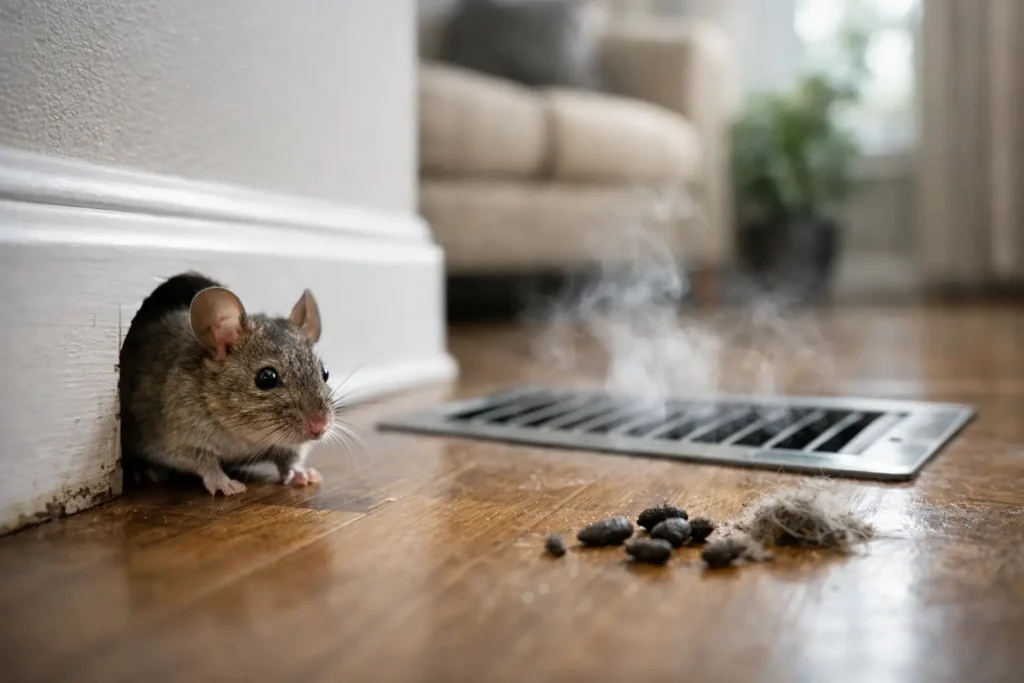
A rodent problem can stay hidden above the ceiling or below the floor for months, while the effects make their way into the rooms where your family sleeps, cooks, and breathes. Understanding how rodents affect indoor air quality starts with recognizing that an attic or crawlspace is not isolated from the rest of the house. Air moves through gaps around light fixtures, plumbing penetrations, ductwork, wall cavities, and attic access points.
Droppings, urine, nesting material, and damaged insulation can turn those concealed spaces into contamination sources. The result may be a persistent musty or ammonia-like odor, more airborne dust, and a home that no longer feels as clean or comfortable as it should. Don’t wait for visible rodent activity in the living area. By that point, the contamination may already be widespread.
How rodents affect indoor air quality in hidden spaces
Rodents do not need much space to enter a home. Once inside, they commonly settle in attics, crawlspaces, garages, and wall voids where they can nest undisturbed. As mice and rats travel, they leave urine trails and droppings along insulation, framing, stored belongings, and HVAC-adjacent areas.
The most immediate air-quality issue is particulate contamination. Droppings can dry out over time, while urine residue and nesting debris collect dust. When air currents, vibration, maintenance work, or animals moving through the space disturb these materials, fine particles may become airborne. Openings between the attic, crawlspace, and living areas can allow odors and particles to move into the home.
Urine creates a separate problem. Its odor may be strongest near the nest, but it can spread through porous materials such as insulation, wood, cardboard, and fabric. In Southern California homes, warm attic temperatures can intensify odor conditions. Air fresheners may cover the smell briefly, but they do not remove the source.
There is also a health concern. Rodent waste can contain bacteria and other pathogens. The level of risk depends on the extent and age of contamination, the rodent species, ventilation, and whether materials have been disturbed. That is why contaminated areas should be handled with care, not swept, vacuumed with a standard household vacuum, or torn out without proper protective measures.
Damaged insulation makes the problem worse
Insulation is designed to help regulate indoor temperatures, not serve as nesting material. Rodents tunnel through it, compress it, and saturate it with urine. Affected insulation can lose thermal performance, which may make rooms harder to heat or cool and place more strain on the HVAC system.
From an air-quality standpoint, contaminated insulation is difficult to restore with surface treatment alone. Loose-fill insulation can hold droppings and urine deep within the material. Fiberglass batts may look intact from a distance while concealment, nesting, and contamination are present underneath. If contamination is widespread, removal and replacement are often the more reliable solution.
This is one reason rodent control alone is not enough. Trapping or removing the animals addresses the active infestation, but it does not remove the waste, odors, compromised insulation, or damaged nesting areas they leave behind. A complete response must deal with both the rodents and the conditions that allowed them to affect the home.
Signs rodent contamination may be affecting your home
A strong odor is often the first clue, especially when it becomes noticeable after the air conditioning or heater runs. The smell may be described as stale, musky, or similar to ammonia. It may also come and go with changes in temperature, humidity, or airflow.
Other signs include droppings near the attic access, scratching sounds in walls or ceilings, shredded insulation, greasy rub marks around openings, and gnawed wiring or wood. Some homeowners notice extra dust around ceiling vents or a room that suddenly feels more difficult to keep comfortable. These signs do not prove that indoor air quality has been affected, but together they warrant a professional inspection.
A dead rodent can create a sharp odor issue as well. The odor may be localized, but locating the animal can be difficult when it is inside a wall or inaccessible portion of the attic. Removing the carcass without addressing nearby urine, droppings, and nesting material may leave the larger contamination problem behind.
Why cleanup requires more than a quick spray
A deodorizer or disinfectant is not a substitute for physical removal of contaminated materials. Spraying over droppings, urine-soaked insulation, or nests leaves the source in place. It may reduce odor temporarily, but the material can continue to hold contamination and attract future rodent activity.
Professional remediation begins by identifying the full extent of the damage. Technicians inspect the attic, crawlspace, entry points, insulation condition, and areas around ducts or openings. They use appropriate protective gear and containment practices to limit unnecessary disturbance during removal.
The cleanup process typically includes removing droppings, nesting material, carcasses when present, and insulation that cannot be safely restored. Surfaces are then sanitized and treated for lingering odor where needed. Once the contaminated material is gone, replacement insulation can restore the home’s thermal barrier and help return the attic or crawlspace to a cleaner condition.
The right scope depends on what the inspection finds. A small, contained issue may require targeted cleanup and sealing. A long-term infestation with widespread urine staining, nests, and compromised insulation may call for full attic or crawlspace restoration. The goal is not to sell unnecessary work. It is to remove the actual contamination rather than leaving hidden sources behind.
Exclusion protects indoor air quality after cleanup
A clean attic is only part of the solution if rodents can still enter the home. Mice can fit through remarkably small gaps, while rats exploit larger openings near rooflines, vents, utility lines, crawlspace vents, and damaged exterior features. If these access points remain open, a new infestation can undo the cleanup.
Exclusion work closes those entry points with durable materials and repairs vulnerable areas that rodents use to get inside. It is the prevention step that turns cleanup into a lasting restoration plan. Without it, homeowners may find themselves paying to remove new droppings, nests, and odors a few months later.
This is especially relevant for older homes, where settling, aging screens, roof gaps, and utility penetrations create multiple hidden access routes. A thorough inspection should look beyond the obvious hole or chewed vent screen and identify the full path rodents are using.
When to call for professional rodent cleanup
Call for an inspection when you smell persistent rodent urine, find droppings in or near the attic, discover damaged insulation, or suspect activity in walls or crawlspaces. Fast action matters most when there are children, older adults, pets, allergy concerns, or anyone who may be more sensitive to dust and odors in the home.
Avoid disturbing extensive droppings or pulling out insulation yourself. Standard cleaning methods can spread dust and expose you to materials that should be removed under controlled conditions. A trained remediation team can assess the area, explain what needs to be removed, sanitize affected surfaces, and seal the openings that allowed the infestation to begin.
For homeowners in Los Angeles, Orange, Ventura, Riverside, and San Bernardino counties, Professional Rodent Cleanup provides inspections and complete attic and crawlspace restoration services, including contamination removal, sanitization, insulation replacement, and exclusion work backed by a lifetime workmanship guarantee.
Your home should not carry the lingering odor, dust, and uncertainty of a hidden rodent infestation. A proper cleanup gives you a clear path back to a sanitized, insulated, rodent-resistant home – and the confidence to breathe easier in it.
20 Responses