
Schedule a professional inspection: 833-END-RATS (833-363-7287)
A mouse removed from a kitchen or attic is not necessarily a mouse problem solved. If gaps remain open, nesting material stays in place, or urine odor continues to mark the area, new mice can follow the same route back into the property. Knowing how to stop mice from coming back means addressing the access points and the contamination they leave behind – not relying on a temporary treatment.
For homeowners, landlords, and facility managers in Southern California, repeat activity often begins in overlooked spaces: an attic near a roofline vent, a crawlspace around utility penetrations, a garage door corner, or a wall void above a drop ceiling. The solution must be practical, thorough, and safe for the people using the building.
How to Stop Mice From Coming Back: Remove the Invitation
Mice can fit through remarkably small openings. A complete inspection should follow the exterior from foundation to roofline, looking closely at plumbing and HVAC penetrations, damaged vents, utility lines, door sweeps, weep openings, siding transitions, and gaps around attached garages.
Sealing is not simply filling a visible hole with whatever material is nearby. Each opening needs a durable exclusion repair appropriate to its location and building material. A low foundation gap may need a different solution than a roofline opening or a vent screen. If active mice are still inside, the timing of exclusion also matters. Closing every route before the interior has been cleared can leave rodents trapped in wall voids or ceilings.
Food and water sources should be reduced as part of the plan. Store dry goods in hard-sided sealed containers, repair persistent leaks, keep outdoor trash lids secure, and avoid leaving pet food out overnight. These steps help, but they do not replace exclusion. A clean pantry cannot compensate for an open attic vent.
Clean Contamination So Mice Do Not Follow the Scent
Mice use familiar scent trails. Droppings, urine residue, nests, and contaminated insulation can leave an odor that encourages recurring activity even after the rodents are gone. This is why a property can still smell unpleasant or feel unsafe after basic trapping has ended.
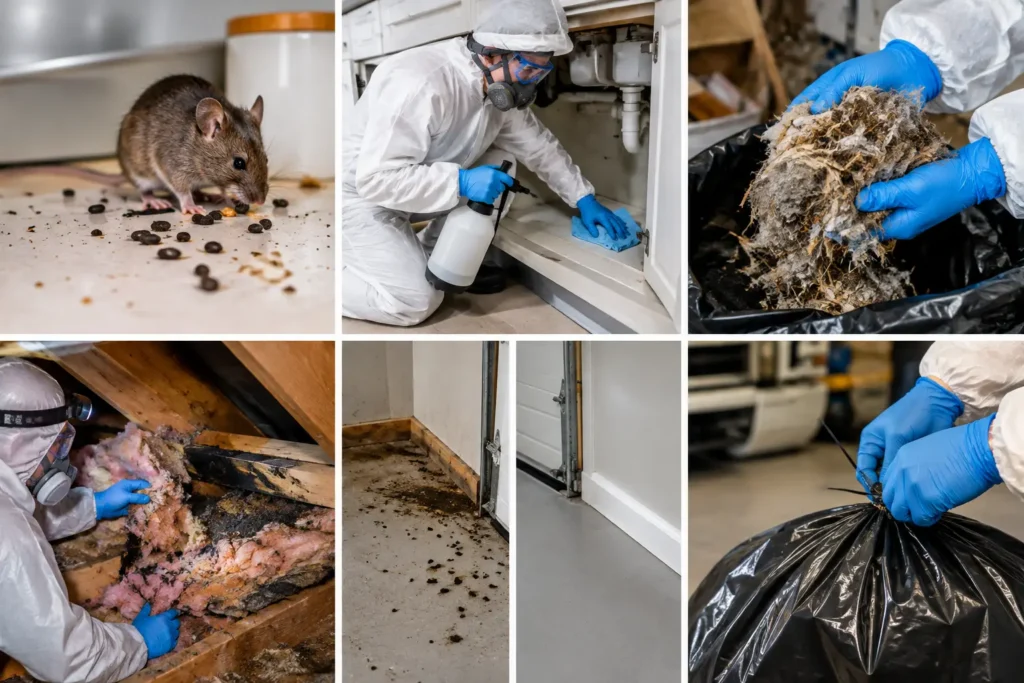
Do not dry sweep, brush, or use an ordinary household vacuum on rodent droppings or nesting debris. Those methods can disturb contaminated particles and spread them into the air. Cleanup should begin with proper personal protective equipment, site preparation, and containment to limit cross-contamination into living or occupied areas.
A professional process typically involves carefully wetting contaminated material with an appropriate disinfectant and allowing the required contact time before removal. Waste and heavily contaminated debris are sealed for disposal. Specialized HEPA equipment may be used where appropriate, while affected surfaces receive targeted sanitation and odor treatment.
In attics and crawlspaces, insulation is often the deciding factor. Light, localized contamination may be treatable, but insulation with widespread droppings, urine staining, nesting material, or persistent odor may need removal and replacement. Leaving damaged insulation behind can preserve odor and reduce the value of an otherwise successful exclusion repair.
Focus on the Areas You Cannot Easily See
A mouse problem rarely stays limited to the room where activity was first noticed. Inspect attic insulation, crawlspaces, wall voids, garages, storage rooms, utility closets, and suspended ceilings. In apartment buildings, warehouses, schools, and commercial spaces, service penetrations and shared utility pathways can allow activity to move between areas.
Professional Rodent Cleanup uses containment, removal, targeted sanitation, proprietary scent neutralization, and restoration methods designed for these hidden spaces. The goal is not to mask an odor with fragrance. It is to remove the contaminated source wherever access and conditions allow.
Use Prevention That Does Not Create a New Problem
Poison-free rodent control is often the better fit for occupied homes, rentals, and facilities where pets, children, tenants, or staff may be present. It also keeps the focus on finding and correcting the conditions that allow rodents in. Toxic bait can create additional concerns when a rodent dies in an inaccessible wall, attic, or crawlspace, leaving an odor source behind.
After cleanup and exclusion, monitor the property for fresh signs such as new droppings, gnaw marks, movement sounds, or renewed odor. A few days of quiet is encouraging, but seasonal changes, construction nearby, and damaged exterior materials can expose new weak points. Recheck door sweeps, vents, roofline areas, and utility openings after storms or repairs.
For properties in Los Angeles, Orange, Ventura, Riverside, and San Bernardino counties, an inspection is especially useful when mice keep returning despite prior trapping or when odor and contamination remain after activity appears to stop. The problem may be hidden in insulation, a crawlspace, or an entry route that was never fully sealed.
Ready when you are: schedule a professional inspection at 833-END-RATS (833-363-7287)
A lasting result starts with finding what mice used, removing what they left behind, and restoring the space so it no longer welcomes them back.