
Schedule a professional inspection: 833-END-RATS (833-363-7287)
A rat in the attic or mouse droppings behind stored inventory is not just a pest-control problem. It can mean urine odor moving through the building, contaminated insulation, nesting debris in wall voids, and damage that remains after the rodents are gone. Knowing how to stop rodents means addressing the access points, the contamination, and the conditions that invite a repeat infestation.
For homeowners, landlords, and facility managers across Southern California, the right response is usually more involved than setting a few traps. A lasting solution starts with a careful inspection and ends with a clean, restored space that is harder for rodents to re-enter.
How to Stop Rodents Before They Return
Rodents enter buildings through openings that can be easy to miss: gaps around utility lines, damaged roof edges, unsealed crawlspace vents, openings near HVAC equipment, and breaks where walls meet foundations. In attics, they may travel along rooflines or through construction gaps. In warehouses and apartment buildings, loading areas, storage rooms, and utility penetrations are frequent trouble spots.
The goal is not simply to remove the animal you see. It is to identify how it got in and seal appropriate entry points after activity has been addressed. Poison-free control and exclusion are often the better fit for occupied homes, schools, apartments, and commercial properties because they focus on physically blocking access rather than leaving toxic bait where children, pets, staff, or wildlife could be exposed.
Exclusion work needs to match the structure. A small gap at a garage wall may be straightforward, while a multi-unit property can have several connected voids, roof transitions, and utility paths. Rushing this step is one reason infestations return.
Do Not Treat Rodent Contamination Like Ordinary Dirt
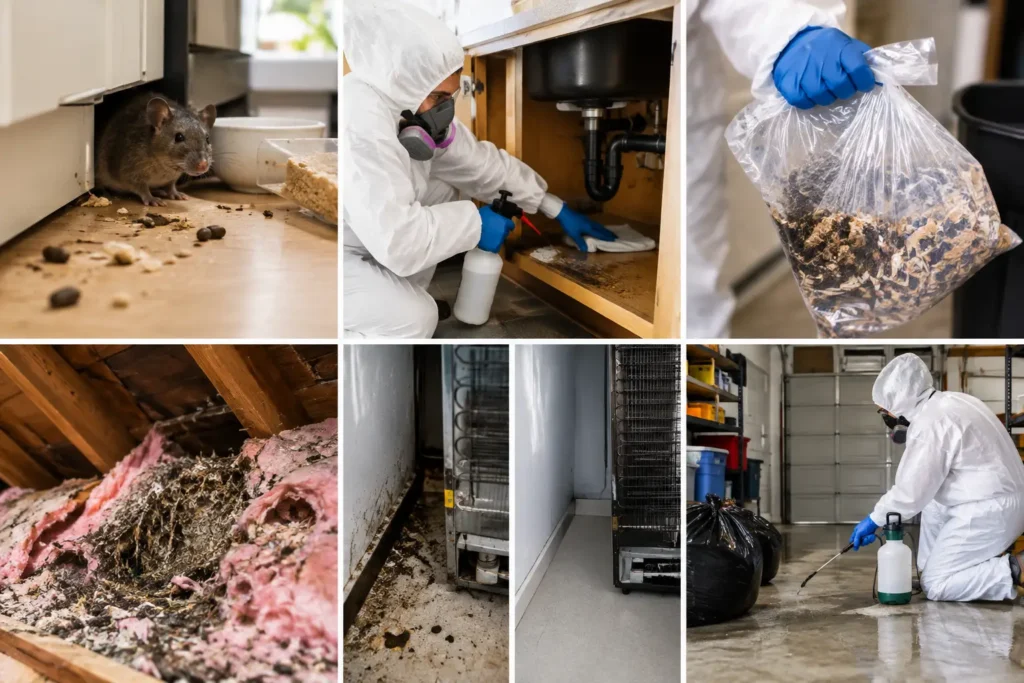
Droppings, urine staining, nests, and contaminated insulation should never be dry swept, brushed, or cleaned with a standard household vacuum. Those methods can disturb contaminated particles and spread them through the space. The same caution applies to old nesting material in attics, crawlspaces, drop ceilings, wall cavities, and storage areas.
A safer, CDC-aligned approach uses proper personal protective equipment, controlled wet disinfecting, and enough disinfectant contact time before removal. Contaminated material should be handled carefully, sealed for disposal, and removed without tracking debris into clean portions of the property. Specialized HEPA equipment may be appropriate for affected areas and controlled cleanup work.
This matters especially when insulation has been heavily soiled. Insulation can hold urine odor and nesting debris long after rodent activity ends. Spot cleaning may help in a limited area, but widespread contamination often calls for removal of affected insulation, sanitation of exposed surfaces, deodorizing, and replacement as part of restoration.
Odor Is a Clue, Not a Cosmetic Issue
Persistent rodent odor is often strongest when temperatures rise, HVAC systems run, or attic air moves into living areas. Air fresheners may mask the smell briefly, but they do not remove the urine residue and contaminated material causing it.
Professional odor control begins after the source has been removed. Targeted sanitation and proprietary rodent scent neutralization can address odors in framing, subfloors, crawlspaces, attics, and other affected areas. The best method depends on where contamination is located and whether porous materials, such as insulation or stored contents, are involved.
A Practical Response for Homes and Commercial Properties
If you see fresh droppings, hear movement overhead, notice gnaw marks, or smell urine, limit access to the affected area and avoid disturbing the material. Keep employees, tenants, children, and pets away from the contamination until it can be evaluated.
Then arrange a professional inspection that looks at the full condition of the property, not just the visible evidence. A meaningful inspection should identify active or past rodent areas, likely entry points, contaminated materials, odor sources, and any restoration work needed. In a Los Angeles home, that may mean an attic with damaged insulation. In an Ontario warehouse or an Irvine apartment building, it may involve storage areas, drop ceilings, wall voids, and shared utility routes.
Professional Rodent Cleanup provides contamination removal, attic and crawlspace sanitation, odor neutralization, contaminated insulation removal, and restoration services throughout Los Angeles, Ventura, Orange, Riverside, and San Bernardino counties. With more than 20 years of hands-on experience through Rodents Stop, the focus is on careful containment, real cleanup, and prevention that helps lock rodents out for good.
A clean-looking attic is not always a clean attic. When droppings, urine odor, nests, or damaged insulation are present, a thorough inspection gives you a clear path forward without unsafe shortcuts.
Ready when you are: schedule a professional inspection at 833-END-RATS (833-363-7287)