
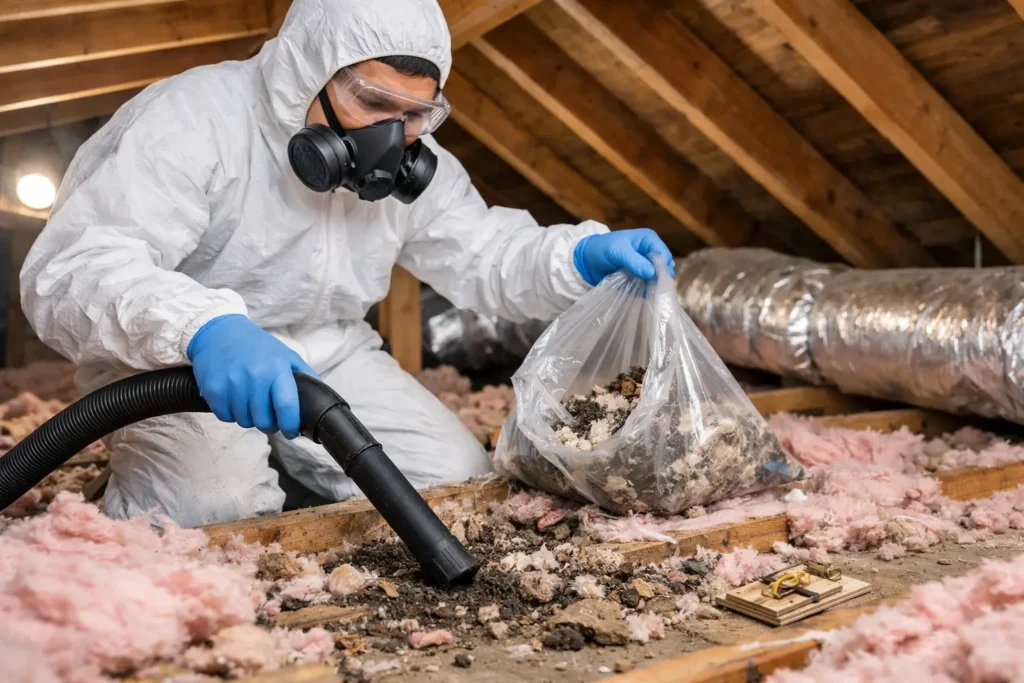
A few droppings near the attic hatch can point to a much larger problem above your ceiling. Rodents travel along framing, burrow into insulation, build nests, and leave urine trails that are often hidden from view. Professional Attic Cleaning is not a cosmetic sweep-up service. It is a controlled restoration process that removes contaminated materials, treats affected surfaces and odors, restores insulation when needed, and helps prevent rodents from getting back in.
For homeowners, the goal is simple: return the attic to a clean, sanitary, properly insulated, rodent-resistant condition without exposing your family to contaminated dust or leaving behind the conditions that caused the problem.
Why Rodent-Contaminated Attics Need More Than Pest Control
Traps and bait may reduce rodent activity, but they do not remove what rodents leave behind. A rodent infestation can contaminate insulation with droppings, urine, nesting material, hair, and food debris. In some cases, rodents also damage air ducts, chew wiring, or create odor problems that spread through gaps around recessed lights, plumbing penetrations, and attic access points.
Attic insulation is especially difficult to clean safely. Loose-fill and batt insulation can trap contamination deep within the material, and walking through it can stir dust into the air. Trying to vacuum or bag contaminated insulation without the right containment, respiratory protection, and cleanup methods can create more exposure rather than less.
There is also a home-performance issue. Compressed, tunneled, or urine-soaked insulation does not insulate as intended. When attic insulation loses its effectiveness, conditioned air escapes more easily and your HVAC system has to work harder. In Southern California, that can mean less comfort during hot spells and higher energy use throughout the year.
A complete response addresses the infestation, the contamination, the odor, the insulation, and the entry points. Skipping any one of those steps can leave homeowners with an attic that looks improved but is still vulnerable to reinfestation.
Signs You May Need Professional Attic Cleaning
Not every attic needs a full insulation removal. A small, recent issue contained to one accessible area may call for targeted sanitation and repairs. But widespread droppings, persistent odor, damaged insulation, or evidence of repeated rodent activity usually requires a more thorough assessment.
Pay attention to a stale, musky, or ammonia-like smell near attic access doors, closets, and ceiling vents. You may also notice scratching at night, shredded paper or insulation around the attic opening, dark rub marks near exterior gaps, or small droppings in the garage and along walls. These signs often indicate that rodents are using more than one part of the home.
Other warning signs include insulation that is matted down or scattered, visible nests, chewed electrical wiring, duct damage, and increased insect activity around the attic. Rodents can bring fleas, mites, and other pests into nesting areas, so the issue may not end when the rodents are gone.
The right next step is a professional inspection. A trained technician can identify whether activity is current, locate probable entry points, assess how far contamination has spread, and determine whether selective cleanup or full insulation removal is appropriate.
What a Complete Professional Attic Cleaning Includes
A quality attic cleanup begins with control, not demolition. Technicians first evaluate the condition of the attic, look for live activity, identify access routes, and plan the work so contaminated materials can be removed without spreading debris through the living space.
Containment and protective procedures
Rodent waste should not be dry-swept or disturbed casually. Professional crews use appropriate protective gear and controlled work practices to reduce airborne dust and contact with contaminated materials. Access areas are protected, and removal routes are planned to keep debris from being tracked through the home.
The exact approach depends on the attic layout, the amount of contamination, the type of insulation, and whether there are safety concerns such as damaged wiring or limited access. Homes with low-clearance attics, older insulation, or extensive nesting may require additional precautions.
Removal of contaminated insulation and nesting material
When insulation has been heavily soiled or damaged, removal is often the most dependable option. Technicians extract contaminated material, bag it for proper disposal, and remove nests, droppings, and rodent debris from accessible areas.
This is where basic pest control and restoration work differ. Simply placing traps in an attic with contaminated insulation leaves the underlying mess in place. Removing compromised material helps eliminate the source of lingering odor and gives technicians a clear view of the attic deck, framing, wiring, and entry points.
Sanitization and odor treatment
After debris and contaminated insulation are removed, affected surfaces are treated with professional sanitizing products designed for rodent contamination. The purpose is to address residue in the areas rodents traveled, nested, or urinated – not to cover the smell with fragrance.
Odor treatment can take more than one step. Urine may have penetrated wood surfaces, insulation, or dust layers, and the strength of the odor depends on how long the infestation was active and how much contamination is present. Removing the source is always more effective than relying on sprays alone.
Insulation restoration
Once the attic is cleaned and treated, replacement insulation may be installed to restore thermal performance. The appropriate material and depth depend on the home, existing conditions, local requirements, and whether any undamaged insulation can remain.
This is a practical part of rodent cleanup that homeowners should not overlook. A sanitized attic with inadequate insulation may still leave the home uncomfortable and inefficient. Restoring insulation protects both indoor comfort and the long-term condition of the property.
Rodent Exclusion Is What Protects the Cleanup
Cleaning an attic without closing entry points is like repairing water damage while leaving the roof leak open. Rodents can enter through small gaps around rooflines, eaves, vents, pipes, utility penetrations, garage connections, and damaged screens. Once inside, they tend to follow familiar routes and may return to nesting sites.
Exclusion work identifies and seals those vulnerable areas with durable materials suited to the location. The process should account for the entire structure, not just the most obvious hole. Rodents are persistent, and a home can have several access points at different elevations.
Timing matters. Active rodent removal and exclusion must be coordinated carefully so animals are not sealed into the structure. A professional inspection helps establish the right sequence based on the species, activity level, and layout of the home.
For homeowners, this is the difference between a one-time cleanup and a long-term solution. An attic can be cleaned, sanitized, reinsulated, and then protected by sealing the routes rodents use to come back.
Why DIY Attic Cleanup Can Create Bigger Problems
Homeowners often want to act quickly after finding droppings, and that instinct is understandable. The problem is that attics are confined, dusty spaces with hidden hazards. Disturbing dry waste, old insulation, or nesting material can send contaminated particles into the air. There may also be unstable walking surfaces, exposed nails, damaged wiring, or unseen gaps in the ceiling below.
Consumer odor sprays and surface cleaners may temporarily change the smell, but they cannot resolve contamination embedded in insulation or nesting debris tucked beneath it. Store-bought traps can also miss the structural reason rodents entered in the first place.
A professional service is particularly valuable when there is widespread waste, a strong urine odor, damaged insulation, a dead animal, recurring activity, or signs that rodents have been present for months. It also makes sense for homeowners who want documented work, a clear scope of restoration, and a plan that includes prevention instead of repeated spot treatments.
What to Expect From the Inspection and Cleanup Process
A straightforward inspection should leave you with answers, not pressure. The technician should explain where rodent activity is present, how extensive the contamination appears, what materials need to be removed, whether insulation replacement is recommended, and which exterior entry points need attention.
During the work, the crew should protect access areas, remove contaminated debris in a controlled manner, sanitize affected spaces, and complete the agreed restoration work. Before the job is considered complete, the attic should be evaluated for remaining access points and insulation needs.
Professional Rodent Cleanup provides homeowners in Los Angeles, Ventura, Riverside, San Bernardino, and Orange counties with a full restoration approach that combines cleanup, sanitization, insulation services, and exclusion work. Same-day availability and emergency response can be especially helpful when a strong odor, active infestation, or damaged attic demands prompt attention.
Do not wait for attic odors to reach the living space or for rodents to cause more damage. A careful inspection can show you exactly what is happening overhead and provide a direct path back to a cleaner, healthier, better-protected home.