
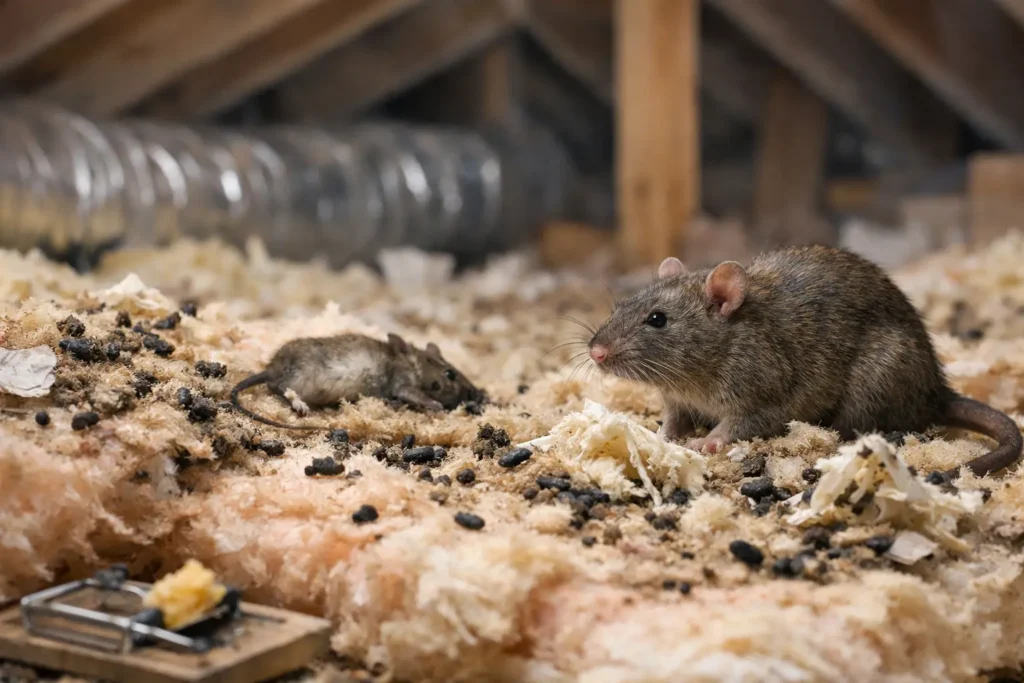
That sharp, stale smell coming from the attic is usually not “just old insulation.” If you are asking, is rodent contaminated insulation dangerous, the short answer is yes. Once rodents start nesting, urinating, and leaving droppings in insulation, that material can become a source of odor, airborne contaminants, and hidden damage that affects the rest of the home.
For many homeowners, the problem starts with scratching sounds at night or a musty smell that gets worse when the HVAC runs. What makes it more serious is that attic and crawlspace insulation do not just sit there. They can hold urine, feces, dander, nesting debris, and bacteria, then continue releasing contaminated dust into the space long after the rodents are gone.
Why rodent contaminated insulation is dangerous
Insulation is designed to trap air and regulate temperature. Unfortunately, that same fluffy, porous structure also traps contamination. When rodents move through attic or crawlspace insulation, they compress it, burrow into it, and use it as a nesting ground. The result is not just dirty insulation. It is insulation that may no longer be sanitary or effective.
The biggest concern is exposure. Rodent droppings and urine can dry out over time, and disturbed insulation can release particles into the air. That matters any time someone enters the attic, during duct leakage, or when air movement carries those particles into living areas. Homeowners often notice this as worsening odors, allergy-like symptoms, or a general drop in indoor air quality.
There is also a structural and efficiency side to the problem. Rodents tear insulation apart, create tunnels, and flatten sections that should be evenly installed. Even if the contamination looks limited to one corner, the damage often spreads farther than expected. A home can end up smelling worse, feeling less comfortable, and paying more in heating and cooling costs at the same time.
What makes contaminated insulation a health concern?
Not every attic exposure leads to illness, but the risk is real enough that contaminated insulation should be handled carefully. Rodent waste can introduce bacteria and allergens into the environment. The longer the problem sits, the more contamination builds up.
For people with asthma, allergies, or respiratory sensitivity, the effects are often felt sooner. Dust from rodent-contaminated areas can irritate the nose, throat, and lungs. Children, older adults, and anyone with a weakened immune system may be more affected by poor air quality and contaminated debris.
Another factor is how cleanup is attempted. Homeowners sometimes assume they can sweep up droppings, remove a little insulation, and be done. That can actually make exposure worse if contaminated particles become airborne. Safe remediation is not just about removing visible droppings. It includes controlled removal, containment, sanitization, and proper disposal of infested material.
Odor is usually a warning sign
A persistent attic or crawlspace odor is often the first clue that contamination has gone beyond a minor pest issue. Rodent urine soaks into insulation and wood surfaces. Nesting materials add another layer of contamination, and if a rodent dies in the space, the smell intensifies fast.
Odor alone does not tell you the full severity, but it usually means cleanup should not be delayed. Once those smells settle into porous materials, they rarely disappear without removing the source.
The danger is not always visible
One of the hardest parts of this problem is that attic contamination can look smaller than it is. A few droppings near the access point may seem manageable, while deeper sections of insulation are heavily tunneled, soaked, or packed with nesting debris.
This is why inspection matters. The visible mess is often only part of the picture. Rodents travel along beams, around duct lines, and into corners homeowners rarely see. By the time odors or air quality issues are noticeable indoors, the contamination may already be widespread.
When should insulation be removed instead of cleaned?
This depends on the level of infestation, the type of insulation, and how deeply the contamination has spread. In light cases, a targeted cleanup may be possible if contamination is isolated and the surrounding material is still intact. But in many attic and crawlspace infestations, removal is the safer and more complete option.
Insulation usually needs to be removed when it has absorbed urine, contains significant droppings, has active or old nesting sites, or has been compressed and shredded by rodent activity. At that point, trying to save it often leaves behind odors, contamination, and reduced thermal performance.
For homeowners, this is where professional assessment helps. The question is not just whether the insulation looks bad. It is whether it can still do its job without continuing to affect sanitation, comfort, and air quality.
What professional cleanup should include
A real remediation process goes beyond trapping rodents or spraying deodorizer into the attic. If contaminated insulation is dangerous, the solution has to address both the contamination and the conditions that allowed it to happen.
First comes inspection. The goal is to identify the extent of the infestation, where contamination is concentrated, and whether the rodents are still active. From there, contaminated insulation and nesting material should be removed with protective equipment and controlled handling procedures to reduce airborne spread.
After removal, the area should be sanitized and treated for odor. This step matters because contamination often remains on attic surfaces even after the insulation is gone. Sealing entry points is just as important. Without exclusion work, cleanup alone can turn into a repeat problem.
In many homes, the final step is insulation replacement. This restores energy efficiency and helps bring the attic or crawlspace back to a clean, functional condition. For Southern California property owners dealing with heavy rodent activity, combining cleanup with insulation replacement is often the most practical long-term fix.
Is rodent contaminated insulation dangerous if the rodents are gone?
Yes. Even after rodents are no longer active, the contamination they leave behind can remain in the insulation. Old droppings, urine, body oils, and nesting debris do not become harmless just because the scratching has stopped.
This is where many homeowners get stuck. The infestation seems over, but the smell remains, the attic still feels unsafe, and the HVAC seems to move dusty air through the house. In those cases, the problem has shifted from pest control to contamination cleanup.
The longer contaminated insulation stays in place, the more time odors and particles have to settle into the environment. Waiting can also make future cleanup more difficult if moisture, mold-like odor, or additional damage develops.
Why DIY cleanup often falls short
The main issue with do-it-yourself cleanup is that it tends to focus on what is easy to reach and easy to see. Rodent contamination rarely works that way. Insulation may look acceptable on the surface while hiding urine saturation and droppings below.
There is also the safety issue. Disturbing contaminated insulation without the right protection and removal methods can spread dust and debris rather than contain it. Store-bought odor products may mask the smell for a while, but they do not remove the source.
For moderate to severe infestations, partial cleanup usually turns into delayed cleanup. Homeowners spend time and money, but still end up with odor, damaged insulation, and unresolved entry points.
What homeowners should do next
If you suspect rodents have been living in your attic or crawlspace, the right next step is to have the space inspected for contamination, not just pest activity. You need to know whether the insulation is salvageable, how far the damage goes, and what removal and sanitization work is needed.
A proper remediation plan should answer three questions clearly: what has to be removed, how the space will be sanitized, and how the home will be protected against reinfestation. That kind of process gives homeowners something better than a temporary fix. It gives them a path back to a cleaner, safer, and more efficient home.
Professional Rodent Cleanup handles that process from contaminated insulation removal through sanitization, odor treatment, exclusion, and insulation replacement. When the problem is handled thoroughly, the goal is not just to get rodents out. It is to restore the space so you can trust your home again.
If the attic smells off, the insulation looks disturbed, or you have seen signs of droppings or nesting, do not wait for the damage to spread. Contaminated insulation rarely improves on its own, and early action usually means a cleaner, safer result.
8 Responses