
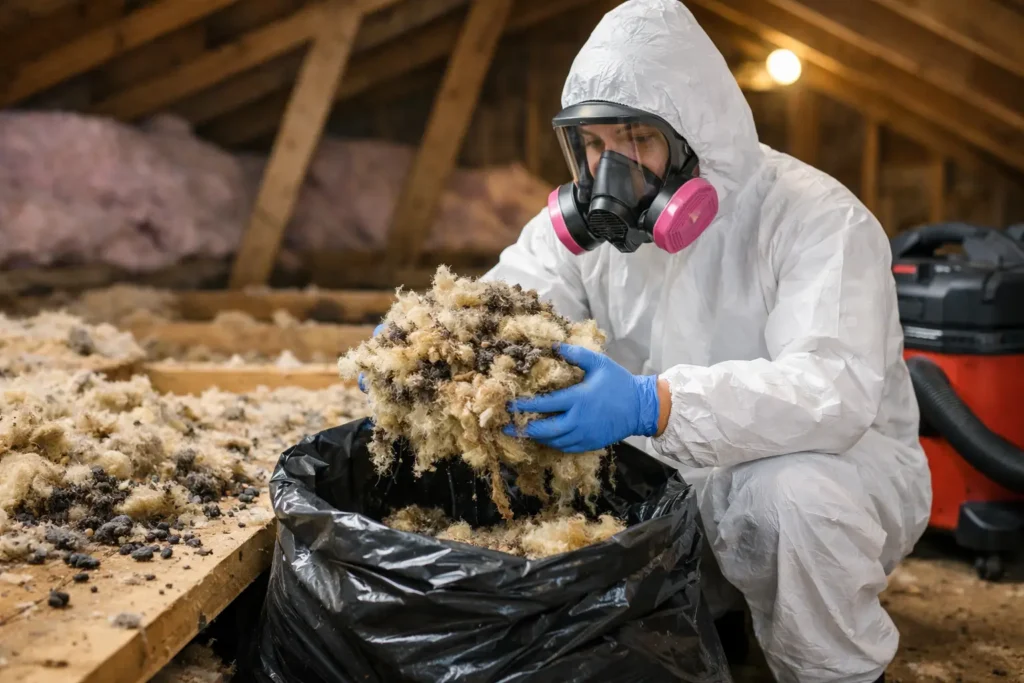
A few droppings near an attic hatch can point to a much larger problem overhead. Rodents often travel, nest, and urinate across broad sections of insulation long before a homeowner sees obvious damage below. To remove rodent contaminated insulation safely, the work needs to address more than the material itself: contaminated surfaces, urine odor, airborne particles, damaged ventilation paths, and the openings that allowed rodents inside.
This is not a cleanup job to postpone until later. Contaminated attic or crawlspace insulation can affect indoor air quality, reduce energy efficiency, and leave a persistent odor that ordinary cleaning will not solve. The right restoration process removes the source, sanitizes the area, restores insulation where needed, and locks rodents out before they can return.
When Rodent-Contaminated Insulation Needs Removal
Not every rodent sighting means every inch of insulation must be removed. The decision depends on the extent of activity, the type of insulation, how long the infestation has been present, and whether urine, droppings, nesting debris, or carcasses have spread through the space.
Insulation should generally be removed when it contains widespread droppings or urine staining, has been tunneled through for nesting, carries a strong odor, or has absorbed contamination from a long-term infestation. Loose-fill insulation is especially difficult to clean because droppings and urine can settle throughout the material. Trying to pick out visible debris leaves contamination behind.
Batts can sometimes show localized damage, but the surrounding material still needs careful evaluation. Rodents may travel along insulation edges, framing, ductwork, and utility lines. What looks like a small nest from the attic opening may extend well beyond the visible area.
A professional inspection helps determine whether removal should be limited to affected sections or whether a full attic or crawlspace restoration is the more dependable option. The goal is not to sell more work than necessary. It is to avoid leaving contaminated material behind that can continue producing odor and creating health concerns.
Why DIY Cleanup Can Create More Exposure
Homeowners often want to bag visible nests, vacuum droppings, and replace a few damaged insulation batts. That instinct is understandable, but rodent-contaminated spaces require more care than a standard household cleaning project.
Dry sweeping, brushing, or using an ordinary vacuum can disturb dried droppings and contaminated dust. Moving through an attic without the proper protective equipment can also spread debris through the home or expose the person doing the cleanup to urine residue, parasites, sharp debris, and hidden electrical hazards.
Rodent urine odor is another challenge. The smell can soak into insulation, wood framing, ceiling cavities, and other porous materials. Covering it with deodorizer may temporarily mask the odor, but it does not remove the source. If contaminated insulation remains in place, warm weather and humidity can make the odor more noticeable again.
Professional crews use full protective gear, controlled removal methods, and equipment designed for contaminated insulation. This allows them to remove materials without treating the attic like a normal storage area or spreading debris through living spaces below.
The Professional Process to Remove Rodent Contaminated Insulation
A complete remediation project follows a sequence. Skipping steps can leave a clean-looking attic that still smells, still contains contamination, or remains open to another infestation.
1. Inspect the attic or crawlspace and find entry points
The first step is a detailed inspection of the affected space and the home exterior. Technicians look for droppings, urine trails, nesting areas, chewed wiring, damaged ductwork, carcasses, and compromised insulation. They also identify how rodents entered.
Common access points include roof gaps, open construction joints, damaged vents, pipe penetrations, gaps around utility lines, and openings near eaves or fascia boards. Mice can enter through remarkably small gaps, while rats can exploit larger weaknesses around the roofline and foundation.
An inspection should also determine whether active rodents are still present. Cleanup without a plan for removal and exclusion can lead to reinfestation before restoration is complete.
2. Remove nesting debris and contaminated insulation
Once the work area is contained and technicians are protected, contaminated nesting material, droppings, and insulation are removed and bagged for proper disposal. Specialized insulation-removal equipment may be used for loose-fill material, while damaged batts are carefully lifted and contained.
This stage is about removing the contamination source, not simply making the space look better. Material that has absorbed urine or contains hidden droppings cannot be restored by spraying a surface treatment over the top.
Removal also exposes the attic or crawlspace structure for a proper assessment. Framing, subflooring, ducts, and wiring can be inspected once damaged insulation and nests are out of the way. If rodents have chewed electrical wiring or ductwork, those conditions should be addressed by the appropriate qualified trade before new insulation is installed.
3. Sanitize exposed surfaces and treat odor sources
After removal, exposed structural surfaces are cleaned and treated with professional-grade sanitizing products appropriate for rodent contamination. The exact treatment depends on the surfaces involved and the level of contamination. Wood framing, sheathing, subflooring, and accessible utility areas may all require attention.
Odor treatment is not a cosmetic extra. It is part of restoring the space. Effective treatment targets urine residue and contamination left behind after insulation removal, rather than relying on fragrance to cover the smell.
This is also the point where technicians can identify moisture issues that may have attracted rodents or worsened the condition of the insulation. A leaking roof, damaged vent, or damp crawlspace can make a restored area vulnerable again if left unresolved.
4. Seal the home against future rodent entry
Exclusion is what separates a complete restoration from a temporary cleanup. Every identified entry point should be sealed with durable, rodent-resistant materials suited to its location. Vent covers, roofline gaps, pipe openings, and other vulnerable areas may need repair or reinforcement.
Trapping or removal may solve the immediate animal problem, but it does not close the route that brought rodents inside. A home can be sanitized and reinsulated, then contaminated again within weeks if exterior access points remain open.
For Southern California homes, this step is particularly valuable because rodents can remain active year-round. Older homes, homes near hillsides or open space, and properties with aging rooflines often have multiple small vulnerabilities that are easy to overlook.
5. Install clean, properly performing insulation
New insulation is installed after cleanup and exclusion are complete. The correct material and depth depend on the space, existing conditions, and the home’s insulation needs. A properly restored attic or crawlspace should be clean, dry, insulated, and protected from future rodent access.
Replacement insulation does more than make the attic look finished. It helps the home manage heat transfer, supports more consistent indoor temperatures, and can improve comfort when damaged or compressed insulation had been left in place for years.
What Homeowners Should Do Before Help Arrives
If you suspect rodent contamination, avoid disturbing the area. Keep children and pets away from the attic hatch or crawlspace access, and do not sweep, vacuum, or pull out insulation without proper protection and a plan for containment.
If you notice a strong odor inside the home, fresh droppings, scratching sounds, or ceiling stains below an affected attic, document what you can from a safe distance. Photos of droppings near access points, visible nests, chewed materials, or exterior gaps can help during an inspection. Do not climb through a damaged attic floor or handle dead rodents with bare hands.
It also helps to think beyond the attic. Rodents may contaminate crawlspaces, wall voids, garages, and storage areas. A thorough inspection identifies the full scope so the cleanup is not limited to the first problem area discovered.
Choosing a Cleanup Company That Restores the Whole Problem
The right company should be prepared to explain what is contaminated, what can be safely retained, what needs removal, and how it will prevent a repeat infestation. Ask whether the scope includes sanitization, odor treatment, insulation replacement, and exclusion – not just trapping or debris removal.
You should also expect clear information about licensing, insurance, protective procedures, workmanship coverage, and the condition of your home after the job is complete. For homeowners who need fast help, same-day availability and emergency response can matter when odors are severe or an active infestation is still underway.
Professional Rodent Cleanup approaches these projects as home restoration, not basic pest control. A free inspection can establish the condition of the insulation, identify active entry points, and provide a straightforward plan for cleanup, sanitization, replacement insulation, and long-term exclusion.
A clean attic or crawlspace should give you confidence, not leave you wondering what remains under the insulation. Address the contamination thoroughly, seal the access points, and give your home the protected, healthy condition it deserves.
One Response