
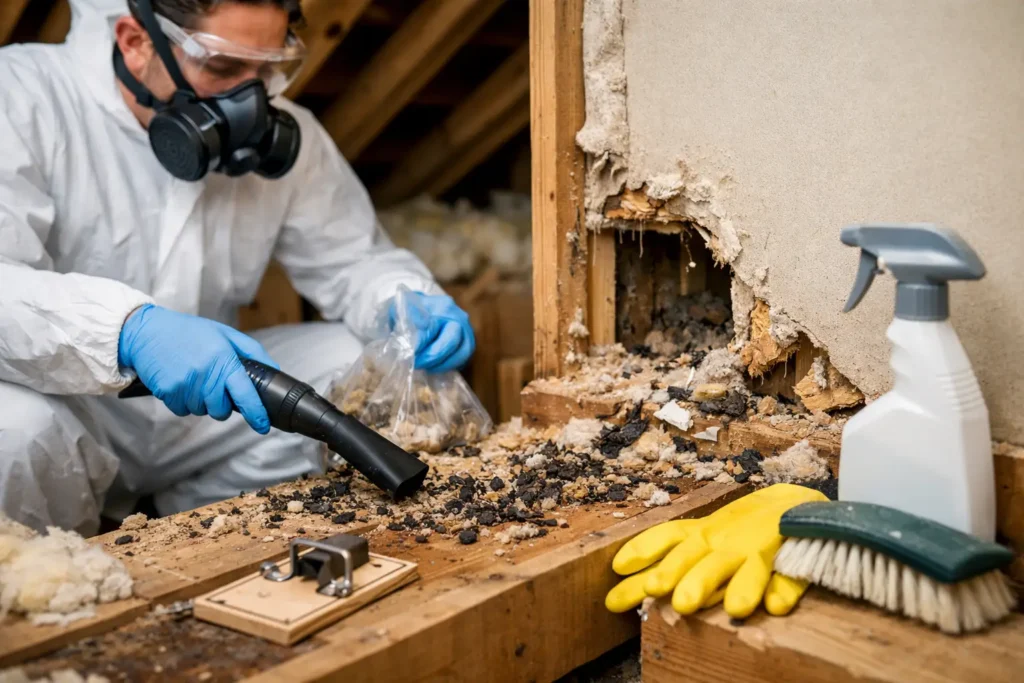
A urine smell that gets stronger when the heat turns on. Insulation pulled into nests. Droppings scattered across attic framing. These are not small housekeeping issues hidden above the ceiling or below the floor. Rodent Damage cleanup is a home-restoration job that removes contaminated material, addresses odor and air-quality concerns, restores damaged insulation, and helps prevent rodents from getting back inside.
The right response is not to spray a fragrance, set a few traps, or sweep up visible droppings. Rodent waste can be disturbed and spread through enclosed areas, while damaged insulation may continue holding urine odor long after activity appears to stop. A complete cleanup gives homeowners a clear path forward: remove the contamination, sanitize the affected area, repair what rodents damaged, and seal the routes they used to enter.
Why Rodent Contamination Needs More Than Pest Control
Removing rodents is necessary, but it is only one part of the problem. Rodents leave behind droppings, urine, nesting debris, food remnants, and damaged building materials. In an attic or crawlspace, these contaminants can sit undisturbed for weeks or months, especially where homeowners cannot easily see them.
Rodents also damage the systems that make a home comfortable. They tunnel through insulation, compress it into nests, and reduce its ability to control indoor temperatures. They can chew wiring, ductwork, vapor barriers, stored belongings, and wood components. The longer activity continues, the more likely a simple pest issue becomes a restoration issue.
Odor is often the first sign that cleanup is still needed. Urine can soak into insulation, wood, and other porous surfaces. On warm days or when HVAC systems move air through the home, that odor may become much more noticeable. Covering it with deodorizer does not remove the source.
What Professional Rodent Damage Cleanup Includes
Every property is different. A small, recent attic issue may require limited removal and targeted sanitation. A heavily affected crawlspace or attic with widespread urine contamination and ruined insulation may need a more extensive restoration. A professional inspection determines the scope before work begins.
Containment and safe removal
Cleanup starts by protecting the home and the people in it. Technicians should wear full protective gear and use a controlled process to avoid unnecessarily disturbing contaminated dust and debris. Contaminated insulation, nests, droppings, and damaged materials are carefully removed and disposed of rather than left behind under new insulation.
This step matters because insulation is not always salvageable. If it has been saturated with urine, filled with droppings, or used repeatedly for nesting, it may no longer provide dependable thermal performance or a clean environment. Trying to preserve heavily contaminated insulation can leave the odor and contamination problem in place.
Sanitization and odor treatment
Once contaminated material is removed, exposed surfaces can be cleaned and treated with professional sanitizing products appropriate for the affected area. This process targets residue on framing, subfloors, ledges, and other accessible surfaces where rodents traveled or nested.
Odor treatment should follow removal, not replace it. If contaminated insulation or nesting material remains, the smell can return. When the source is removed first, treatment is far more effective at improving the condition of the attic or crawlspace.
Insulation restoration
New insulation is not just a cosmetic finish. Proper insulation helps regulate temperature, reduces strain on heating and cooling systems, and supports overall energy efficiency. After cleanup, replacement insulation can restore the protective layer rodents damaged or contaminated.
The right insulation plan depends on the structure, the affected area, and the condition of remaining materials. In some homes, partial replacement is appropriate. In others, widespread contamination makes full removal and replacement the more dependable choice.
Exclusion that locks rodents out
No cleanup is complete if rodents still have open access to the home. Mice and rats can use surprisingly small gaps around rooflines, vents, utility penetrations, crawlspace openings, siding, and damaged exterior materials. If those points are not sealed, a newly cleaned attic can become contaminated again.
Professional exclusion identifies active and potential entry points, then seals them with durable materials suited to the location. This work should be performed as part of a coordinated plan, so rodents are not simply trapped inside while access points are closed. The goal is to remove the current problem and make the property harder to re-enter.
Signs Your Attic or Crawlspace May Need Cleanup
Homeowners do not always see rodents themselves. Activity often happens at night and in concealed areas. What you notice instead may be the evidence they leave behind.
A persistent musky or ammonia-like smell, especially near vents or ceiling openings, can point to urine contamination. Dark pellets in insulation, along beams, or near stored items are another common sign. You may also find shredded insulation, torn duct wrap, nests made from paper or fabric, grease marks along travel paths, or chewed wiring and wood.
Pay attention to changes in your home as well. Uneven room temperatures, higher energy use, scratching sounds above the ceiling, and recurring rodent sightings can all indicate a larger attic or crawlspace problem. If you have already had rodents removed but the odor remains, cleanup and sanitation may still be needed.
Why DIY Cleanup Can Create More Problems
Homeowners understandably want to take action quickly. But dry sweeping, vacuuming droppings with a standard household vacuum, or pulling out insulation without protective measures can stir up contaminated particles. It can also leave hidden waste behind in corners, wall cavities, duct areas, and hard-to-reach framing.
DIY work can be especially difficult in older homes, low crawlspaces, and attics with limited access. The issue is not simply reaching the debris. It is knowing what is contaminated, what can be safely retained, what needs replacement, and whether rodents still have an entry route.
There is also a practical trade-off. A small visible patch of droppings might seem manageable, but the visible evidence may represent only a portion of the activity. An inspection can reveal nesting areas, urine-soaked insulation, exterior gaps, and damage that is easy to miss from the attic opening alone.
A Straightforward Path Back to a Clean Home
A complete remediation project should feel organized, not overwhelming. First, the property is inspected to identify rodent evidence, contamination levels, insulation damage, and entry points. Next, technicians remove affected materials, sanitize accessible surfaces, treat odor sources, and restore insulation where needed. Finally, exclusion work closes the gaps that allowed rodents inside.
For Southern California homeowners, fast action is especially helpful because rodent activity can continue year-round. Waiting can allow odors to deepen, insulation damage to spread, and a small access point to become an established travel route. Same-day availability and emergency response can make a meaningful difference when a homeowner discovers extensive contamination or a strong indoor odor.
When choosing a cleanup provider, look beyond trap setting. Ask whether the company handles contaminated insulation removal, sanitation, odor treatment, replacement insulation, and exclusion under one coordinated scope. Confirm that technicians are licensed and insured, use protective equipment, and stand behind their sealing work with a clear workmanship guarantee.
Professional Rodent Cleanup approaches the work as full home restoration, not a quick surface treatment. A free, no-obligation inspection can clarify what happened in your attic or crawlspace and what it will take to make the area clean, sanitized, insulated, and protected against reinfestation.
If you have found droppings, odor, nests, or damaged insulation, do not wait for the problem to become harder to restore. A properly cleaned and sealed home gives you more than relief from rodents – it gives your household a healthier, more comfortable place to live.