
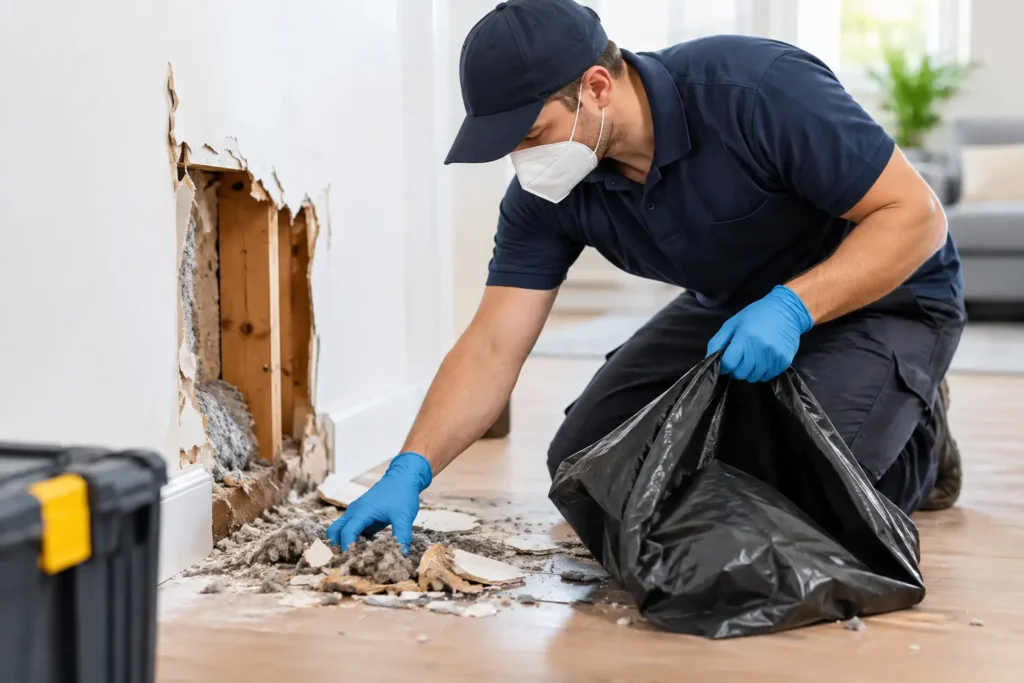
A search for Rodent Damage Repair Near Me usually starts with one unsettling discovery: droppings in the attic, a urine odor coming through a ceiling vent, shredded insulation, or scratching overhead after dark. What you can see is often only part of the problem. Rodents can contaminate concealed areas, compromise insulation, damage wiring, and keep returning through the same small exterior gaps unless the home is fully restored and sealed.
Rodent Damage Is More Than a Pest Problem
Trapping or removing rodents is necessary, but it does not repair the conditions they leave behind. In an attic or crawlspace, droppings, urine, nesting debris, and contaminated insulation can affect odors and indoor air quality. Disturbed contamination can also create unnecessary exposure for homeowners who try to sweep, vacuum, or remove materials without proper protection.
The damage can also become expensive when it is left alone. Rodents may tear and compress insulation, reducing its ability to regulate indoor temperatures. They can chew wood, ductwork, stored belongings, and electrical wiring. A lingering odor may signal that urine has soaked into insulation or other porous materials, not that the area simply needs air freshener.
A proper repair plan looks at the entire affected space: contamination, damaged materials, odor sources, insulation performance, and the entry points that allowed rodents inside.
What Professional Rodent Damage Repair Near Me Should Include
Not every company that offers rodent control provides restoration. Before scheduling service, ask whether the work includes cleanup and prevention, not just bait stations or traps. The right scope depends on the amount of contamination, the age and condition of the insulation, and whether rodents are still active.
Inspection Finds the Full Scope of the Damage
A professional inspection should identify active rodent evidence, nesting areas, damaged insulation, urine staining, and likely access points around the roofline, vents, utility penetrations, foundation, and crawlspace. This matters because a clean-looking portion of an attic may sit beside heavily contaminated insulation or an open entry point.
For Southern California homeowners, inspections are especially valuable in older homes with aging vent screens, roof gaps, open crawlspace access, or exterior penetrations that have shifted over time. The goal is to understand what needs repair before cleanup begins, rather than treating only the most visible evidence.
Protected Removal and Sanitization Address Contamination
Contaminated insulation and nesting material should be removed using appropriate containment methods and full protective gear. This is not a standard housekeeping job. Professionals remove affected material, collect rodent waste, and sanitize the underlying surfaces to reduce contamination and odor.
Whether all insulation needs replacement depends on the condition of the space. Localized activity may allow for a more targeted removal. Widespread droppings, urine, nesting, or damaged insulation often calls for a more complete attic or crawlspace cleanup. A clear inspection report helps homeowners understand that distinction and avoid paying for work they do not need.
Insulation Replacement Restores Home Performance
Once contaminated material is removed and the area is sanitized, replacement insulation can restore comfort and energy efficiency. Clean, properly installed insulation helps the attic or crawlspace do its job again. It also removes the odor-holding material that rodents have damaged.
This step is often overlooked by basic pest-control providers. Yet leaving torn or contaminated insulation in place can mean the home remains less efficient and unpleasant long after the rodents are gone.
Exclusion Keeps Rodents From Coming Back
The final repair is the one that protects every other step: sealing access points. Rodents can enter through surprisingly small openings, and they will often reuse familiar routes. Exclusion work closes gaps around vents, eaves, pipe openings, roof transitions, crawlspace vents, and other vulnerable areas with durable materials suited to the location.
A home does not need a temporary fix. It needs a plan that removes the contamination and locks rodents out for good. That is why Professional Rodent Cleanup pairs cleanup and restoration work with detailed rodent-proofing, backed by a lifetime workmanship guarantee.
When to Call for Repair Instead of Waiting
Don’t wait for the odor to worsen or for damage to spread. Schedule an inspection promptly if you notice recurring droppings, a strong ammonia-like smell, chewed wiring or insulation, nesting material, scratching sounds, greasy rub marks, or sudden increases in heating and cooling costs.
If you see exposed or damaged electrical wiring, avoid touching it and contact a qualified professional right away. Likewise, do not disturb large accumulations of droppings in an attic or crawlspace. The safest next step is to have the area assessed and receive a clear recommendation for cleanup, sanitization, insulation repair, and exclusion.
A clean attic is not just a cosmetic improvement. It is a healthier, better-protected part of your home. A thorough inspection can replace uncertainty with a practical path back to a sanitized, insulated, rodent-resistant space.