
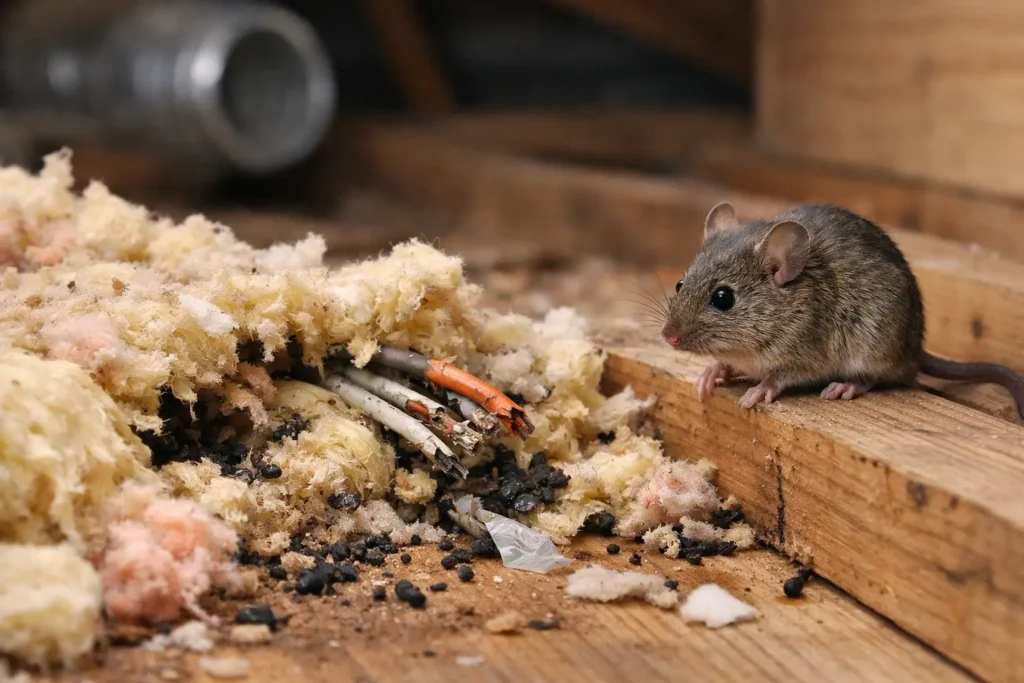
You usually do not see attic or crawlspace insulation until something feels off in the house. A sour odor that will not go away, rooms that suddenly run hot or cold, dustier air, or scratching above the ceiling can all point to rodent damaged insulation symptoms. When rodents get into insulation, the problem is not just mess or noise. It can become a contamination issue, an air quality issue, and an energy efficiency issue at the same time.
The most common rodent damaged insulation symptoms
One of the first signs homeowners notice is odor. Rodents leave behind urine, droppings, nesting material, and body oils that soak into insulation. Once that happens, the smell tends to linger, especially during warm afternoons when attic temperatures rise. If the odor seems strongest near ceiling vents, hallways, closets, or upper rooms, contaminated insulation is a likely cause.
The next symptom is uneven indoor temperature. Insulation works when it stays dry, properly placed, and full enough to slow heat transfer. Rodents tunnel through it, compress it, and scatter it. That creates thin spots and gaps. In Southern California homes, that often shows up as bedrooms that are harder to cool, rooms that warm up too fast, or HVAC systems that seem to run longer without delivering the same comfort.
You may also notice a sudden increase in allergy-like irritation. Contaminated insulation can hold rodent dander, droppings, urine residue, and disturbed debris. Every time air moves through the attic or crawlspace, fine particles can circulate through the home. Some people describe it as stale, dirty, or musty air. Others notice throat irritation, more sneezing, or a general sense that the house does not feel clean even after normal cleaning.
Noise still matters, but it is not the whole story. Scratching, chewing, and movement in the attic or under the floor often mean rodents are active near insulation. However, silence does not mean the damage is over. Many homeowners call only after the animals are gone but the smell, contamination, and temperature problems remain.
What damaged insulation actually looks like
If you look into an attic or crawlspace, rodent activity often leaves a visible pattern. Insulation may appear flattened, tunneled, clumped together, or pushed away from framing. You may see dark trails where rodents traveled repeatedly. In more severe cases, there are obvious nests made from shredded insulation, paper, fabric, or plant material.
Droppings are another clear warning sign, but they are not always spread evenly. Rodents tend to concentrate activity along edges, near vents, around duct lines, and close to entry points. That means one part of the attic might look normal while another area is heavily contaminated. This is why a quick glance from the access opening can miss the real extent of the problem.
Staining also matters. Urine can soak below the surface, leaving yellowing or darker patches in insulation and surrounding building materials. Once that contamination sets in, spot cleaning usually does not fix it. Insulation is porous. It absorbs waste and odor, and that contamination can stay trapped long after the rodents stop moving through the space.
Why rodent damaged insulation symptoms get worse over time
Rodent activity rarely stays contained to one small spot. As nesting grows, the contamination spreads. As insulation gets compressed or displaced, energy loss increases. As droppings and urine accumulate, odor and sanitation concerns become harder to ignore.
There is also a timing issue. Many homeowners first notice the problem when weather changes. Heat waves make attic odors stronger. Cooler nights can make temperature imbalance more obvious. If your utility bills rise at the same time your home feels less comfortable, damaged insulation should be part of the inspection.
It also depends on how long the infestation has been active. A recent intrusion may leave localized signs. A long-term infestation can affect large sections of attic or crawlspace insulation, ductwork, stored items, and even surrounding wood framing. The longer it sits, the less likely it is that removal of rodents alone will solve the problem.
Symptoms homeowners often mistake for something else
A lot of rodent-related insulation damage gets misread at first. Homeowners may assume they have an HVAC issue because certain rooms never feel comfortable. They may think the smell is from old insulation, moisture, or dust buildup. They may even replace air filters several times without realizing the contamination source is above the ceiling.
Another common mistake is assuming that if pest control has already addressed the rodents, the home should return to normal on its own. That is not always how this problem works. Trapping or removal can stop the infestation, but it does not remove soiled insulation, nesting debris, or odor saturation. If the space was heavily used by rodents, cleanup and insulation restoration are usually separate needs.
You may also notice higher dust levels around vents and surfaces. That can happen when disturbed insulation fibers and contaminated debris move through the structure. Not every dusty home has rodent damage, of course. But when dust, odor, and temperature issues show up together, the attic or crawlspace deserves a closer look.
When the issue becomes a health and safety concern
Rodent damaged insulation symptoms are not just cosmetic. Once insulation is contaminated with droppings and urine, the concern shifts from comfort to sanitation. Disturbing that material without proper containment can spread particles into the air. That is one reason professional cleanup matters, especially in homes with children, older adults, or anyone sensitive to poor indoor air quality.
There is also the issue of hidden damage. Rodents that move through insulation often chew nearby materials. During inspection, technicians may find damaged vapor barriers, duct insulation, wiring pathways, or entry gaps around rooflines, vents, and crawlspace access points. The insulation problem is often part of a larger pattern of intrusion.
If there is a strong odor, visible droppings, or widespread tunneling, waiting usually works against you. The space becomes harder to clean, deodorize, and restore. And if entry points remain open, replacing insulation without exclusion work can lead to repeat contamination.
What professional inspection should confirm
A proper inspection should not stop at confirming rodent presence. It should identify how much insulation is affected, where contamination is concentrated, whether odor treatment will be needed, and how rodents are entering the structure. Homeowners benefit most when the inspection connects the symptoms they feel inside the house with the conditions found in the attic or crawlspace.
That process matters because not every insulation issue requires the same response. In mild cases, contamination may be limited to specific sections. In moderate to severe cases, full removal is often the safer and more effective option. It depends on the spread of droppings, urine saturation, nesting volume, and the condition of the insulation itself.
For many properties in Los Angeles County, Ventura County, Orange County, Riverside County, and San Bernardino County, attic heat can intensify rodent odor and make damaged insulation more noticeable fast. That is why speed matters. A delayed response often means more discomfort, more contamination, and higher restoration costs.
What the cleanup and restoration process should include
Once rodent damaged insulation symptoms are confirmed, the goal is not just to make the space look cleaner. The goal is to remove contaminated material safely, sanitize the affected area, address odor, seal entry points, and restore insulation so the home performs properly again.
That usually starts with controlled removal of infested insulation and nesting debris, followed by bagging and sealing of contaminated waste. From there, sanitization and deodorization help address the residue left behind. Exclusion work comes next so rodents cannot return through the same gaps. Only after the space is properly cleaned and protected should new insulation go in.
This is where homeowners often save time and frustration by working with a company that handles cleanup, sanitation, exclusion, and insulation replacement as one coordinated job. Professional Rodent Cleanup is built around that full restoration approach because partial fixes tend to leave part of the problem behind.
If your house smells off, feels harder to cool, or shows signs of rodent activity above or below living spaces, trust what the house is telling you. Insulation is easy to ignore until it stops doing its job. Once rodents contaminate it, fast action protects your air, your comfort, and the condition of the home.
One Response