
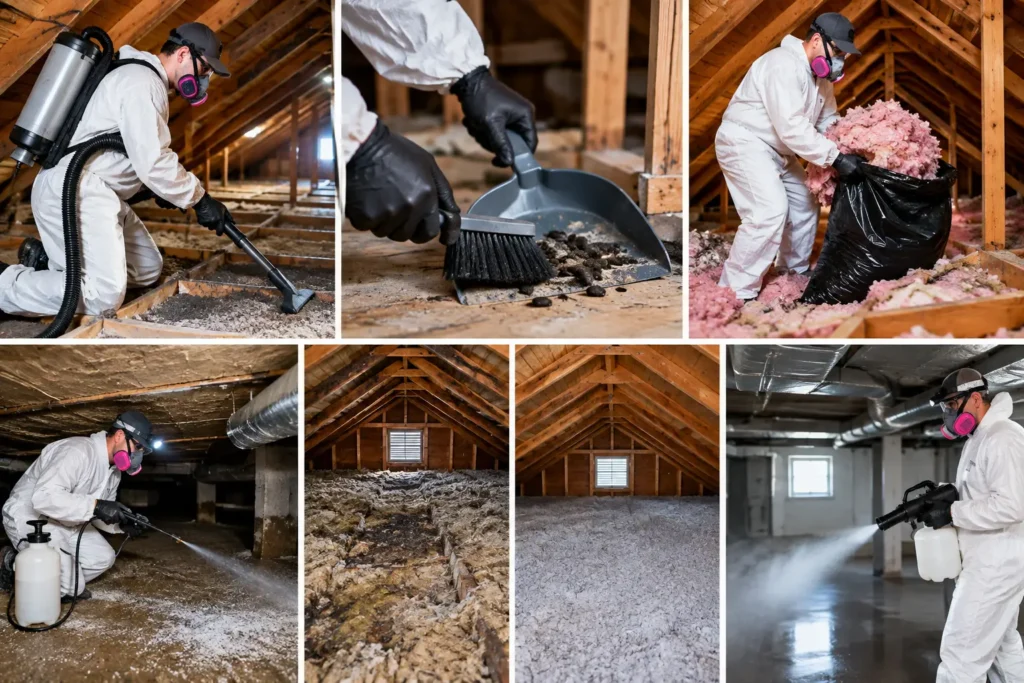
A rodent problem does not end when the scratching stops. In attics, crawlspaces, wall voids, drop ceilings, garages, and storage areas, rats and mice can leave behind droppings, urine residue, nesting debris, damaged insulation, and odors that linger long after the animals are gone. Proper rodent sanitation addresses that contamination at its source rather than covering up the smell or treating only the visible mess.
For a professional inspection in Los Angeles, Ventura, Orange, Riverside, or San Bernardino County, call 833-END-RATS (833-363-7287).
Why Rodent Sanitation Is More Than Surface Cleaning
A few droppings on a garage floor may be a limited cleanup issue. An attic with trails of droppings, urine-stained insulation, shredded nesting material, and a persistent ammonia-like odor is different. The contamination may be spread across framing, duct runs, stored belongings, insulation, and narrow areas that are difficult to reach safely.
This is why sweeping, vacuuming with ordinary equipment, or spraying fragrance into the space rarely solves the real problem. Disturbing dry droppings and nesting debris can spread particles into the air. Leaving urine-contaminated insulation in place can allow odor to return when temperatures rise, particularly in hot Southern California attics. A cleanup plan should be based on where rodents traveled, nested, and contaminated materials – not just on what is easiest to see from the access opening.
For landlords and property managers, sanitation also helps document that an affected unit, common area, attic, or crawlspace has received focused attention before the space is returned to normal use. In commercial properties, warehouses, schools, and apartment buildings, a thorough process can reduce disruptions caused by persistent odors or neglected contamination in hard-to-access areas.
What Professional Rodent Sanitation Should Include
The right scope depends on the property and the severity of activity. A single localized area may need targeted removal and sanitation. A longstanding infestation can require insulation removal, odor neutralization, exclusion work, and restoration. The key is to inspect first, then build the cleanup around actual conditions.
Inspection and Site Preparation
Professional cleanup starts by identifying the affected areas and the likely pathways rodents used. Technicians look for droppings, urine staining, nesting sites, chewed materials, odor concentration, damaged insulation, and possible entry points. In an Encino attic or an Ontario warehouse, the extent of contamination can be very different even when the initial complaint is simply “a bad smell.”
Before removal begins, the work area should be prepared to control debris and keep contamination from being tracked into clean portions of the property. Containment is particularly valuable when work is being performed near living spaces, finished ceilings, storage areas, or occupied commercial operations. Personal protective equipment and professional-grade collection methods help technicians handle contaminated materials carefully rather than moving the problem from one area to another.
Removal of Contaminated Materials
Rodent droppings, nesting debris, and heavily affected insulation should be removed when they cannot be effectively cleaned in place. Insulation is often the biggest issue in attics and crawlspaces because it can hold urine residue and odor over a broad area. If rodents have tunneled through it, nested in it, or repeatedly traveled across it, a surface treatment alone may not be enough.
Removal also applies to contaminated debris in wall-adjacent voids, suspended ceilings, garages, and storage areas. The goal is not to remove every material automatically. It is to remove materials that are damaged, odor-retaining, or too contaminated to leave behind with confidence. That distinction matters because responsible remediation should match the condition of the property rather than follow a one-size-fits-all approach.
Targeted Cleaning, Sanitation, and Odor Control
After contaminated waste and materials are removed, affected structural surfaces can be treated with targeted sanitation methods. This may include framing, subflooring, accessible surfaces, and areas around former nesting locations. Cleaning is followed by a proprietary rodent scent neutralization process designed to address the odor signature rodents leave behind.
Odor control is often misunderstood. Fragrance products can make a space smell better for a short time, but they do not remove the source of the odor. True odor work requires finding contaminated insulation, debris, and urine-affected areas first. If a property still smells strongly after a basic cleanup, it may be because the most affected material is hidden behind a ceiling, inside an attic cavity, or below a crawlspace floor system.
Restoration and Prevention
Once sanitation is complete, restoration may involve replacing removed insulation, cleaning and organizing the access area, or addressing damage connected to rodent activity. Just as important, the property needs protection against a repeat infestation. If rodents can still enter through gaps around utility lines, roofline openings, foundation vents, or other vulnerabilities, new contamination can begin soon after cleanup.
Professional Rodent Cleanup takes a humane, poison-free approach focused on exclusion and long-term prevention. Sealing active entry points and correcting conditions that allow rodents inside helps protect the work that has already been completed. Cleanup without prevention is often a temporary reset. Prevention without cleanup leaves behind the odor, debris, and damaged materials that brought the property owner to seek help in the first place.
When a Professional Cleanup Is the Better Choice
Property owners sometimes handle a small, fresh, isolated mess on a nonporous surface. But professional help is usually the safer and more practical choice when droppings are widespread, insulation is contaminated, odors persist, rodents have occupied the space for an unknown period, or activity is present in difficult-access areas.
It is also a good choice when there are signs of recurring infestations. Repeated droppings near the attic hatch, a urine odor that becomes stronger during warm weather, scratching in a wall, or new debris after a prior cleanup all suggest that the original issue was not fully resolved. In multi-unit buildings, one untreated attic or utility chase can contribute to recurring problems across more than one space.
Do not assume that an area is clean because it looks clean from below. Attics above bedrooms, crawlspaces below additions, and ceiling voids above offices can hold contamination that is invisible during a casual walkthrough. A detailed inspection gives homeowners and facility managers a clearer basis for deciding whether targeted service or more extensive restoration is warranted.
Common Problems That Need More Than Deodorizer
A persistent rodent odor can have several sources, and each requires a different response. Urine-soaked insulation may need removal. Nesting material behind stored boxes may need to be collected and sanitized. A deceased rodent in an inaccessible cavity may require a different access strategy. In some cases, the odor is strongest near an air return or opening because airflow is carrying it from a contaminated attic or wall void.
Damaged insulation deserves special attention. Beyond holding odors, it can lose its effectiveness when rodents compress, shred, or contaminate it. Replacing affected insulation after sanitation can improve the condition of the space while removing a material that may otherwise continue to retain odor.
For businesses, sanitation work should also be planned around operations. A warehouse may need containment that keeps cleanup away from inventory. A school or apartment building may need work scheduled to limit disruption. The cleanup standard should remain careful and thorough, while the work plan fits the property’s real-world needs.
Don’t Wait for the Odor to Get Worse
Rodent contamination is easier to address before it spreads through more insulation, storage areas, or building cavities. If you have found rat or mouse droppings, smell urine in the attic or crawlspace, or suspect old nesting debris is still affecting the property, an inspection can clarify what needs to be removed, sanitized, neutralized, and restored.
Professional Rodent Cleanup serves Southern California property owners with more than 20 years of hands-on experience through Rodents Stop. Ready when you are, schedule a professional inspection by calling 833-END-RATS (833-363-7287). A careful cleanup and prevention plan can help your property feel usable, clean, and protected again.