
Schedule a Professional Inspection: 833-END-RATS (833-363-7287)
A rat problem in a San Fernando Valley attic rarely ends when the animal is gone. Droppings remain behind insulation, urine can continue to smell when temperatures rise, and nesting debris may be hidden around ductwork, wall openings, or recessed lights. Professional rodent control and cleanup in the San Fernando Valley addresses the contamination left behind, not just the activity you can see.
For homeowners in Sherman Oaks, Encino, Woodland Hills, Northridge, and nearby communities, that distinction matters. Attics and crawlspaces are often out of sight for years. By the time odor enters living areas or insulation is visibly damaged, contamination may extend well beyond one small corner.
Professional Rodent Control and Cleanup in San Fernando Valley
A complete response has two connected parts: stopping rodents from getting back in and restoring the affected space safely. Control without cleanup can leave a property with persistent odor, soiled insulation, and ongoing concerns about indoor conditions. Cleanup without exclusion can mean new contamination shortly after the work is finished.
At Professional Rodent Cleanup, our work is built on more than 20 years of hands-on experience through Rodents Stop. We begin with an inspection of accessible attic, crawlspace, garage, storage, ceiling, and exterior entry areas. The goal is to identify where contamination is concentrated, what materials can be cleaned, what should be removed, and how rodents have been entering.
A practical plan may include humane, poison-free rodent control and exclusion measures such as sealing qualifying gaps, openings around utility lines, and damaged access points. The right scope depends on the age of the building, the amount of activity, and whether rodents have reached wall voids or drop ceilings. A single entry point can create a repeat problem, but not every stain or odor means an entire attic needs to be rebuilt.
Why Attic Contamination Needs More Than a Quick Cleanup
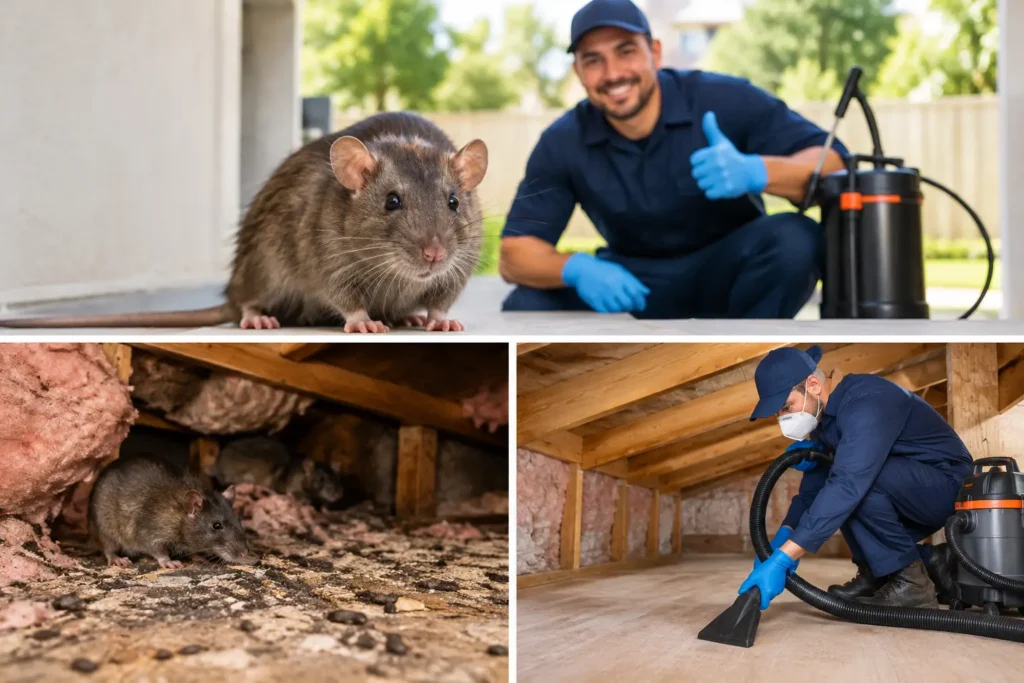
Rodent waste should not be dry swept, brushed, or picked up with an ordinary household vacuum. Those methods can disturb contaminated particles and spread them into the air or across clean surfaces. A professional crew uses appropriate personal protective equipment, controlled work practices, and specialized HEPA equipment when the conditions call for it.
Before removal begins, technicians prepare the work area and establish containment to limit the movement of dust and debris. Droppings, nests, carcass-related debris, and heavily contaminated insulation are carefully removed and sealed for disposal. Remaining affected surfaces are treated with a proper disinfecting process that allows the required contact time rather than being sprayed and immediately wiped away.
This work is especially important in attics with loose-fill or batt insulation. Insulation can trap urine odor, droppings, and nesting material deep below the visible surface. If contamination is limited, targeted removal and sanitation may be appropriate. If urine saturation, widespread droppings, or nesting is extensive, removing contaminated insulation can be the more reliable option before restoration.
Odor Is a Clue, Not a Cosmetic Problem
The sharp, stale odor many property owners notice is not always solved with fragrance or a basic deodorizer. Rodent urine can penetrate insulation, wood framing, and dusty attic surfaces. Heat and humidity can make the smell more noticeable, which is why some San Fernando Valley properties seem fine in cooler weather and become difficult to live with during warmer periods.
After source materials are removed and sanitation is completed, targeted deodorization and proprietary rodent scent neutralization help address lingering odor at its source. This step works best after cleanup, not as a substitute for it. Covering up an odor while contaminated nesting debris remains in place is a short-term fix that often disappoints property owners.
What Property Managers and Commercial Owners Should Watch For
Apartment buildings, warehouses, schools, and commercial properties can have rodent activity in spaces that are easy to miss: suspended ceilings, loading areas, equipment rooms, storage zones, and utility chases. One overlooked void can affect several suites or units. For landlords and facility managers, documented inspection findings and a clear cleanup scope help prioritize work without treating every area as equally contaminated.
Common warning signs include recurring urine odor, insulation displaced near attic access points, droppings around stored materials, rub marks near openings, and fresh debris after previous pest treatment. If activity continues after trapping or removal, the building likely needs a closer look at entry points and exclusion details.
Restore the Space and Help Prevent the Next Infestation
Professional cleanup is about returning an affected area to usable condition. That may mean sanitizing a crawlspace, removing damaged insulation, deodorizing an attic, clearing nesting debris, and restoring insulation where removal was necessary. It also means looking for conditions that allow rodents to return, including unsealed openings and damaged vents.
Do not wait for attic odor or contamination to spread into occupied spaces. A careful inspection gives you a realistic picture of what needs attention and what does not. Ready when you are, schedule a professional inspection at 833-END-RATS (833-363-7287).
Read more about rat droppings removal in Sherman Oaks.