
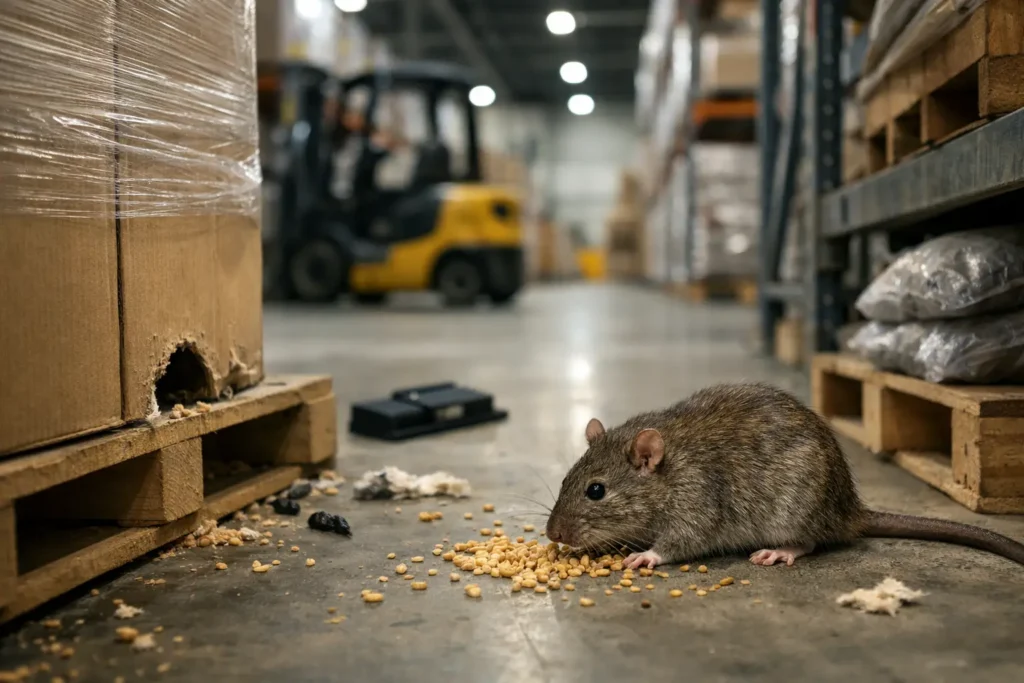
A warehouse rodent infestation is rarely limited to a few droppings near a loading door. Rodents move through wall voids, racks, insulation, break rooms, electrical spaces, and stored goods. By the time activity is visible during business hours, contamination, odor, damaged materials, and access points may already be spread across the facility.
For warehouse operators, the priority is not simply catching rodents. It is stopping active access, protecting people and inventory, safely removing contamination, and correcting the building conditions that let the problem develop. A few traps may reduce sightings, but they do not clean urine-soaked materials, restore damaged insulation, or seal the openings rodents use to return.
Why Rodents Create Bigger Problems in Warehouses
Warehouses give rats and mice what they need to establish themselves: shelter, warmth, water, and protected travel routes. Pallets, stored cartons, utility chases, ceiling spaces, compactors, floor drains, landscaping, and loading areas can all support rodent activity. Older buildings and facilities with frequent deliveries are especially vulnerable because exterior doors and penetrations are opened and closed throughout the day.
The direct damage can be expensive. Rodents chew cartons, labels, food packaging, wiring, plastic, and insulation. They also leave droppings and urine wherever they travel. That can mean inventory loss, cleanup expenses, interrupted operations, and concerns about sanitation standards.
The less visible damage matters too. Nesting materials and urine can create persistent odor, particularly in insulated cavities, ceilings, and mechanical areas. Chewed wiring can create equipment failures and fire risk. When contaminated insulation or debris is disturbed, particles can be pushed into occupied areas or ventilation pathways.
Not every rodent sighting means a large infestation. A single mouse near a dock may have entered recently. But repeated sightings, fresh droppings, gnaw marks, or odor should be treated as evidence that the building needs a thorough inspection, not a quick surface-level response.
Warehouse Rodent Infestation Warning Signs
Rodents are most active when a building is quiet, so signs are often more useful than a daytime sighting. Fresh droppings are usually dark, moist-looking, and concentrated along walls, behind stored materials, near food sources, and around equipment. Older droppings become dry and gray, but their presence still shows that an area has been used.
Look for greasy rub marks along walls, pipes, and door frames. Rats often reuse the same travel routes, leaving dark marks from oils in their fur. Mice may leave smaller evidence, including shredded paper, fabric, foam, or insulation gathered into nests. Gnawing around conduits, door sweeps, utility penetrations, and packaging is another serious warning sign.
A sharp ammonia-like odor may point to accumulated urine, especially in enclosed storage rooms, ceiling cavities, and areas with insulation. Staff may also report scratching sounds after closing, unexplained product damage, or sightings near dumpsters and loading docks. Those reports should be documented by location and date. Patterns help identify the entry route and the areas that require cleanup.
What to Do When You Find Droppings or Nesting Material
Do not sweep, vacuum, or blow rodent droppings with standard equipment. Dry cleanup can stir contaminated dust into the air. It also spreads material beyond the original area, making a contained problem more difficult to address.
First, limit access to the affected section if possible. Move employees away from visible droppings, nests, or damaged materials until the area can be evaluated. If inventory may be contaminated, separate it from unaffected stock and follow your company’s product-handling and disposal requirements. Food, pharmaceuticals, and other regulated products may require additional documentation and oversight.
Next, arrange for a qualified inspection. A proper assessment should identify active rodent evidence, likely species, travel paths, nesting locations, damaged building materials, moisture sources, and exterior openings. The response should be based on what is actually happening in the building. Heavy attic or wall-void contamination requires a different scope than limited activity at one exterior door.
For substantial contamination, trained technicians should use protective gear and controlled removal methods. The goal is to remove contaminated nesting material, droppings, and insulation where necessary, sanitize affected surfaces, and address odor at its source. Spraying fragrance over urine-contaminated materials does not solve the problem. Neither does placing traps without removing what rodents have left behind.
Exclusion Is the Step That Makes Cleanup Last
A clean warehouse can become contaminated again if entry points remain open. Rodents can use gaps around utility lines, damaged vents, unsealed pipe penetrations, broken siding, roofline openings, dock-door gaps, and worn weatherstripping. Mice can enter through openings far smaller than most people expect.
Exclusion work should focus on durable, building-appropriate repairs rather than temporary patches. Depending on the facility, that may include sealing penetrations, repairing vents, reinforcing access points, installing or replacing door sweeps, and correcting gaps around dock equipment. The material and method matter. A soft filler alone may not stand up to gnawing, weather, or repeated building movement.
Loading docks deserve special attention because they combine frequent exterior access with food debris, pallet traffic, and sheltered hiding places. Doors should close tightly, dock seals should be maintained, and employees should report visible gaps promptly. Keeping doors open for convenience can create an ongoing entry route, so the practical solution may depend on delivery schedules and how the facility operates.
Sanitation and Storage Practices That Reduce Pressure
Exclusion works best when paired with housekeeping that makes the property less attractive. This is not about expecting staff to solve a structural rodent problem through cleaning alone. It is about removing the easy food, water, and shelter that allow a small issue to grow.
Waste should be contained in sound, closed receptacles and removed on a reliable schedule. Spills need prompt cleanup, including under shelving and around break areas. Leaks below sinks, near ice machines, or around plumbing should be repaired because rodents will use even minor water sources.
Storage layout also affects inspection and treatment. When possible, keep products elevated and leave enough clearance along walls for staff to spot droppings, gnaw marks, and rub marks. Avoid allowing damaged cartons, loose packaging, or unused materials to accumulate in corners. Exterior vegetation, stored equipment, and debris should be kept from creating concealed paths directly against the building.
When a Professional Response Is Necessary
A professional response is appropriate when evidence is recurring, contamination is widespread, odors persist, insulation or wiring is damaged, or rodents may have reached concealed areas. It is also the right move when the warehouse handles sensitive inventory or when a failed inspection, employee concern, or customer complaint raises the stakes.
The best providers coordinate rodent control with remediation and exclusion. Those are related but separate jobs. Rodent control addresses active populations. Cleanup removes the contamination left behind. Exclusion closes access points. If any one piece is skipped, the facility may remain unsafe, unsanitary, or vulnerable to reinfestation.
Ask clear questions before approving work. Find out how the provider will locate entry points, contain contaminated materials, sanitize affected areas, handle insulation damage, document findings, and confirm that repairs are complete. A detailed scope gives facility managers a better basis for protecting employees, inventory, and the building itself.
In Southern California, warm weather can keep rodent pressure active through much of the year. Waiting for a seasonal slowdown is rarely a reliable plan. Address the evidence while it is localized, protect the areas people and products depend on, and make the building harder for rodents to enter again.