
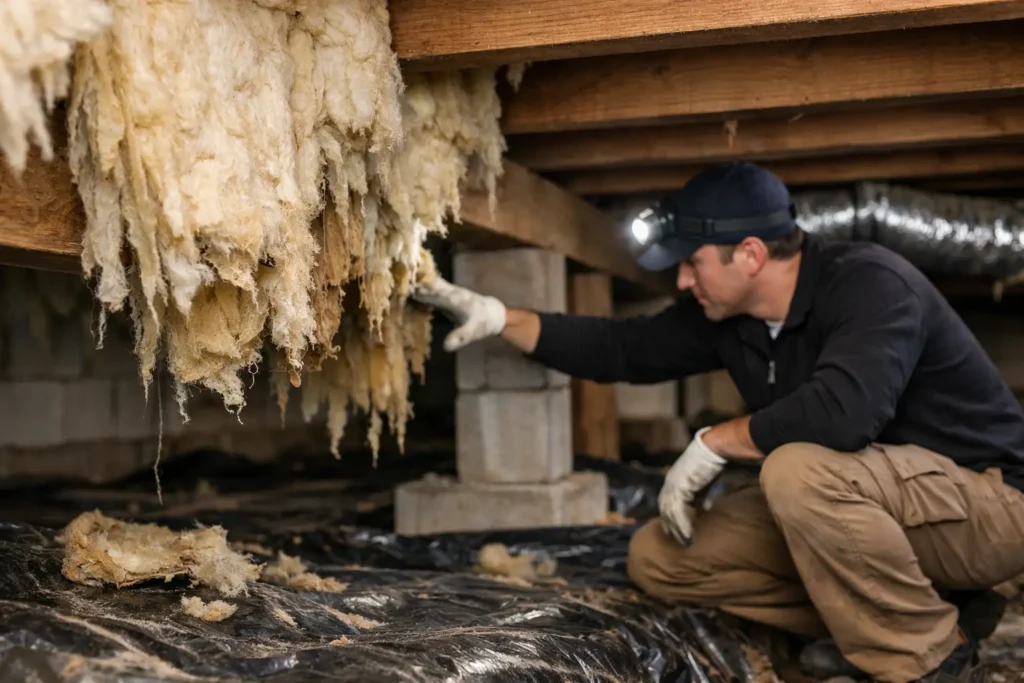
If you are asking when should crawlspace insulation be replaced, the question usually starts with a smell, a cold floor, higher utility bills, or signs of rodent activity under the house. In most homes, crawlspace insulation does not need replacement just because it is old. It needs replacement when it is wet, contaminated, falling down, compressed, mold-damaged, or no longer doing its job safely.
That distinction matters. Homeowners are often told insulation lasts forever, but crawlspaces are harsh environments. Moisture, pests, poor ventilation, plumbing leaks, and long-term neglect can turn insulation from a protective barrier into a contaminated problem area. Once that happens, leaving it in place can affect air quality, comfort, odor, and energy performance throughout the home.
When should crawlspace insulation be replaced instead of repaired?
The short answer is this: replace crawlspace insulation when the material is damaged beyond recovery or when contamination creates a health and sanitation concern. Minor issues can sometimes be corrected, but crawlspace insulation is not like a surface you can simply wipe down and trust again.
If a small section has shifted or detached and the material is still dry and clean, reattaching or spot repair may be enough. But if insulation has absorbed urine, collected droppings, supported nesting, or held moisture for an extended period, replacement is usually the safer and more complete solution.
This is especially true after rodent activity. Insulation acts like a sponge for contamination. It can trap odor, bacteria, and debris deep inside the fibers, even when the visible damage seems limited. In those cases, partial fixes often leave the real problem behind.
The clearest signs your crawlspace insulation needs replacement
One of the most obvious signs is insulation that is hanging down or falling away from the subfloor. Once insulation sags, it creates gaps and loses much of its thermal value. Sometimes this happens because old fasteners fail, but in many cases it points to moisture, pest disturbance, or material breakdown.
Wet insulation is another major warning sign. A plumbing leak, groundwater intrusion, or high humidity can saturate insulation and keep the crawlspace damp. Wet fiberglass and other insulation materials do not perform well, and they can contribute to mold growth and wood damage around them.
Rodent contamination is a common reason for replacement. If you see droppings, shredded insulation, nesting material, tunneling, or strong ammonia-like odors, the insulation should be treated as compromised. The same applies if the crawlspace has visible trails, grease marks, or repeated signs of infestation.
Discoloration, mold-like spotting, or persistent musty odor also point to a replacement decision. Even if the source of moisture has stopped, damaged insulation can continue holding odor and contamination. If the crawlspace smells bad, the living space above it often does too.
Another sign is poor indoor comfort. If floors feel colder in winter or the HVAC system seems to work harder than before, the crawlspace insulation may no longer be providing a consistent barrier. Age alone is not the issue here. Performance is.
When should crawlspace insulation be replaced after rodent activity?
After a moderate or heavy rodent infestation, replacement is usually the right call. Rodents do not just pass through insulation. They burrow into it, tear it apart, urinate on it, and leave droppings and nesting debris throughout the area. That kind of contamination spreads beyond the visibly damaged spots.
A common mistake is removing droppings while leaving contaminated insulation behind. That may improve appearance for a short time, but it does not fully address the odor, sanitation risk, or damaged thermal performance. If the infestation has been ongoing, insulation removal and replacement should be part of the cleanup plan, along with sanitization and sealing entry points.
This is where homeowners benefit from a full-process service rather than basic pest control alone. Killing or trapping rodents does not restore the crawlspace. If the insulation remains contaminated, the space is still compromised.
Moisture damage changes the timeline
In Southern California, some homeowners assume crawlspaces stay dry enough that insulation rarely needs attention. But plumbing leaks, drainage issues, and humidity can still cause serious damage under a home. Once insulation gets wet and stays wet, replacement often becomes the better long-term option.
The reason is simple. Even after drying, insulation that has been soaked may remain matted, compressed, or contaminated. Its R-value drops, and its ability to support a cleaner, healthier crawlspace drops with it. If mold has developed nearby, replacement becomes even more urgent.
The right response is not just changing the insulation. The moisture source must be corrected first. Otherwise, new insulation can fail for the same reason the old material did.
How long does crawlspace insulation usually last?
Under ideal conditions, crawlspace insulation can last many years. But crawlspaces are rarely ideal. The lifespan depends on the material, installation quality, moisture exposure, pest activity, and overall condition of the space.
Some insulation may appear intact after 15 to 20 years, yet still perform poorly because it has shifted, compressed, or absorbed contamination over time. Other insulation may fail much sooner if rodents enter the crawlspace or a plumbing issue goes unnoticed.
That is why replacement should be based on inspection findings, not a fixed calendar. A homeowner asking for a timeline is asking the right question, but the answer is usually condition-based. If the insulation is clean, dry, secure, and performing properly, replacement may not be necessary yet. If it is damaged or contaminated, waiting longer rarely improves the outcome.
Can you replace only part of the crawlspace insulation?
Sometimes, yes. If the damage is limited to one section and the rest of the insulation is clean and secure, a partial replacement can make sense. This is more realistic after a small plumbing event or isolated physical damage.
But partial replacement is not the best choice when contamination is widespread. Rodents move through hidden areas, and odors travel. What looks like a local issue often reaches farther than expected. In those situations, full removal allows proper cleaning, sanitization, and a fresh start.
A thorough inspection helps determine which path makes sense. The goal is not to replace more than necessary. The goal is to avoid leaving behind damaged material that keeps causing problems.
What happens if you wait too long?
Delaying replacement can lead to bigger issues than energy loss. Contaminated insulation can continue affecting indoor air quality and holding odor under the home. Moisture-damaged insulation can contribute to mold conditions and wood deterioration. Rodent-damaged insulation can hide ongoing activity and make re-infestation easier.
There is also the comfort factor. Homes with failing crawlspace insulation often feel harder to heat and cool. Floors may stay cold, rooms may feel uneven, and utility costs can rise without an obvious explanation.
The longer damaged insulation stays in place, the less likely a simple fix will solve the full problem. What starts as a cleanup issue can grow into a larger restoration project.
What a proper replacement process should include
Good crawlspace insulation replacement is not just a removal job. It should start with inspection to identify contamination, moisture, and entry points. If rodents have been active, all affected insulation and nesting material should be removed carefully and contained correctly.
After that, the crawlspace should be cleaned and sanitized based on the level of contamination. Odor treatment may also be necessary, especially when urine saturation has been present for a long time. Then the space should be protected by sealing rodent access points before new insulation is installed.
That sequence matters. Replacing insulation without cleaning the area or addressing rodent entry turns a restoration project into a temporary cosmetic fix.
Knowing when to act
If your crawlspace insulation is dry, secure, and free of contamination, replacement may not be urgent. If it is sagging, wet, torn up by rodents, holding odor, or making the home less comfortable, it is time to move. The safest answer to when should crawlspace insulation be replaced is this: replace it as soon as inspection shows it is no longer clean, effective, or safe to keep under the home.
A crawlspace does not need to stay out of sight and out of mind. When it is properly cleaned, sanitized, sealed, and reinsulated, the whole home feels healthier, cleaner, and easier to live in. That is a repair homeowners notice above the floor, not just below it.