
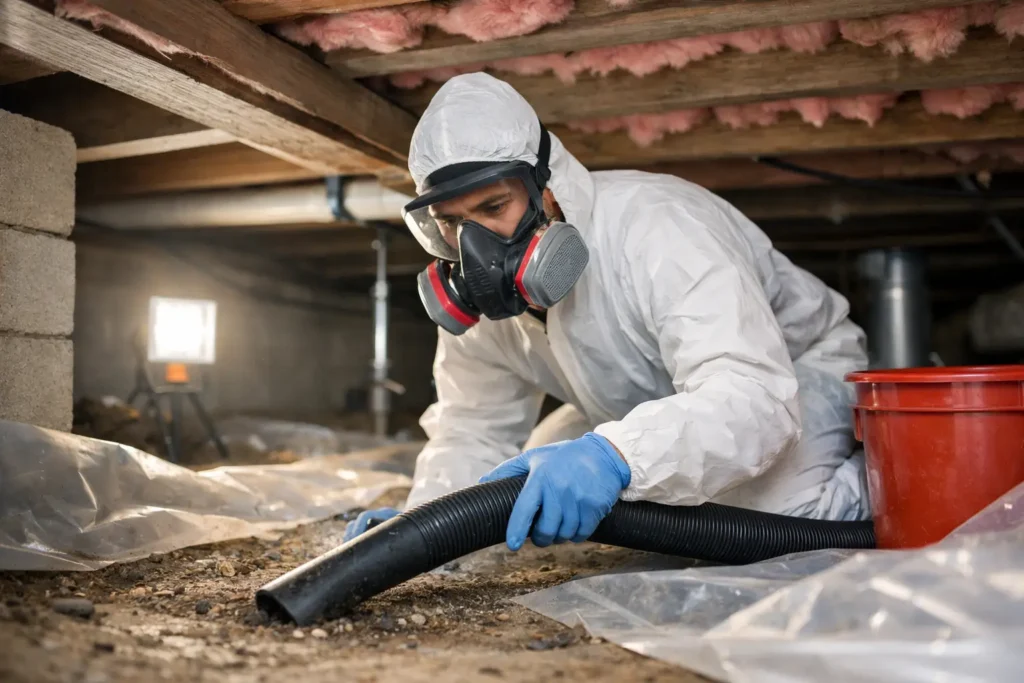
Rodent contamination does not stay contained beneath your floor. Urine odors, droppings, nesting debris, and damaged insulation can affect the air moving through your home, reduce energy efficiency, and leave homeowners wondering what they cannot see. Professional Crawlspace cleanup addresses the full problem – not just the rodents that caused it.
A proper cleanup restores a concealed area that has become unsafe, dirty, and inefficient. It also closes the entry points that allowed rodents inside, so your investment is protected after the work is complete.
Why Rodent-Damaged Crawlspaces Need More Than Pest Control
Traps and bait can reduce rodent activity, but they do not remove what rodents leave behind. Droppings, urine, shredded insulation, food debris, and nesting materials may remain in tight, poorly ventilated areas long after the animals are gone. Disturbing those materials without the right protective equipment can spread contaminated dust and unpleasant odors.
Crawlspace insulation is often one of the biggest concerns. Rodents tunnel through it, compress it, and use it for nests. Once insulation is contaminated, it may no longer perform as intended. That can contribute to colder floors, higher heating and cooling costs, and persistent odors that seem to have no clear source.
The right response depends on the extent of the damage. A small, isolated issue may require targeted removal and sanitization. Widespread droppings, heavily soiled insulation, active nesting, or strong urine odor typically calls for a complete remediation plan.
What Professional Crawlspace Cleanup Includes
A thorough service begins with an inspection of the crawlspace and the exterior areas rodents may be using for access. Technicians identify contaminated materials, visible activity, moisture concerns, insulation damage, and gaps around utility lines, vents, foundation openings, or other vulnerable points.
The cleanup process is designed to handle contamination without turning your home into a larger mess. Technicians wear full protective gear, safely remove rodent waste and nesting materials, and bag contaminated insulation for proper disposal. They then sanitize affected surfaces and apply odor treatment where urine contamination has created a lasting smell.
If insulation has been damaged or removed, replacement insulation can be installed to restore the crawlspace’s thermal performance. This is more than a cosmetic upgrade. Clean, properly installed insulation helps support comfort, energy efficiency, and better separation between the crawlspace and the living areas above.
The final step is exclusion. Entry points must be sealed with durable materials appropriate for the opening and location. Without exclusion work, cleanup can become a temporary reset followed by another infestation. A complete restoration approach removes the contamination and locks rodents out for good.
Signs You Should Schedule an Inspection
Homeowners often notice a problem upstairs before they realize the crawlspace is involved. A stale or ammonia-like odor, scratching sounds near the floor, sudden changes in indoor comfort, or recurring rodent activity can all point to a hidden issue below the home.
Other warning signs include droppings near foundation vents, torn duct wrap, damaged insulation, chewed wiring, or debris pushed around crawlspace openings. Older Southern California homes can be especially vulnerable because of aging vent screens, gaps around additions, and penetrations made for plumbing, electrical, or HVAC work.
Do not wait for a minor odor or a few droppings to become widespread contamination. Early inspection often limits the amount of material that needs to be removed and helps prevent further damage to insulation, ducts, and structural areas.
Why DIY Cleanup Can Create Bigger Problems
A crawlspace is cramped, dusty, and difficult to access. Homeowners may not be able to see the full extent of contamination, especially behind insulation or around ducts and pipes. Household cleaners may mask an odor temporarily, but they do not necessarily address urine-soaked materials or contaminated nesting areas.
Professional remediation teams use protective procedures, commercial sanitation methods, and containment-minded removal practices suited to concealed spaces. Just as importantly, they can identify the access points a basic cleanup would miss. Rodents can return through openings that appear too small to matter.
A Clear Path Back to a Clean, Protected Home
A free, no-obligation crawlspace inspection gives you a clear view of what is happening below your home and what it will take to fix it. You should receive a straightforward scope covering contamination removal, sanitization, insulation needs, and exclusion repairs – with no pressure to guess at the right solution.
When rodent damage is present, fast action protects more than your crawlspace. It helps restore cleaner air, better insulation performance, and confidence that the rodents are not coming back.