
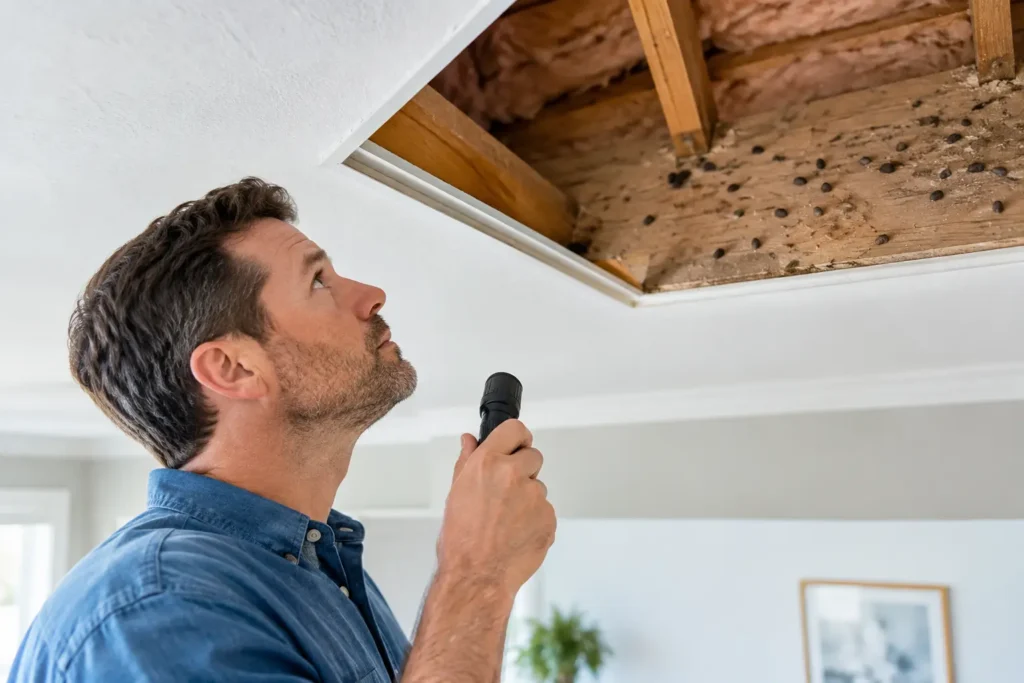
A faint scratching sound overhead is unsettling. Finding droppings above ceiling panels, around recessed lights, or falling from an attic access hatch turns that concern into a clear warning: animals have likely been using a concealed part of your home.
Droppings above ceiling areas are not a cosmetic issue to sweep aside. They can point to contaminated insulation, urine-soaked nesting material, damaged ductwork, and an active entry point that allows rodents to move through the attic or wall cavities. The right response protects your household without turning a contained problem into a wider contamination issue.
What Droppings Above Ceiling Areas Usually Mean
In Southern California homes, rodent droppings above a ceiling often mean rats or mice are active in the attic. Roof rats are especially common around mature landscaping, rooflines, utility penetrations, and gaps near vents. Mice can enter through even smaller openings and may nest inside insulation, behind soffits, or near warm mechanical equipment.
The location matters. If droppings are visible near an attic hatch, light fixture, ceiling vent, or in a garage with a finished ceiling, there may be far more contamination out of sight. Rodents tend to travel repeatedly along protected routes. What you can see at one opening may be only a small part of the activity above it.
Droppings alone do not identify every animal with certainty. Larger droppings, loud nighttime movement, and damage around roof access points may suggest rats. Smaller pellet-like droppings can indicate mice. Birds, bats, squirrels, and other animals can also occupy roof and ceiling voids. A professional inspection is the safest way to identify the source before cleanup or exclusion work begins.
Why You Should Not Sweep or Vacuum Them
The instinct to clean immediately is understandable. But dry sweeping, brushing, or using a household vacuum can disturb contaminated particles and send dust into the air. Rodent waste may carry bacteria and other contaminants, while urine residue and nesting debris can contribute to persistent odors and poor attic air conditions.
There is also a practical concern: reaching through a ceiling opening or stepping into an attic can disturb compromised insulation, exposed wiring, or unstable areas of the structure. If the rodents are still active, cleaning visible droppings without addressing the source only creates a cycle of repeated contamination.
For a small, isolated amount of droppings in an accessible area, use appropriate protective equipment and dampen the material with a disinfectant before carefully collecting it. Avoid creating airborne dust. When droppings are in an attic, crawlspace, wall cavity, or above a finished ceiling, professional remediation is the better choice. These spaces require controlled removal, protective gear, and a plan for the contaminated materials that cannot be effectively cleaned in place.
Signs the Problem Has Moved Beyond a Small Cleanup
A single dropping near an exterior door does not always mean your attic needs restoration. It depends on where the waste is found, how much is present, and whether there are signs of ongoing activity. The concern becomes more urgent when you notice any combination of the following:
- A urine or ammonia-like odor, particularly when the attic warms up
- Scratching, scurrying, or gnawing sounds at night
- Flattened, shredded, or dark-stained insulation
- Chewed electrical wiring, duct insulation, or stored items
- Nesting materials, food debris, or grease marks along travel routes
- Droppings that continue appearing after traps or pest control treatments
These signs suggest the issue is not limited to an animal passing through. Rodents may have established a nesting area, contaminated insulation across a larger section of the attic, or created several access routes. In that situation, basic pest removal does not restore the affected space.
The Health, Odor, and Insulation Concerns
An attic is part of your home’s protective envelope, even though you rarely see it. When rodents contaminate that space, the effects can reach beyond the attic door.
Urine and droppings can produce odors that drift through recessed lights, ceiling penetrations, HVAC pathways, and gaps around access panels. Warm weather can make the smell stronger. In severe cases, homeowners notice odors in bedrooms, hallways, closets, or living areas without realizing the source is overhead.
Contaminated insulation is another concern. Insulation that has been used for nesting, compressed by animal activity, or saturated with urine does not perform as intended. Heat can move into the home more easily in summer, and conditioned air can escape more readily. Replacing affected insulation is not simply about appearance. It helps restore comfort, energy performance, and a cleaner attic environment.
Rodents can also gnaw on wiring and damage flexible ducts. Those issues require careful assessment. Cleanup crews should never treat an attic as just a bag-and-vacuum job when there are potential electrical, structural, or HVAC concerns nearby.
What Professional Rodent Cleanup Should Include
A complete solution starts with determining how animals got in and how far the contamination extends. An inspection should examine the attic or crawlspace, roofline, vents, eaves, utility openings, and other vulnerable exterior points. The goal is to identify active evidence, not make assumptions from one visible pile of droppings.
When removal is needed, trained technicians use full protective gear and controlled methods to remove droppings, nests, and contaminated insulation. The affected areas are then sanitized and treated for urine odor where appropriate. This helps address the material causing the problem rather than masking it with fragrance or leaving contaminated debris behind.
The final piece is exclusion. Openings around roof penetrations, vents, construction gaps, damaged screens, and utility lines must be sealed with durable materials suited to the location. Exclusion should be timed and performed carefully so rodents are not trapped inside the structure. Once access points are closed, the home is far less likely to become a nesting site again.
That full sequence matters: remove the contamination, sanitize the area, restore insulation when necessary, and lock rodents out. Skipping any one part can leave odors behind, reduce insulation performance, or invite reinfestation.
What to Do While You Arrange an Inspection
Keep the area undisturbed and avoid opening ceiling panels or moving attic insulation yourself. If droppings are appearing around a ceiling fixture, do not assume the fixture is the entry point. It may simply be the closest opening where debris can fall from the attic.
Keep children and pets away from the affected area. If you notice an electrical concern such as flickering lights, a burning odor, visible chewed wiring, or a tripped breaker, contact a qualified electrician promptly. Rodent cleanup specialists can address contamination and exclusion, but electrical hazards should receive immediate attention.
You can also make note of where and when you hear activity, smell odors, or find new debris. Those details help technicians locate travel routes and distinguish an older contamination issue from current rodent activity. Do not rely on poison or a few traps as a complete answer for an attic problem. Even if activity stops, the waste, urine residue, nests, and damaged insulation remain.
Don’t Let a Hidden Attic Problem Grow
Rodents are most damaging when they remain unnoticed. By the time droppings above the ceiling become visible, there may already be an established route from the exterior into your attic. A prompt inspection gives you a clear picture of what is happening and what it will take to correct it.
Professional Rodent Cleanup helps homeowners throughout selected Southern California counties move from uncertainty to a clean, sanitized, insulated, and rodent-resistant home. If you see droppings, smell urine, or hear movement overhead, don’t wait for the damage to spread. Arrange a no-obligation inspection and get the concealed space above your ceiling properly restored.