
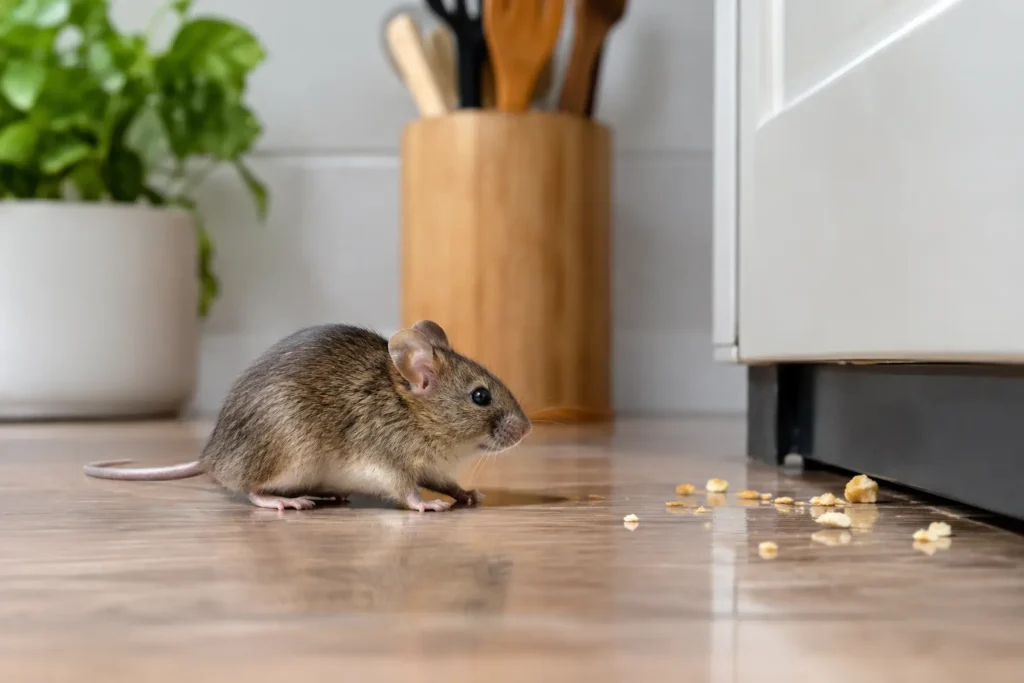
A few dark droppings behind the toaster, a shredded paper towel under the sink, or a scratching sound after dinner can change how you feel about your own home. Mice in the kitchen are not simply an inconvenience to sweep away. They are a warning that rodents have found food, water, and a route into the structure – and they may be contaminating areas you cannot see.
The right response is calm but prompt. A trap may catch one mouse, but it does not identify where rodents entered, whether they are nesting above or below the kitchen, or how far urine and droppings have spread. For homeowners, the goal should be a home that is clean, sanitized, properly insulated, and sealed against another infestation.
Why Mice Choose the Kitchen
A kitchen gives mice nearly everything they need without requiring them to travel far. Crumbs under appliances, pet food, unsealed pantry goods, garbage, and moisture around plumbing make the space especially attractive. In older homes, gaps around water lines, drain pipes, wall penetrations, and damaged vents can create direct travel paths from the exterior, crawlspace, garage, or attic.
Mice are also excellent at moving through concealed spaces. The activity you see beside a cabinet may be connected to a nest in wall voids, attic insulation, or a crawlspace. That is why a kitchen sighting should not be treated as proof that the problem is limited to the kitchen.
Signs of Mice in the Kitchen That Need Attention
Droppings are usually the first sign, especially in drawers, under the sink, behind the refrigerator, or near dry-food storage. Fresh droppings tend to be darker and softer than older ones, but any droppings in food-preparation or storage areas should be taken seriously.
Other signs include gnaw marks on packaging, greasy rub marks along walls, chewed wiring or cabinet materials, and a stale or ammonia-like odor. You may hear light scratching in walls or ceilings at night. A mouse seen during daylight can also suggest a larger population or a disturbed nesting area, although the full picture depends on the property.
Look for these signs without moving appliances or disturbing hidden debris if you suspect extensive contamination:
- Shredded paper, fabric, insulation, or cardboard used for nesting
- Small openings around pipes, utility lines, baseboards, or cabinets
- Food packages with irregular chew marks or scattered contents
- Odor that lingers even after the counters and floors are cleaned
The Risk Is Not Limited to Food Damage
Food exposed to rodents should be discarded. Rodents can contaminate countertops, cabinet interiors, dishes, and pantry surfaces through droppings, urine, saliva, and contact with their fur. A visible mess in the kitchen is concerning, but contamination in enclosed areas may be more difficult to address because it can remain undetected for weeks or months.
Odor is another common concern. Urine can soak into porous materials, including insulation, wood, stored belongings, and debris in crawlspaces or attics. Surface cleaning in the kitchen may reduce the immediate smell without solving the source. If odor returns, or becomes stronger when the HVAC system runs or the weather changes, concealed contamination deserves a professional inspection.
There is also a property-condition issue. Mice can chew wiring, damage cabinetry, tear insulation, and create nesting pockets that reduce insulation performance. When insulation is heavily soiled or compressed, it may no longer provide the thermal barrier your home needs. That can affect comfort and energy costs long after the mice are gone.
What to Do First
Do not sweep or vacuum dry droppings. That can stir contaminated particles into the air. Keep children and pets away from the affected area, discard exposed food, and avoid handling nests or large accumulations of droppings without proper protective equipment.
If contamination appears limited to a small, accessible hard surface, use appropriate gloves and follow safe cleaning practices with a disinfecting solution. Never assume a quick wipe-down is enough when droppings are inside cabinets, behind appliances, in insulation, or around HVAC components. Those situations require a closer assessment of the affected materials and surrounding spaces.
It is reasonable to remove obvious food sources by placing pantry items in hard, sealed containers and keeping pet food off the floor overnight. However, do not mistake better food storage for rodent proofing. Mice can continue entering a home even when the kitchen is spotless if exterior gaps remain open.
Why Trapping Alone Often Falls Short
Traps can be useful for monitoring active rodent activity, but trapping is one part of a larger restoration problem. If entry points are not sealed, new mice can replace the ones removed. If droppings, nesting material, or urine-soaked insulation are left in place, the odor and contamination remain.
The sequence matters. A thorough solution begins with inspection to locate activity, entry routes, and damaged areas. Next comes removal of contaminated nesting materials and insulation where needed, followed by sanitization and odor treatment. Finally, exclusion work closes vulnerable openings so rodents cannot use the same routes again.
This approach is especially important when a kitchen infestation is connected to an attic or crawlspace. Those spaces often hold the larger contamination load, even when the kitchen is where the problem first became visible.
Professional Cleanup Protects More Than Appearance
A proper rodent cleanup is not housekeeping. Trained technicians use full protective gear and controlled removal methods to address contaminated materials without spreading debris through living areas. They can determine whether insulation needs removal and replacement, whether odor treatment is necessary, and which structural gaps are allowing access.
Professional Rodent Cleanup provides this complete restoration approach for Southern California homeowners: contamination removal, sanitization, insulation restoration when required, and exclusion work that locks rodents out for good. A property inspection can show whether your kitchen signs are isolated or part of a larger issue above ceilings, behind walls, or below the home.
The trade-off is simple. A basic pest service may address immediate activity, while a full cleanup and exclusion project addresses the conditions that make a return infestation likely. The appropriate scope depends on the extent of contamination, the age and condition of the home, and whether rodents have reached insulation or concealed building spaces.
How to Keep the Kitchen Protected After Service
Once the source is removed and entry points are sealed, everyday habits help maintain the result. Clean under and behind appliances periodically, keep food in sealed containers, empty indoor trash regularly, and repair plumbing leaks quickly. Pay attention to new sounds, odors, droppings, or damaged packaging rather than waiting for activity to become obvious.
Exterior maintenance matters too. Rodents can use overgrown vegetation, clutter near walls, damaged screens, and gaps around utility penetrations as opportunities to reach the home. Exclusion is most effective when it is paired with ongoing awareness of changes around the property.
A kitchen should feel like the clean center of your home, not a place where you hesitate to open a drawer or prepare a meal. When signs of rodents appear, acting early can limit contamination, protect your insulation, and give you a clear path back to a sanitary, rodent-resistant home.
Read more about five signs mice are getting into your kitchen.