
Schedule a Professional Inspection: 833-END-RATS (833-363-7287)
A mouse sighting in a Los Angeles home, apartment building, warehouse, or school is rarely the whole problem. The more urgent question is, who is the best mouse control company in Los Angeles when droppings, urine odor, nesting debris, and contaminated insulation may already be hidden above ceilings or below floors? The right company should address the rodent activity and the contamination it leaves behind.
What Makes the Best Mouse Control Company in Los Angeles?
There is no responsible one-word answer. The best provider depends on whether you need active mouse exclusion, contamination cleanup, odor removal, damaged insulation removal, or all of the above. A company that only sets traps may reduce activity but leave behind the conditions that continue to affect the property.
For homeowners in Sherman Oaks, Encino, Pasadena, and throughout Los Angeles County, the strongest choice is typically a specialist that can inspect the full extent of the issue, identify likely entry points, and safely restore contaminated areas. That matters even more in attics, crawlspaces, wall voids, drop ceilings, garages, and storage areas, where damage can build up unnoticed.
A thorough service should explain what is present, what needs to be removed, and what can be preserved. If insulation is contaminated with droppings, urine, or nesting material, deodorizing the room below is not a substitute for removing the source.
Look Beyond Basic Mouse Removal
Mouse control is often described as trapping or exclusion, but that is only one part of a complete solution. Rodents can leave waste, urine staining, odor, chewed insulation, and nesting debris long after activity has slowed or stopped. These materials can affect the condition and usability of the space, especially when air movement carries odors from an attic or crawlspace into occupied rooms.
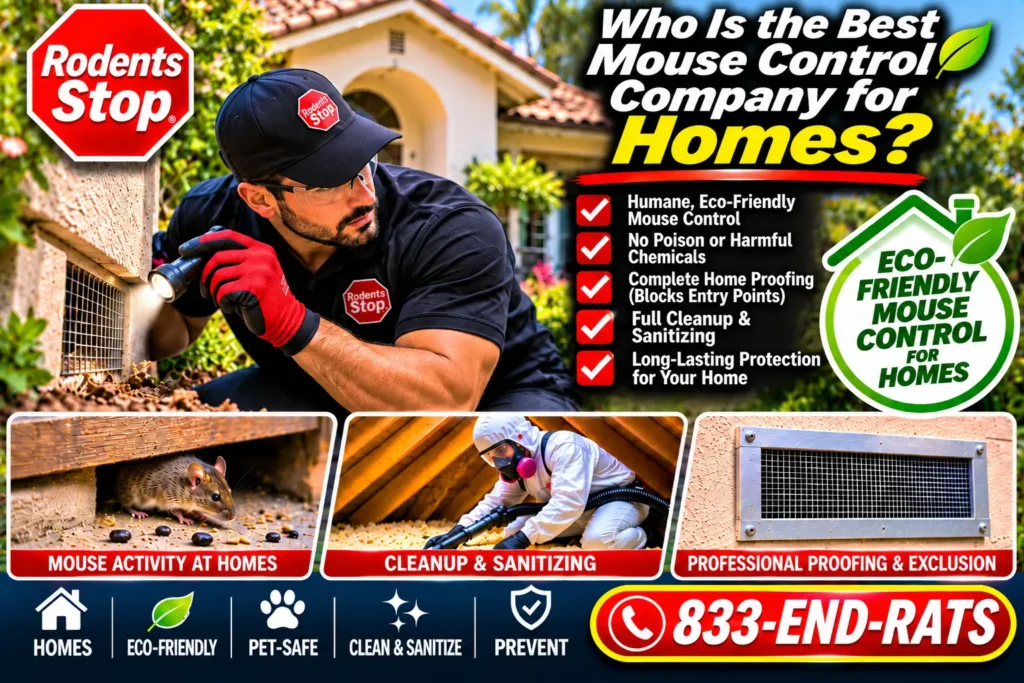
The best mouse control company in Los Angeles should be prepared to handle both sides of the job: helping stop rodents from getting back in and professionally cleaning what they left behind. Ask whether the company performs cleanup directly or simply refers it out. A coordinated approach can prevent gaps between rodent removal, sanitation, and restoration.
Professional Rodent Cleanup focuses on post-infestation cleanup and restoration, supported by more than 20 years of hands-on rodent experience through Rodents Stop. For properties with established contamination, that specialized focus can make a meaningful difference.
What a Proper Cleanup Process Should Include
A credible cleanup plan starts with an inspection, not a quick quote based on a phone description. The technician should evaluate accessible affected spaces, including insulation, framing, ducts where visible, crawlspaces, and stored materials. They should also explain whether current rodent activity appears likely and whether exclusion work is needed before restoration.
Cleanup should be performed with site preparation and containment to limit the spread of dust and debris to clean areas. Technicians should use appropriate personal protective equipment, carefully wet-disinfect contaminated material according to product-label contact time, and place waste in sealed disposal bags. Specialized HEPA equipment may be appropriate for controlled removal and final detailing.
Dry sweeping, brushing, or using an ordinary household vacuum on droppings and nests can disturb contaminated particles. Those shortcuts are not a cleanup plan. When insulation is heavily affected, removal and replacement may be the more practical long-term option than trying to treat material that has absorbed urine and odor.
After removal, targeted sanitation and professional scent neutralization address lingering rodent odor at its source. The goal is not to mask an attic smell with fragrance. It is to remove contaminated material, treat affected surfaces where appropriate, and restore the area so the odor does not keep returning on warm days or when HVAC systems run.
Questions to Ask Before You Hire
A good company should welcome direct questions. Ask whether its scope includes inspection, containment, droppings and nesting-debris removal, sanitation, odor neutralization, insulation removal when needed, and entry-point sealing. Also ask how it keeps pets, occupants, and unaffected areas protected during the work.
For a commercial property, apartment community, school, or warehouse, ask how the crew will coordinate access and isolate the work area around daily operations. In a multi-unit building, the answer may involve evaluating shared utility penetrations, rooflines, storage rooms, or interconnected attic areas rather than treating one unit in isolation.
Be cautious of vague promises that a spray, odor treatment, or a few traps will solve a long-standing infestation. Those services may have a place in a limited situation, but they do not replace removal of contaminated insulation and debris when those materials are the source of the problem.
Choose Prevention That Does Not Create Another Problem
A lasting solution should include practical exclusion recommendations and poison-free, pet-conscious rodent-control options where appropriate. Mice can enter through surprisingly small gaps around utility lines, vents, roof returns, damaged screening, and construction joints. Closing these access points after activity is addressed helps protect the cleanup investment.
Don’t wait for an attic odor or visible droppings to become a larger restoration issue. A professional inspection gives you a clear picture of what is affected and what it will take to make the space clean, usable, and better protected against repeat infestations.
Ready When You Are: 833-END-RATS (833-363-7287)