
Ready when you are. Schedule a professional inspection at 833-END-RATS (833-363-7287).
That sharp, musky smell coming from an attic vent, ceiling cavity, or crawlspace is rarely “just old insulation.” Insulation odor causes often point to an underlying property-condition issue: rodent urine, droppings, nesting debris, moisture, decaying material, or a combination of these problems. Covering the odor with fragrance may make a room easier to tolerate for a few hours, but it does not remove the contaminated source.
For Southern California homeowners, landlords, and facility managers, the first step is determining what is actually in the insulation and whether rodents still have access. The right cleanup plan protects the occupied space, removes contaminated materials safely, addresses odors at their source, and helps prevent the same problem from returning.
Why does my attic smell like urine when the house is closed up?
Start with the location of the smell. Is it strongest at the attic hatch, in one closet, or at a ceiling vent when the system starts? A musty smell can also come from moisture. Neither odor alone identifies rats or mice. During an assessment, ask the technician to show you where staining, nesting debris, or a roof leak lines up with the room below. If the smell comes with scratching above the ceiling at night, tell us when both started.
Common Insulation Odor Causes in Attics and Crawlspaces
Insulation can absorb and hold odors for years, especially in enclosed areas with limited airflow. Fiberglass, cellulose, and other loose-fill materials are not designed to be cleaned after widespread urine contamination. Once odors have soaked into insulation, the smell may become more noticeable during hot weather, after rain, or when HVAC systems create pressure changes inside the building.
Rodent urine and droppings
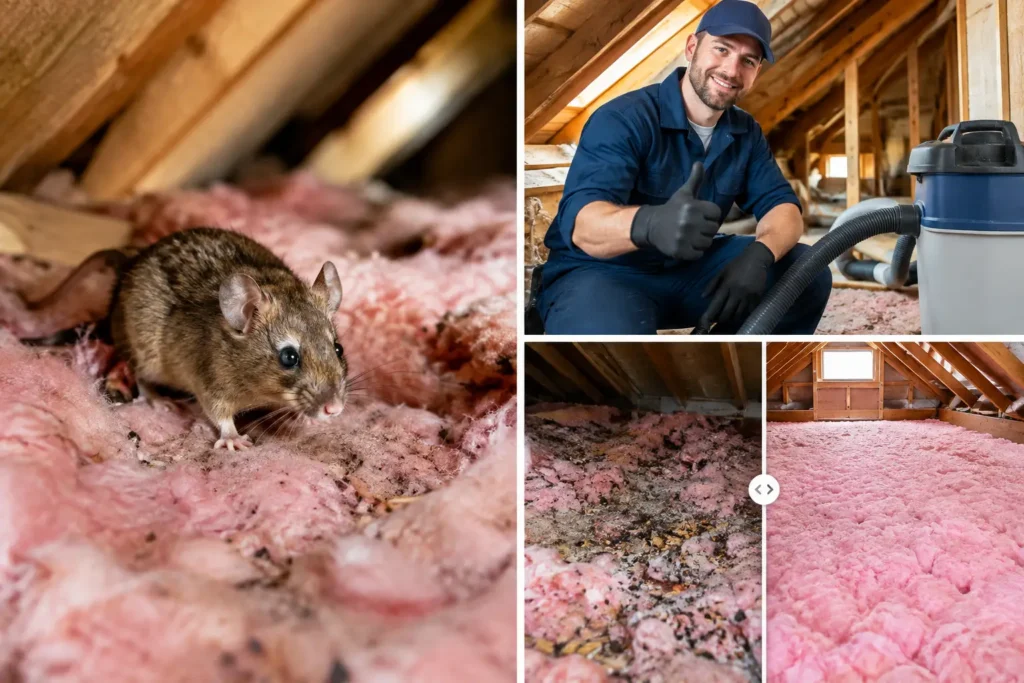
Rats and mice frequently use attic insulation, crawlspaces, wall voids, and drop ceilings as travel routes and nesting areas. Urine can saturate insulation beneath nesting locations and along repeated runways. Droppings, urine residue, and body oils create the familiar pungent rodent odor that many property owners notice near vents, light fixtures, attic hatches, or upper-floor closets.
Heat makes this worse. In places such as Los Angeles, Woodland Hills, and Riverside, attic temperatures can rise dramatically. Warm insulation releases more odor into the surrounding air, which is why a smell may seem mild in the morning and much stronger by afternoon.
A rodent odor can remain after animals are gone because the contamination is still there. Removing rodents without removing soiled insulation and nesting debris often leaves the property with the same persistent smell.
Nesting debris and hidden carcasses
Rodents shred insulation, paper, fabric, cardboard, and other nearby materials to build nests. These nests trap urine and droppings in one concentrated area. If an animal dies inside an inaccessible wall, ceiling, attic corner, or crawlspace, decomposition can add a severe odor that changes over time.
A hidden carcass is sometimes the immediate cause of a sudden smell, but it is not always the whole problem. A technician may find long-term urine contamination and nesting debris in the same area. Removing only the carcass may reduce one odor while leaving the underlying contamination behind.
Moisture, mold-like odors, and damaged building materials
Not every insulation odor is caused by rodents. Roof leaks, plumbing leaks, condensation, and poor crawlspace ventilation can wet insulation and create a musty odor. Wet insulation can also lose performance, compress, and allow moisture to affect nearby wood framing or drywall.
The distinction matters because moisture damage and rodent contamination can overlap. Rodents may favor a damp, undisturbed crawlspace, while a roof leak can make previously contaminated insulation smell stronger. A proper inspection looks for both conditions instead of assuming one explanation fits every odor.
Contaminated insulation from a past infestation
A previous infestation may have ended months or even years ago, but the attic can still smell. This is common in rental homes, apartment buildings, storage areas, and older commercial spaces where nobody entered the attic after the rodents were removed.
Odor severity depends on how long the activity continued, the amount of urine present, the insulation type, the size of the affected area, and airflow through the building. A small, isolated nesting area may be handled differently than an attic with broad contamination across the insulation surface.
Why the Odor Travels Into Living and Work Areas
Odor does not need an open attic hatch to enter a building. Air moves through gaps around recessed lights, plumbing penetrations, duct openings, wall-top plates, electrical boxes, and unsealed access panels. When the home is under negative pressure from exhaust fans, HVAC operation, or temperature differences, attic or crawlspace air can be pulled toward occupied rooms.
This is why occupants may report an odor in a bedroom or hallway even though the source is above the ceiling. In warehouses, schools, and commercial buildings, odors may travel through utility chases, suspended ceilings, and mechanical spaces.
Air fresheners, candles, and routine cleaning are not reliable answers to contamination inside a concealed space. They can mask the warning sign while urine-soaked insulation, droppings, and nest material remain in place.
When Insulation Should Be Removed Instead of Deodorized
There is no one-size-fits-all answer. If contamination is limited to a small, accessible area and insulation remains dry and structurally sound, targeted removal and sanitation may be appropriate. When urine, droppings, or nests are widespread, full removal of the affected insulation is often the more dependable path to odor control.
Insulation should be evaluated for removal when it has visible droppings throughout it, strong urine odor, extensive nesting debris, moisture damage, or repeated rodent activity. Insulation that has been tunneled through or flattened may also no longer provide the thermal performance the building needs.
The trade-off is straightforward: targeted work can cost less when the affected area is truly limited, while broader removal costs more but may prevent lingering odor and missed contamination. An honest inspection should explain the scope, show where the issue is located, and separate necessary work from optional improvements.
Safe Cleanup Is More Than Picking Up Debris
Rodent-contaminated insulation should not be dry swept, brushed, or vacuumed with an ordinary household vacuum. Those methods can disturb contaminated dust and spread it through the area. Cleanup requires controlled handling, appropriate personal protective equipment, and measures to keep debris from moving into clean portions of the property.
Professional Rodent Cleanup approaches affected attics and crawlspaces with a restoration process built around containment and source removal. The work typically begins with an inspection of access points, contamination patterns, insulation condition, and potential rodent entry routes. Technicians then prepare the work area, isolate the affected space as needed, and remove droppings, nesting debris, and contaminated insulation using sealed disposal practices and specialized HEPA equipment where appropriate.
Hard surfaces that can be retained are wet disinfected using the proper product contact time rather than quickly sprayed and wiped. After removal and sanitation, targeted odor neutralization addresses remaining rodent scent in the affected structure. If the odor source has not been removed first, deodorizing alone is unlikely to provide a lasting result.
Odor Removal Works Best With Rodent Exclusion
An attic cleanup can be undone quickly if rodents still enter through roofline gaps, damaged vents, utility openings, or construction gaps around the structure. Exclusion is the prevention component that turns cleanup into a longer-term solution.
A professional inspection should identify active signs, possible access points, and conditions that could support repeat activity. Poison-free rodent control and exclusion-focused recommendations are especially valuable for homes with children or pets, multifamily properties, and facilities where contamination control matters.
For landlords and property managers, this approach also helps separate current contamination from old damage. That clarity makes it easier to plan repairs, document conditions, and address tenant complaints without guessing at the odor source.
Don’t Wait for the Smell to Get Worse
If insulation odor appears only on hot days, after rain, or when the HVAC runs, treat that pattern as useful information. It often means air movement or humidity is activating contamination hidden above a ceiling or below a floor. The longer urine-soaked insulation and nesting debris remain, the more difficult odor control can become.
A careful inspection can determine whether you are dealing with active rodents, old contamination, moisture damage, or several issues at once. The goal is not to perfume the space. It is to remove the source, sanitize affected materials, restore the area, and help keep rodents from coming back.
Ready to find out what is causing the smell? Schedule a professional inspection at 833-END-RATS (833-363-7287).
One Response