
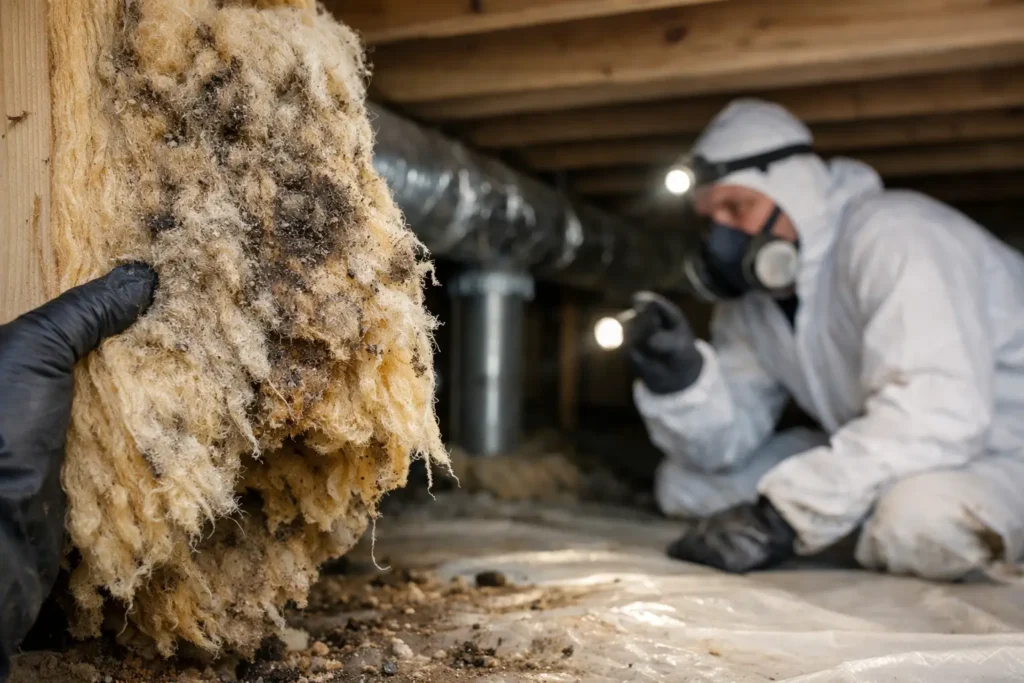
A crawlspace problem usually does not announce itself politely. It starts with a smell that will not go away, rooms that feel damp or dusty, or insulation hanging where it should be sealed in place. If you are wondering how to tell if crawlspace insulation is contaminated, the key is knowing what contamination actually looks, smells, and feels like before it spreads further through the home.
Contaminated insulation is not just dirty insulation. In crawlspaces, it often means rodent droppings, urine, nesting debris, moisture damage, mold growth, dead animal matter, or insulation that has absorbed odors and bacteria. Once that happens, the material is no longer doing its job well, and it can become a source of odor, poor air quality, and ongoing health concerns.
How to tell if crawlspace insulation is contaminated
The clearest sign is visible damage combined with evidence of rodent activity. If the insulation looks torn, compressed, stained, or pulled down from the floor joists, that is a warning sign. Rodents commonly burrow into insulation to build nests, and they leave droppings, urine trails, greasy rub marks, and shredded material behind.
Odor is another major clue. A musty smell can point to moisture and mold. A sharp ammonia-like smell often suggests rodent urine. A strong, stale animal odor usually means contamination has built up over time. If the smell gets worse when the HVAC runs or when outdoor temperatures rise, the crawlspace may be circulating contaminated air upward into the living space.
You may also notice increased allergy symptoms, irritation, or persistent dust inside the home. Crawlspaces affect indoor air more than many homeowners realize. When insulation is contaminated, particles and odors can move through gaps, ducts, and floor penetrations. That does not mean every sneeze comes from the crawlspace, but when symptoms line up with odor and visible damage, it should be taken seriously.
What contaminated crawlspace insulation looks like
Some contamination is obvious. You may see dark spotting, yellow or brown staining, nesting piles, or droppings scattered across the insulation surface. In severe cases, the insulation may be matted down, ripped open, or missing in sections where rodents have tunneled through it.
Moisture changes the picture a bit. Wet insulation often sags, clumps, or looks flattened. Fiberglass may appear dirty and heavy. Other insulation types can show surface discoloration or break down around the edges. If there is mold growth, you may see black, green, or white patches on the insulation itself or on nearby wood framing.
It also matters where the damage appears. Isolated staining near a plumbing leak may point to a moisture issue first. Widespread droppings and shredded insulation usually point to active or past rodent infestation. Sometimes both are happening at once, which is common in older crawlspaces or homes with ongoing entry points.
Signs rodents have contaminated the area
Rodent contamination leaves a pattern. Droppings are often concentrated near nesting zones, along beams, and around entry points. Urine can soak into insulation and wood, creating lingering odor that does not disappear with basic cleaning. You may also find chewed vapor barriers, gnaw marks on wood or wiring, and trails through dusty surfaces.
Listen to the timing, too. If you have heard scratching under the floor at night, noticed a new odor after pest activity, or found signs in other parts of the house, the crawlspace insulation deserves a closer look. Insulation contamination usually does not happen in isolation. It is often part of a broader infestation problem.
Signs moisture or mold are part of the problem
Not all contaminated insulation is caused by rodents. Crawlspaces can also trap humidity, suffer plumbing leaks, or collect groundwater intrusion. When insulation gets wet, it can lose performance quickly and become a breeding ground for mold and bacteria.
Look for condensation on pipes, damp soil, standing water, musty odor, fungal growth on joists, or insulation that feels wet or unusually heavy. If the crawlspace smells earthy and stale rather than sharply animal-like, moisture may be the primary issue. Still, moisture and rodent contamination often overlap because damp crawlspaces are attractive to pests and harder to keep sanitary.
When insulation can be cleaned and when it needs removal
This is where homeowners can lose time and money. Light surface dust is one thing. Insulation that has been exposed to rodent droppings, urine, nesting material, mold, or dead animal decomposition is another. Once porous insulation absorbs contamination, cleaning the surface rarely solves the problem completely.
In most moderate to heavy contamination cases, removal is the safer and more effective option. The material can hold odor, bacteria, and allergens deep inside. Leaving it in place may keep the smell coming back and allow unhealthy particles to remain in the crawlspace.
There are a few situations where nearby framing or non-porous surfaces can be sanitized while insulation stays. But if the insulation itself is soaked, stained, shredded, or filled with droppings, replacement is usually the right call. It also gives you a clean baseline for deodorization and long-term energy efficiency.
Why a visual check is not always enough
A quick glance with a flashlight can reveal obvious damage, but it may miss the full scope of contamination. Rodents often nest deep inside insulation layers or in hard-to-reach corners. Urine saturation may not be fully visible. Odor can spread beyond the most damaged-looking area, and mold can form on hidden surfaces.
There is also the safety issue. Disturbing contaminated insulation can release particles into the air. Sweeping, pulling, or bagging it without proper protection can make exposure worse. For homeowners, the goal should be recognition, not risky cleanup. If you see enough signs to suspect contamination, that is usually the point to bring in a trained remediation team.
What a professional crawlspace inspection should confirm
A proper inspection should do more than say, yes, it looks bad. It should identify the type of contamination, how far it extends, whether the infestation is active, and what materials need to be removed versus sanitized. It should also address the reason the problem happened in the first place.
That means checking for entry points, nesting zones, urine and droppings spread, damaged vapor barriers, moisture conditions, and insulation performance loss. In Southern California homes, especially in Los Angeles County, Orange County, Riverside County, San Bernardino County, and Ventura County, crawlspace construction and access can vary a lot. A good inspection accounts for those conditions instead of treating every home the same.
For severe contamination, the right process usually includes controlled insulation removal, sealed debris handling, sanitization, odor treatment, and rodent exclusion work before new insulation goes in. Professional Rodent Cleanup focuses on that full-process approach because cleanup without prevention often leads right back to the same problem.
What to do if you suspect contamination
Start by avoiding direct contact with the material. Do not move insulation around, vacuum droppings with a standard household vacuum, or assume odor spray will fix what is embedded in the insulation. If there is active rodent activity, pest control alone still does not address the contaminated material left behind.
Instead, document what you notice. Pay attention to odor, visible droppings, torn insulation, moisture, and any new symptoms in the home such as stale air or worsening allergies. Those details help speed up the inspection and make it easier to determine whether spot treatment, full removal, sanitization, or insulation replacement is needed.
Acting early matters. A smaller contaminated area is easier to contain than a crawlspace that has been used as a nesting site for months. The longer damaged insulation stays in place, the more likely it is to keep affecting air quality, odor, and comfort inside the home.
A crawlspace does not have to look dramatic to be unhealthy. If the insulation smells bad, shows staining, has rodent evidence, or has been exposed to moisture for any length of time, trust that warning sign and get it checked before the contamination becomes part of everyday living.
5 Responses