
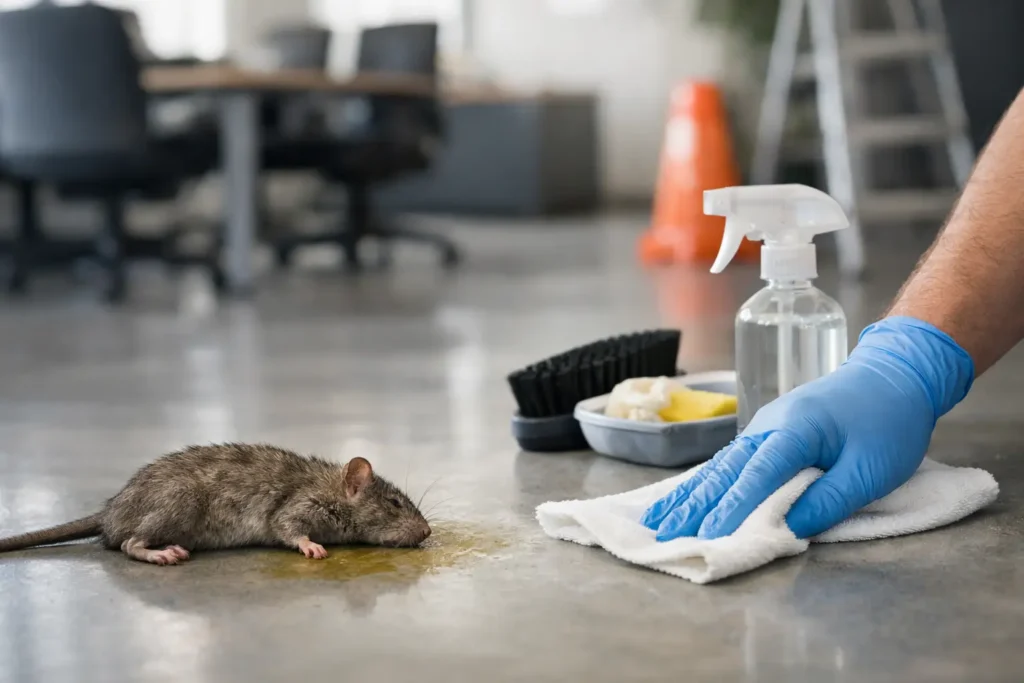
A rodent problem in a commercial building is not just a nuisance. When urine soaks into insulation, wood, concrete, and stored materials, the contamination spreads farther than most property owners realize. That is why rodent urine cleanup commercial services matter – not only for odor control, but for sanitation, air quality, and the long-term condition of the building.
For commercial properties, the risk goes beyond what you can see. Rodent urine can dry, break down into particles, and circulate through the air in attics, crawlspaces, wall cavities, and service areas. Staff may notice a sharp odor, tenants may complain about indoor air quality, and building owners may find that the real issue is much larger than trapping alone can solve. If contamination is left in place, the problem often returns because the source was never fully removed.
Why rodent urine cleanup commercial work needs more than basic janitorial cleaning
Standard cleaning is not designed for rodent contamination in concealed spaces. Wiping visible surfaces may improve appearance, but it does not fix urine saturation in insulation, nesting debris in attics, or contamination inside crawlspaces where rodents have been active for months.
Commercial cleanup has to account for scope, material damage, and cross-contamination. A warehouse office with light activity around a storage corner is very different from a multi-unit property with widespread attic contamination. In both cases, the job requires controlled removal, proper bagging and sealing of affected materials, surface sanitization, odor treatment, and steps to keep contamination from spreading into occupied areas.
The difference is thoroughness. If urine-soaked insulation remains in place, odors often persist. If nesting and droppings are disturbed without protective protocols, contaminants can spread into the air. If entry points are ignored, the same infestation pattern can start over again.
What rodent urine can do inside a commercial building
Urine contamination affects more than smell. It can damage insulation performance, stain surfaces, and create persistent odor conditions that make a space feel unclean even after surface wiping. In attics and crawlspaces, urine often mixes with droppings, nesting material, and chewed debris, creating a broader remediation issue.
For property managers and owners, the practical concerns usually show up fast. Tenants may report bad odors. Maintenance teams may notice dark staining or matted insulation. HVAC pathways may carry unpleasant smells into occupied suites. In severe cases, contamination can contribute to unhealthy indoor conditions that make a building harder to lease, manage, or maintain.
There is also a cost issue. The longer contaminated material remains in place, the more likely it is that insulation replacement, deodorization, and sealing work will be needed on a larger scale. Acting early usually limits the spread. Waiting often turns a contained cleanup into a more expensive restoration project.
How rodent urine cleanup commercial services are typically handled
A proper cleanup starts with inspection. Before any material is removed, technicians need to determine where rodents have been active, how far contamination has spread, and which materials can be sanitized versus which materials need to be removed and replaced. This is especially important in attics and crawlspaces, where damage is often hidden.
Once the affected areas are mapped out, contaminated insulation and nesting debris are removed under controlled conditions. This is not simple trash removal. The debris has to be bagged, sealed, and handled in a way that reduces the chance of spreading contaminants to clean parts of the property.
After removal, the exposed surfaces are sanitized. Depending on the building and the severity of contamination, deodorization may also be necessary to address lingering odor compounds embedded in structural materials. In many commercial settings, odor is the issue that prompts the initial call, but odor treatment only works when the contaminated source has already been addressed.
The final step is prevention. Without exclusion work, cleanup alone is incomplete. Rodents return through the same gaps, vents, penetrations, and structural openings they used before. A complete service should address both contamination and access points so the property does not cycle back into the same problem.
When cleanup becomes restoration
Many commercial property owners start by looking for sanitation, but what they really need is restoration. If rodents have heavily contaminated attic insulation or crawlspace materials, those spaces may no longer be doing their job. Insulation loses efficiency when it is compressed, torn, or saturated with urine and debris. That can affect odor, comfort, and energy performance.
This is where a full-service approach matters. Removing contaminated material is only half the job. Replacing damaged insulation helps restore the building environment after remediation is complete. For owners trying to protect both tenant comfort and operating costs, this step has real value.
It also changes how the property feels. A properly restored attic or crawlspace is cleaner, safer, better sealed, and more functional. That is very different from a temporary cleanup that leaves damaged materials behind.
Signs your building needs professional rodent urine cleanup commercial service
Some properties show obvious warning signs, while others have a hidden problem building over time. Persistent odor is one of the clearest indicators, especially when it gets stronger during warm weather or when HVAC systems are running. Stained insulation, visible droppings, nesting material, and scratching sounds above ceilings or below floors are also common signs.
In commercial and multi-occupant settings, complaints about air quality should be taken seriously. If occupants describe a musty, ammonia-like, or foul smell that keeps returning, surface cleaning is unlikely to solve it. The source is often in the attic, crawlspace, or wall voids.
A recent pest control visit can also signal the need for cleanup. Trapping or baiting may reduce rodent activity, but it does not remove urine, droppings, or contaminated insulation. Once the infestation is under control, remediation is the step that restores the affected space.
Why property owners in Southern California need a fast response
In Southern California, many commercial and mixed-use properties have attics, crawlspaces, roof gaps, utility penetrations, and aging construction details that rodents can exploit. In counties such as Los Angeles, Orange, Riverside, San Bernardino, and Ventura, dense development and varied building stock can make reinfestation a real concern if exclusion is skipped.
Fast action matters because contamination spreads quietly. What begins in one corner of an attic can move across insulation runs, ducting, and framing as rodent activity continues. A prompt inspection gives property owners a clearer path forward before odors intensify and restoration costs climb.
For occupied buildings, speed also helps reduce disruption. The sooner the contamination is assessed and contained, the easier it is to plan removal, sanitization, and repairs with less impact on tenants, staff, and daily operations.
What to look for in a cleanup company
Not every contractor is equipped for this kind of work. Rodent contamination in commercial spaces requires more than pest control knowledge. The company should be able to inspect concealed areas, remove contaminated material safely, sanitize affected surfaces, address odors, and seal entry points as part of the same process.
It also helps when the provider understands building recovery, not just cleanup. If insulation has to be removed, there should be a plan to replace it. If contamination is severe, the work should follow a clear before-during-after process so the property owner knows what is being removed, treated, and restored.
The strongest providers are direct about what can be cleaned and what must be replaced. That honesty matters. Some materials can be sanitized effectively, while others are too saturated or damaged to save. A careful inspection should separate the two.
Professional Rodent Cleanup approaches these projects as full remediation and restoration work, not a quick spray-and-go service. That is the standard commercial properties need when health concerns, odor complaints, and structural contamination are all part of the same problem.
If your building has a persistent rodent odor, damaged insulation, or signs of contamination in the attic or crawlspace, the next step is simple: treat it like a building condition, not a minor cleaning issue. The sooner the source is removed and the space is restored, the sooner the property can get back to feeling clean, safe, and under control.
2 Responses